Page 1 of 4
The Linnstrument's surface notches against slow bends/slides
Posted: Mon Feb 07, 2022 8:07 am
by Ariloum
What you guys think about Linnstruments surface rubber's notches?
I found that it makes my fingers stuck on slides.
Also, because of that gap between the notes, I have audiable pitches/tone stuck while doing slow bends/slides thru these notches - so actually my bend curve looks like ladder(yes I have Linnstrument's quantize turned off).
With fast 200-500ms slides it's not noticeable.
But you know that sensual kind of bends that you can slowly rise like 2-5 seconds per tone? I mean this kind of attraction.
Did I do something wrong or misunderstood some Linnstrument concept that stopped me of the beautiful bending engine (because for now I feel it limited), like one I could get with these:
1. real guitar connected via MIDI Guitar 2 vst plugin - which decodes audio to MIDI and also perfectly bends.
https://www.jamorigin.com/
2. Velocity KB - an iPad MIDI controller (could be used with osx/windows), which actually is similar to the Linnstrument - it has same guitar frets/pads table logic, but doesn't have these notches and I can do notchless bends like on real guitar/violin.
http://bluemangoo.com/vecocity_keyboard.php
And these days I found that I'm using more iPad app as midi controller (also it's surface is way more sensitive and needs only gentle touches) and real guitar than the Linnstrument because it feels like step back technologically to me and it just looks good while glowing all it's lights laying on my table.
So I don't know what exactly was on Roger's mind while he designed these surfase notches, but personally I don't like it and prefer having notchless rubber surface without any sensor gaps between the semitones.
But Roger said that nobody were interested about that except me,
so did anyone else feels it that way?
Re: The Linnstrument's surface notches against slow bends/slides
Posted: Mon Feb 07, 2022 1:55 pm
by Dirk Diggler
Sounds like you want just a sheet of silicone, I remember Roger mentioning it in a thread.
Maybe search for surface threads here, or send an email to support.
The gaps cause no problems here, but then again I always use Quantize on and hold off.
A lot in bending depends on the instrument source and setup.
Linnstrument is actually a step forward in expressiveness and control compared to iPad apps.
Re: The Linnstrument's surface notches against slow bends/slides
Posted: Mon Feb 07, 2022 2:38 pm
by Ariloum
Dirk Diggler wrote: Mon Feb 07, 2022 1:55 pm
Sounds like you want just a sheet of silicone, I remember Roger mentioning it in a thread.
Maybe search for surface threads here, or send an email to support.
The gaps cause no problems here, but then again I always use Quantize on and hold off.
A lot in bending depends on the instrument source and setup.
Linnstrument is actually a step forward in expressiveness and control compared to iPad apps.
Yeah I wanted just a sheet of flat silicone but I'm not sure if the sensor has no gap in between also. I already contacted Roger about this, and he said that making a new press like that could cost about 7k+ usd to him and since nobody else were interested in this case he won't do it.
And for this: "Linnstrument is actually a step forward in expressiveness and control compared to iPad apps."
Did you tried that app? I'm using Linnstrument for more than a year and also I'm using that app for half a year and it seems exact same approach but without notches on surface and it's price is ~20 usd. To make things more clear: both Linnstrument and Velocity KB has same pads surface, both can highlight you any mode, both can send many different midi control messages and so on.
But my post is not about that, it's about the limitations of the Linnstrument's slide/bend surface/engine compared to other solutions.
Because on first page of the Roger's site about Linnstrument there promo says: "LinnStrument's patented touch-sensing technology permits you to slide in pitch directly from one note to another",
but in fact it does not provide exact pitch smooth transition like other MPE controllers can do, iPad MIDI one I mention or Haken Continuum. Linnstrument does it in ladder-way while you are moving in between of the notes, and promo didn't say that.
And I can say that I'd like to see it in better condition, because for now this part seems broken to me.
Re: The Linnstrument's surface notches against slow bends/slides
Posted: Mon Feb 07, 2022 10:51 pm
by MilesParker
I'm sorry, I don't quite understand the concern here? Is it that for you pitch changes don't seem to be smooth and are somehow interrupted by the ridges? I don't personally find that to be the case at all. Or are you saying you just don't like the feel of the ridges? At risk of missing your point, perhaps you're simply pressing too hard?
Re: The Linnstrument's surface notches against slow bends/slides
Posted: Tue Feb 08, 2022 12:36 am
by Dirk Diggler
I thought Roger had mentioned where you can get a single sheet with no markings? The fretless sheet.
You really just need to turn on quantize, the stepping pitches (ladder-way) goes away. Also make sure your DAW or VSTi is handling pitch in the same ranges. 48 range is good for smooth control.
You'll forget all about the ridges when things are bending as they should.
I have no interest in playing on glass surfaces with limited expression or sensitivity.
Re: The Linnstrument's surface notches against slow bends/slides
Posted: Tue Feb 08, 2022 1:12 am
by MilesParker
Dirk Diggler wrote: Tue Feb 08, 2022 12:36 am
I have no interest in playing on glass surfaces with limited expression or sensitivity.
100%. I played quite a bit with GeoShred prior to purchase on Linnstrument, it just doesn't compare at *all*. FWIW, this is also how I now feel about playing non-MPE synthesizers/samples either on keyboard or on Linnstrument. It's like watching a B&W movie after seeing one in colour.
Re: The Linnstrument's surface notches against slow bends/slides
Posted: Tue Feb 08, 2022 6:20 am
by Ariloum
Dirk Diggler wrote: Tue Feb 08, 2022 12:36 am
I thought Roger had mentioned where you can get a single sheet with no markings? The fretless sheet.
I didn't get it - Is fretless sheet exists? Because Roger said that he is not interested in making that one.
Dirk Diggler wrote: Tue Feb 08, 2022 12:36 am
You really just need to turn on quantize, the stepping pitches (ladder-way) goes away. Also make sure your DAW or VSTi is handling pitch in the same ranges. 48 range is good for smooth control.
You'll forget all about the ridges when things are bending as they should.
I played Linnstrument for a year with turned on quantized pitch. Last week I tried to discover deeply why it is that bad and found discussion thread here on KVR about pitch and ppl were recommended to turn quantization off (and try quantize hold etc). I tried that also but it didn't come to sound better, same problem still persists due to notches.
Dirk Diggler wrote: Tue Feb 08, 2022 12:36 am
I have no interest in playing on glass surfaces with limited expression or sensitivity.
Ye I see no curiosity here just opinion based on your prev experience but not related to the topic at all, so this has no clue to me to discuss while you're stuck with your inertia and sounds like "I know everything already". I played both - Linnstrument and Velocity KB for long, and that didn't feel as you are trying to say about it in the way "why it won't work for you while you didn't tried it" (to me it looks like Linnstrument brave defensive warrior state: I don't know but I condemn) - I don't have problems with this already, and I'm telling you again - my topic is NOT about that, it's about Linnstrument limitation on the slow/moderate bends/slides because of it's surface notches (with comparison to other solutions exists).
And yes, there is lots of MIDI controlling apps on iPad exists which is actually garbage, I tried like 6-7 and deleted all of them except that one I mention - because, actually, it looks like Linnstrument and feels close to same (except bends which is really better).And I love Linnstrument really, the only thing that is bothering me is inability to do good articulated bends on different speeds, because I though it's high-end technologically and similar to Haken Continuum so I could be able to play wide range dynamically articulated bends like on real guitar, but it's not possible, it even has less control that you can have with any generic 1980x keyboard synthesizer's pitch wheel - which is actually precise and you gain full control over the speed and it's angle without any gaps.
If you guys don't have problems with Linnstrument slow slides, show me some on video with raising 1 semitone and another with 1 tone fully controlled bending curve, each lasts 5+ seconds and has no spikes/notches/ladder in it while crossing the pads "frets". Don't use delays, fat reverbs and other things to mask the transition - use just some simple synth like any saw, with +-24 bend range to the each side. And reveal also recorded midi pitch automation curve.
If I'm trying to do this I'm facing these issues:
1. with turned ON quantize + quantize hold: no control over pitch bend speed at all
2. with turned ON quantize hold: spikes on bending curve while crossing the pads notches
3. everything OFF: same spikes on pads notches
From my side I'll do bends comparison video for this trio:
1. Real guitar with MIDI Guitar 2 vst
2. Velocity KB - mobile app
3. Linnstrument
Re: The Linnstrument's surface notches against slow bends/slides
Posted: Tue Feb 08, 2022 9:43 am
by Ariloum
MilesParker wrote: Mon Feb 07, 2022 10:51 pm
I'm sorry, I don't quite understand the concern here? Is it that for you pitch changes don't seem to be smooth and are somehow interrupted by the ridges? I don't personally find that to be the case at all. Or are you saying you just don't like the feel of the ridges? At risk of missing your point, perhaps you're simply pressing too hard?
The problem here is pitch curve gaps/notches/ladders etc. while you are sliding the edges of the pads.
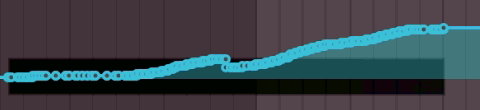
Here is Linnstrument slide curve, as you can see in the middle it has a drop (also I did it faster so it's actually like 1/3 shorter note length):
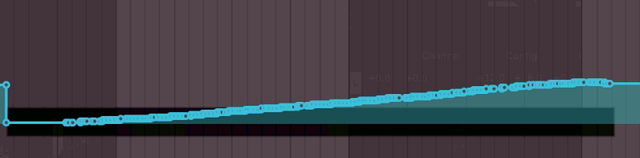
And here is Velocity KB, iPad app same sliding between semitones curve:
If I'm doing fast slides like within 200-500ms it's not a noticiable problem, but when you're trying to get more life of it going slower or doing some cross-pads wider dynamic speed bends moves here and there - this is what is this topic about - not metal shredders approach, but bluesy. So in case of the Linnstrument it doesn't sounds natural, it doesn't feels natural. It feels like you're driving a car with snail speed and can't go faster because there is rifts on the road everywhere. And you have to watch to not fall off the road, but it is dark also and your lights is not working. So it feels like totally mess

P.S.: Imagine that Velocity KB was connected with using of the avg. wi-fi network and has constant ping fluctuations 30-150ms. But even so it sounds/feels slides much better.
Re: The Linnstrument's surface notches against slow bends/slides
Posted: Tue Feb 08, 2022 10:40 am
by LarsDaniel
Several factors at play here.
The absolute majority of linnstrument players will want ridges between notes. Just look at how many are using the linny as a piano controller with no bending at all. The high manufacturing cost off course means that Roger is not making alternatives just-like-that.
Personally, I would like to have (or at least to try out) a surface with no ridges between horizontal notes but ridges between rows. And I think that those who would speak against such a surface are just not aware of the different needs for different use-cases. But in any case, if you want something different, you are in DIY territory.
I have actually been thinking: In theory, if I had a roll of some silicone/rubber material that had the exact dimension of the ridges (like, a very narrow tape tape), then it would be easy to experiment with filling the ridges by laying down the tape in them. I have no idea if such a product exists though.
I have really tried to analyse my playing, and to what extent I have any benefit of the ridges between horizontal notes. I find that I rely on three things: Sight, muscle memory, ear. There is never a situation where a ridge informs my finger, that it is placed incorrectly, because my ear will already have been informed. This is so, because I never use pitch quantise, and only rarely play chords.
So since I am not benefitting from them, I would rather not have them as they most definitely would make a slow slide more smooth and pleasurable to perform. (But remember, this is based on MY playing, not everybody elses playing.)
Re: The Linnstrument's surface notches against slow bends/slides
Posted: Tue Feb 08, 2022 11:47 am
by Ariloum
LarsDaniel wrote: Tue Feb 08, 2022 10:40 am
Several factors at play here.
The absolute majority of linnstrument players will want ridges between notes. Just look at how many are using the linny as a piano controller with no bending at all.
I totally agree with you about different cases of using the Linnstrument, some ppl will prefer to have kind of the frets, BUT it could be done in much more universal/sophisticated way, starting of making some color lines on fret's contour/places (or even light diode tubes inside to lighten the pads circuits) ending with doing it like little protruding stripes which not affects slides detection but still feels under the fingers (like there is dot's on some notes exists, but more to sinusoidal way to not have pitch gaps while finger is being moving onto it).
For now it's just unnecessary artificial way to limiting the pitchbend possibilities for no reason and this will be true surprise for those people who was expecting better pitch engine while watching all these promo texts and youtube videos, because nowhere it says that little slower pitch slides will be brickwalled.
Re: The Linnstrument's surface notches against slow bends/slides
Posted: Tue Feb 08, 2022 2:12 pm
by Dirk Diggler
I remember someone discussing putting a thin piece of paper over the fingerboard to get the feel of no ridges, you might try that.
If you like that just buy a plain piece of silicone, like for cooking, silicone cookie sheets?

How do you have your DAW set?
What is the bend range of the VSTi you're trying to bend?
If it's all iPad, then there's something in that ecosystem that's defeating the proper bends.
Re: The Linnstrument's surface notches against slow bends/slides
Posted: Tue Feb 08, 2022 3:10 pm
by Ariloum
Dirk Diggler wrote: Tue Feb 08, 2022 2:12 pm
I remember someone discussing putting a thin piece of paper over the fingerboard to get the feel of no ridges, you might try that.
Nice idea, but I guess that won't work because the main issue is that there is no sensor data coming within the notches/frets, and that's the thing that I miss.
Dirk Diggler wrote: Tue Feb 08, 2022 2:12 pm
How do you have your DAW set?
What is the bend range of the VSTi you're trying to bend?
If it's all iPad, then there's something in that ecosystem that's defeating the proper bends.
I'm using both PC with windows 10 and M1 macbook, got same issue no matters which DAW I'm using (mainly I go with Ableton 11 and Reaper 6), so it's not about computer/DAW/VST or iPad ecosystem (I just highlighted an iPad app as example of good working fretless pitch bend engine). Bend range is 24 both on Linnstrument and VST plugins... I guess I could multiply bend range in Linnstrument like twice as VST (like set it 24 in linnstrument and 12 in VST) so if I move finger through 4 pads it would be 2 semitones in the VST and thus level/smooth a little that effect but it's not approach I really wanna go to solve this.
I tried to ask Roger more questions about DIY flat surface meanwhile.
Re: The Linnstrument's surface notches against slow bends/slides
Posted: Tue Feb 08, 2022 3:47 pm
by John the Savage
Ariloum wrote: Mon Feb 07, 2022 8:07 am
What you guys think about Linnstruments surface rubber's notches?
I found that it makes my fingers stuck on slides.
For the record, I've never had a problem executing smooth pitch-bends or long slides.
How long have you been playing the LinnStrument? I mean, while it is certainly more forgiving than most acoustic instruments, it still requires a lot of practice, if one is to master it. Like any instrument, it takes time to develop proficiency in both technique and feel.
Beyond that, I have to say,
every instrument has its strengths and weaknesses, and the LinnStrument is no different in that respect. I wouldn't expect a guitar to play like a piano, any more than I would expect a violin to sound like a saxophone. To that end, name
any instrument as versatile as the LinnStrument, and I'll eat my shorts.

Cheers!
P.S.
Ariloum wrote: Tue Feb 08, 2022 6:20 am
If you guys don't have problems with Linnstrument slow slides, show me some on video with raising 1 semitone and another with 1 tone fully controlled bending curve, each lasts 5+ seconds and has no spikes/notches/ladder in it while crossing the pads "frets".
Bending a semitone over the span of 5 seconds is, in my opinion, unrealistic. In 30yrs a professional musician, I can't say that I've ever been required to do that. Nor have I seen anybody else do that, on any instrument, fretless or otherwise; not manually anyway. I've done some ambient pieces for film which required glides that slow, but it was done using control voltages, specifically to create tension through dissonance.
I also find it ironic that you cite the LinnStrument's "frets" as the issue, and use the Blues as an example, when most of the great Blues players of the last century used fretted instruments, and don't come anywhere close to playing 5-second bends or slides.
And to then
further insist that we not use any other tricks to cover-up this minor anomaly... Common, man. Seriously.
Re: The Linnstrument's surface notches against slow bends/slides
Posted: Tue Feb 08, 2022 4:44 pm
by Ariloum
John the Savage wrote: Tue Feb 08, 2022 3:47 pm
I wouldn't expect a guitar to play like a piano
This is partially possible - you can get hardware or software audio to midi converter (which actually I have both, I even got one of my guitar with MIDI interface) and play on guitar like on any synthesizer or rompler with piano or any kontakt piano library like 200+ gigabyte heavy weight Hans Zimmer piano library.. You can get sound of piano notes but you won't be able to play it like piano because it has different hands setup...
But still on any midi keyboard with the pitchbend wheel you can actually have precise and straight, like pile of wood, pitch-bend engine. 2$ usd bending whistle has it, almost any VST synthesizer does aswell, almost every strings instruments, and these days having high end MIDI controller which can't do proper straight slides/bends - it's strange.
John the Savage wrote: Tue Feb 08, 2022 3:47 pm
To that end, name
any instrument as versatile as the LinnStrument, and I'll eat my shorts.
I linked it already here - it's an iPad app called Velocity KB, it's similar to the Linnstrument: just same pads surface structure divided by rows (strings), but it doesn't have "frets" and bends going just perfectly - as you can see it on the screenshots comparison to the Linnstrument I posted above. You can setup rows/columns amount depending on your device, sensitivity, map midi CC X-Y to different controls, you can also select tonality/mode and so on.

Also Haken Continuum fingerboard has good bend engine + synthesizer beast inside.
John the Savage wrote: Tue Feb 08, 2022 3:47 pm
Bending a semitone over the span of 5 seconds is, in my opinion, unrealistic. In 30yrs a professional musician, I can't say that I've ever been required to do that. Nor have I seen anybody else do that, on any instrument, fretless or otherwise; not manually anyway. I've done some ambient pieces for film which required glides that slow, but it was done using control voltages, specifically to create tension through dissonance.
I putted this 5 seconds cutoff to highlight the problem so u can actually find it faster, but in music that I'm listening to and playing on the guitar there is often bends on tone/semitone happens with 2-3 seconds length (take any Gilmour Pink Floyd solos or Jimi Hendrix - they got lots of juicy bends time to time that is more than 3 seconds), and I'm doing same bends while playing on the guitar, so to me it doesn't feel, huh, unrealistic. And I can play similar to their bends on guitar and on the Velocity KB app that I mention, but I can't do it on the Linnstrument by the reasons I described above.
Re: The Linnstrument's surface notches against slow bends/slides
Posted: Tue Feb 08, 2022 6:22 pm
by MilesParker
The missing piece of info for me was that your concern was long bends. So I just tried that and you’re right I could reproduce the issue. Just sharing that so you’re not thinking “am I crazy? Is this just me?” Haha.
Experimenting just a bit, I think this is entirely down to friction on the ridges, not anything to do with the detector / smoothing algorithm. That is, my finger is simply slowed down a bit over each ridge. I tried with the flat of my finger and it worked better.
Our fingers are of course squishy and oily and it makes sense that the relative stickiness would have an impact with slow movement, no matter what your level of skill. And also makes sense that as with a track pad, any non porous, uninterrupted surface is going to support more perfectly smooth movements.
Then I tried this: grabbed a thin bendable material (in my case it was a gnome fridge magnet my daughter made me that happened to be next to me as I’m in bed sick, heh) curved it slightly around my finger and was able to execute quite smooth slow bends. I’m not wanting to set up my full daw rn (see above) but when I get a chance I will try to post response curves. But to me it sounds quite smooth. I’m not suggesting you play like that, hahah, but I don’t know people put medicine bottles on their fingers so maybe I’ve discovered a new Linnstruemtn technique.
Anyway you’re right that defensiveness can creep into these kind of conversations which is understandable, but your issue seems legit. I just personally would never trade what I find the perfect level of resistance and squishiness for iPad smoothness. And personally I really like the ridges, they do help me navigate around, allowing me to have a better sense of where I am on the pad, etc.. but totally get that you have a different perspective.
One other thought since we are talking about bends. My guess is that the shape of those is more sinusiodal than linear, and since bends rarely go over a few semitones, have you considered using mapping the y axis to a pitch change, assuming you aren’t using that for timbre control or something else? I find that I can get a pretty remarkable level of control by varying angle of finger, and it might even have a more slow start, medium middle, slowing approach that you get as you bend a string and then zero in on exact pitch. You could also use x bend of course, and if you were willing to give up cross note slides you could set pitch sensitivity up to allow more movement. Just a thought..