Yamaha - Vocaloid
| 13 members are watching Vocaloid for news |
Details
| Software: | Vocaloid |
| Developer: | Yamaha |
| Primary Type: | Singing Synth |
| Price (MSRP): | None - Engine is licensed |
| Instrument(s): |
| Version | Download | Avail? | |
| 2.0 | Download | ![]() |
| Copy Protection: | Challenge / Response |
| Average User Rating: | ![]() |
Compatibility Unknown
Related software [list them]
Vocaloid uses Frequency-Domain Singing Articulation Splicing and Shaping, a vocal (singing voice) synthesizing system developed by Yamaha.
With this system, the "Singing articulations" (Collections of voice snippets, such as phrases, and snippets of vocal expression variations like vibrato) needed to reproduce vocals are collected from custom produced recordings of accomplished singers and put into a database after conversion into frequency domains.
To synthesize vocal parts, the system retrieves data consisting of voice snippets, applies pitch conversion, and splices and shapes them to form the words of a song as input by the user. As this processing is done at the frequency domain level, pitch can be easily changed according to the specified melody, and the voice snippets can be spliced in a way that reproduces smooth flowing words.
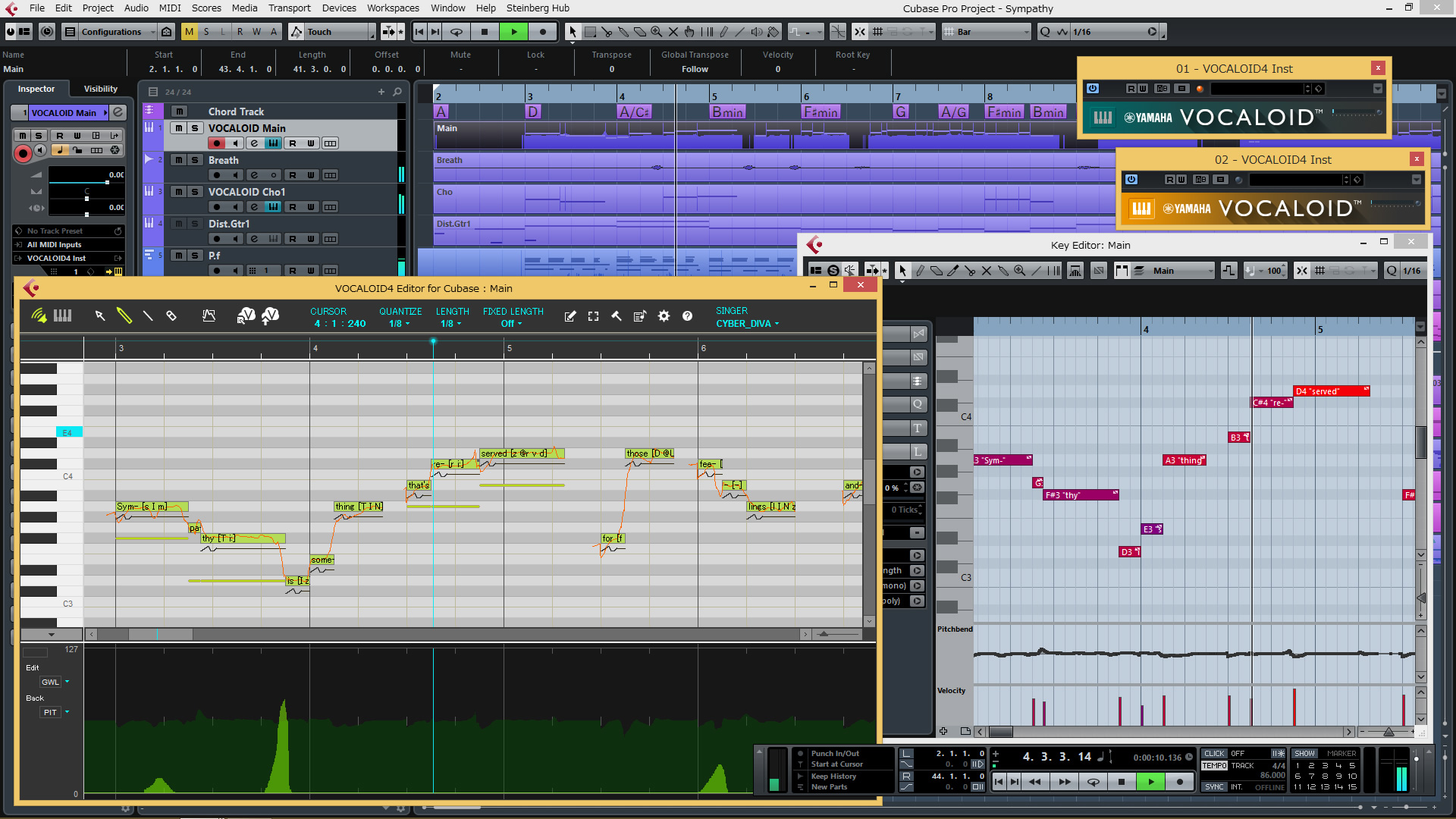
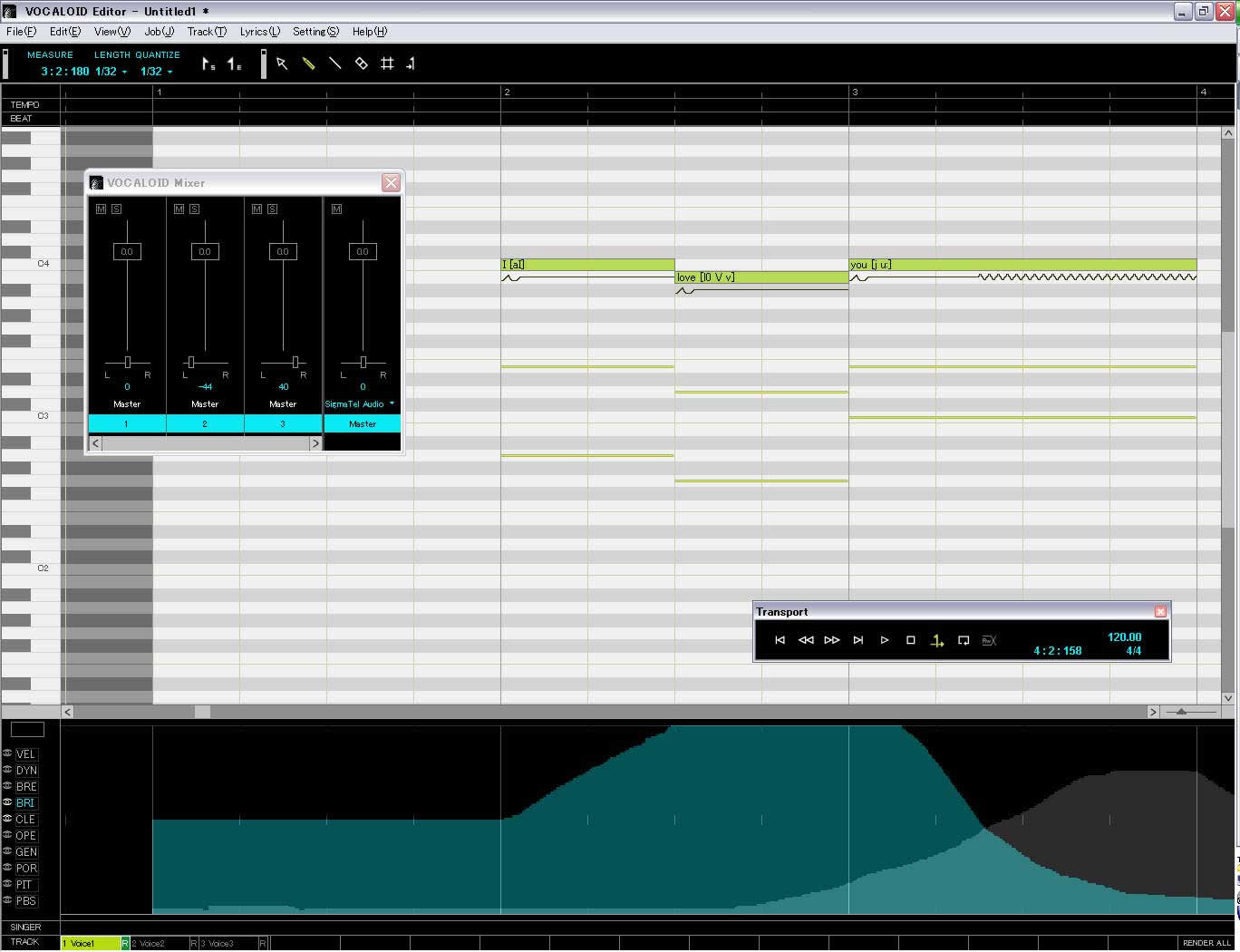
Vocaloid itself consists of a score editor, which does the scale, song word, and expression processing; the Vocal Sound Generator, the engine that synthesizes the vocals; and libraries (each comprised of a pronunciation database and a timbre database) for each vocal. New vocal libraries can be created by recording real voices pronouncing basic vocabulary and reproducing variation effects (such as vibrato) according to templates.
With this system, the "Singing articulations" (Collections of voice snippets, such as phrases, and snippets of vocal expression variations like vibrato) needed to reproduce vocals are collected from custom produced recordings of accomplished singers and put into a database after conversion into frequency domains.
To synthesize vocal parts, the system retrieves data consisting of voice snippets, applies pitch conversion, and splices and shapes them to form the words of a song as input by the user. As this processing is done at the frequency domain level, pitch can be easily changed according to the specified melody, and the voice snippets can be spliced in a way that reproduces smooth flowing words.
Vocaloid itself consists of a score editor, which does the scale, song word, and expression processing; the Vocal Sound Generator, the engine that synthesizes the vocals; and libraries (each comprised of a pronunciation database and a timbre database) for each vocal. New vocal libraries can be created by recording real voices pronouncing basic vocabulary and reproducing variation effects (such as vibrato) according to templates.
Related news... (last 5)
| Zero-G announces Vocaloid Prima to ship this month | 10th January 2008 |
| PowerFX releases Sweet Ann (Vocaloid 2) | 2nd July 2007 |
| Yamaha announces Vocaloid2 / Zero-G announces PRIMA | 7th February 2007 |
| Yamaha updates Vocaloid to v1.1.2 | 27th February 2006 |
| Yamaha releases Vocaloid v1.1.1 | 14th September 2005 |
There are 17 related news items in total, click here to see them all.