


Favorite amp sim and why
-
brando-calrissian brando-calrissian https://www.kvraudio.com/forum/memberlist.php?mode=viewprofile&u=231345
- KVRer
- 13 posts since 7 May, 2010
Being a musician who lives in an apartment, I must say amp sims are a must-have for me. One of my favorites is Guitar Rig. I currently have v3, though v4 is on my to-get list.
-
- KVRist
- 391 posts since 28 Jul, 2003
actually for pure PHATNESS you need to turn it all the way up to *11*. Because if you're on 10 on your guitar, on 10 on your stomps, on 10 on your amp, where do you go from there? I mean when you need this extra push over the cliff, to move more air than the standard bloke playing his digital rack mount amp sim, a *real* amp that goes to 11 is really what makes the difference.
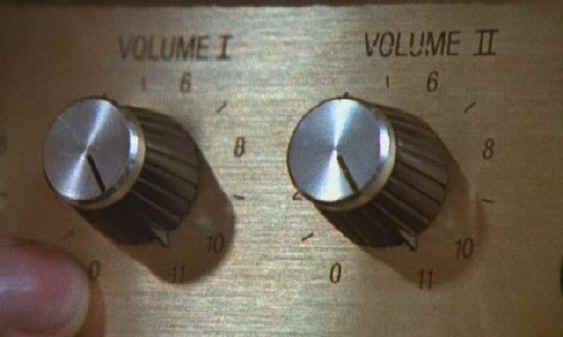
(sorry strange dogs this was too tempting!)
(sorry strange dogs this was too tempting!)
-
- KVRAF
- 4222 posts since 23 Feb, 2004 from Tucson Arizona USA
Audiences don't care what noise is bouncing off their drunken ears, and this has nothing to do with it.Funksploitation wrote:One thing certain to all you guitarists worrying about cab tone etc - your audiences CANNOT TELL THE DIFFERENCE, I promise. You are splitting microscopic hairs, quit yer bitchin and enjoy.
The amp is part of the instrument.
Filling a 500 seat club with a guitar is very easy, all you need is a DeLuxe Reverb or whatever. A mild amount of pedal, if that, gives you an ideal tone and it's blood simple to achieve.
Filling the same 500 seat club using an amp sim really becomes annoyingly difficult. Are you doing DI? Some guitar styles allow you do to that, but for many, it's not an option BECAUSE THE AMP IS PART OF THE INSTRUMENT. Without the effects you get from having the amp right there, turned up loud, and isolated by distance from everything else, you're playing a different instrument.
Recording and rehearsal have completely different considerations from playing for an audience, and there are as many different guitar styles as there are guitarists.
-
- KVRist
- 92 posts since 8 Sep, 2007
LOL, people used to say the same thing about 16 bit CD's. You're wrong. This stuff is in its infancy and already it sounds real close done properly. Give it some time... There are still some minor issues with regards to how things change over time, and dynamics... but with each generation things are getting better.strangedogs wrote:I still contend EVEN THOUGH I'M LOVIN' THESE AMP SIMS - nothing will ever sound as PHAT as a good tube amp cranked up to 10. There's no way they can duplicate that with 1's and 0's...
Personally, I find AT3 to be somewhat static and lacking in dynamic evolution. But then that's just to my ears. Some of the newer stuff like Vandal, Revalver and Studio Devil Pro are doing better in this regard.
In a mix, properly done, even tube amp officiandos have failed the blind test in my studio. I have setup that allows me to send the amp sound back out to guitar cabs, and to easily switch back and forth. I have recorded the amp sim while letting the guitarist monitor through the amp cab. I have successfully fooled these tube amp die-hards numerous times.
Most of what tube amp die-hards are hearing is psychological. 1,0's... its all the same ultimately. The difference is the punch you 'feel' coming from multiple 12's in the room. The chunga chunga effect. As for the sound that's recorded that's a different story.
Micing an amp and then trying to overdub or add tracks a month later is a nightmare, no matter how well documented. Tubes wear, cause noise etc, even if the knobs are all in the right place. Then their is these issue of placement, room parameters, on and on. With sims, I can recreate whatever is needed with one click, even a year later, and even with different guitars in many cases. For recording, the element of recall alone is extremely useful.
It still depends on your given situation. Admittedly, live work is still not quite there. But I expect that sooner rather than later you will see more folks warming to the idea of using a programmable control surface like the Novation zeros for physical control over amp sims. The advantages of recall, multiple instancing, etc are just too appealing.
What's more, there is no need for amp techs in case of failure. A redundant hard drive or even computer can service 100's of different amps and fx's, far more reliable than the real world counterparts which require special parts and trained service techs charging in some cases as much as a unit just for a simple repair.
Case in point, I once I had an expensive Kurzweil fail in the middle of a project. Long story short, due to parts availability issues overseas the unit was down for several months rendering many hundreds of hours of work naught. After that experience I moved entirely to softsynth approach and have never needed a tech or parts replacement since. Simple hard drive redundancy/backup assures me virtually 100% uptime no matter what. I look forward to the day when the same can be said for all my guitar stuff. This is right around the corner.
It all ends up 1's and 0's in the end anyway. With a little more development I think you will see the line blur even more.
-
- KVRist
- 44 posts since 25 Aug, 2005
I wonder too how much of the missing effect is because most amp sims are being run through studio monitors. Monitors are engineered to be transparent and clean, and they simply have none of those dirty pavement-dragging balls that a driven 15" quad speaker cabinet has. Playing my bass through headphones or clean monitors, it's easy to pinpoint its place in a mix, but it doesn't have the same physical presence in the room -- nor should it.
Some people feel "if the mix is right, you don't need a subwoofer." This is probably true strictly speaking. But some of those subsonic body-cavity-felt frequencies are utterly impossible to present with nearfields; it's simply not what they're designed to do.
Some people feel "if the mix is right, you don't need a subwoofer." This is probably true strictly speaking. But some of those subsonic body-cavity-felt frequencies are utterly impossible to present with nearfields; it's simply not what they're designed to do.
!!
-
- Banned
- 1021 posts since 31 Mar, 2009
You're kind of missing the point of amp sims though. They are designed to sound good on studio monitors/hifi speakers, not through guitar cabs. That is why they use cabinet sims. (unless it has a bypassable cab sim then you are supposed to run it through either an external sim, or an guitar cab). They are designed to sound good on studio monitors just like a good guitar tone on a record will sound good on studio monitors. They are meant to capture the sound of a recorded amp. You are never going to get a studio monitor to deliver the kind of resonance/feedback and tonal qualities and just pure 'roar' that a guitar cab will have, they are two different animals.ratatosk wrote:I wonder too how much of the missing effect is because most amp sims are being run through studio monitors. Monitors are engineered to be transparent and clean, and they simply have none of those dirty pavement-dragging balls that a driven 15" quad speaker cabinet has.
What they should be able to do though, is sound like a roaring amp that has been mic'd up well.
-

- KVRAF
- 3878 posts since 28 Jun, 2009 from Wherever I lay my hat
Well said.futurefields wrote: What they should be able to do though, is sound like a roaring amp that has been mic'd up well.
-

- KVRAF
- 2342 posts since 3 Sep, 2005 from Outer Bongolia
Yes, exactly!! All the cab resonance and stress, dynamics, etc has to be modeled to even be present and those effects are not given the level of detail they need yet, often ignored altogether in many sims.ariston wrote:Well said.futurefields wrote: What they should be able to do though, is sound like a roaring amp that has been mic'd up well.
-
- KVRist
- 44 posts since 25 Aug, 2005
I actually agree with you completely! :) What I meant to emphasize is that a lot of guitarists are comparing apples to oranges when auditioning amp sims -- they're playing their amp through their cab, and then playing the sim through their monitors or headphones, and wondering why the sim lacks "punch." Of course it will lack that kind of huge presence in the room, just as a sampled piano will not compare to a live grand, unless it's played through appropriately designed speakers built for the purpose.futurefields wrote:You're kind of missing the point of amp sims though. They are designed to sound good on studio monitors/hifi speakers, not through guitar cabs. That is why they use cabinet sims.ratatosk wrote:I wonder too how much of the missing effect is because most amp sims are being run through studio monitors. Monitors are engineered to be transparent and clean, and they simply have none of those dirty pavement-dragging balls that a driven 15" quad speaker cabinet has.
!!
-
- KVRist
- 387 posts since 30 Mar, 2006 from North Florida
I only use headphones now with all my sims as there's no computer speakers I have that give me the rich sound that my cans do. I'm too poor right now to buy decent monitors so headphones will have to do...
Now the proud owner of an avid 11 Rack, Running Pro Tools 10.3.3 - for me it's heaven!
 )
)-

- KVRAF
- 20931 posts since 22 Nov, 2000 from Southern California
Try the D16 Redoptor, it has a very dynamic feel (maybe too dynamic?) and is pretty good for cutting lead tones.Steviebone wrote:Personally, I find AT3 to be somewhat static and lacking in dynamic evolution.
The speaker is 30-40% of the tone even in a real amp. Personally, the monitoring is the main reason I complain about about imperfect amp sims since so much can be done in the mix. That said, I can generally get a miked amp to sound good in the mix more quickly.I have recorded the amp sim while letting the guitarist monitor through the amp cab.
Sure! It's not as if an SM57 pushed directly against a speaker sounds like an amp in a room.Most of what tube amp die-hards are hearing is psychological. 1,0's... its all the same ultimately. The difference is the punch you 'feel' coming from multiple 12's in the room. The chunga chunga effect. As for the sound that's recorded that's a different story.
Great points! Then again, if we're only talking overdubs, nailing the exact tone isn't that important and probably even has less dimensionality compared to mixing in some variety. Also, with an isolation cab like the Jet City, Randall, or Demeter, the biggest variables are taken away.Micing an amp and then trying to overdub or add tracks a month later is a nightmare, no matter how well documented. Tubes wear, cause noise etc, even if the knobs are all in the right place.
I almost hate to admit how much this point resonates...What's more, there is no need for amp techs in case of failure.
