



Great! ... aaand i can't just give a one sentence response to that.el-bo (formerly ebow) wrote:and my mum has zero issues with it on her ipad mini


Maybe your mum is the average populous; the median. Did she ever use an iPad prior to iOS 7-style design? One of the ways that people fail to recognize loss of a thing is by never having had something better to compare against. There was a thread on GearSlutz about Logic X being slow and everyone that said they had no problems with it had never used Logic 9, never gotten used to Logic 9's speed, and therefore had nothing to compare against. If iOS 6 design suddenly appeared as a new version, with all the other new features intact, i've no doubt there would be plenty of people that would feel "this is so much better" (granted, many might also just think that because it's a change; see the Hawthorne effect).
Not everyone has a mum with issues like mine. She can frustrate the hell out of me, but it's not her fault. Anyway, she was just an example of a group. i don't suggest she's the median. But such people exist and i'm all for making things accessible to as many people as possible. Some design serves this ethos (iOS 6 and under), and some design shits on this ethos (iOS 7+).
The whole complaint about "dumbing down" a computer generally reeks of elitism to me. Not having computer experience (or giving a toss about them) doesn't make people dumb. This is also relevant for visual design: if percentages of the populous find low contrast and thin lines to be a problem, why utilize design that is rife with it?? The more people you accommodate, the better (and the more product you sell; i wonder if there's any correlation between the so-called "decrease in iPad sales" and iOS 7...).
Presuming that you're tech-oriented... It's incredibly likely that you and i are also not the median, so appeasing tech people only is a bad idea for the overall goal of making technology accessible to as many people as possible.
 i fully admit to aesthetic bias. My taste finds iOS 7+ to be incredibly ugly. But that makes the functional parts of the design changes all the more angering to me. i feel we (certainly i) have lost something important, and been handed ugliness on top of it to rub salt in the wound. i do take it personally If the style was to my tastes and the GUI still lost practical functionality, i'd be much more forgiving of the changes. i used to customize the hell out of my Windows systems, for aesthetics, but i found that it just invited problems (why give us customization features and options if they are going to break things??).
trimph wrote:Some of you have perfect 20/20 vision, but, not all of us do.
So, for ME, clean and "flat" GUI's are more useful than the other GUI's.
i find this of great interest. If you could share more about this, how different designs feel to you with your visual acuity, i'd be quite interested to hear about it. i think there's a lot to be said for decluttering and i think that's a worthwhile goal.
i have near-sightedness. i find retina displays to be a thing of great advancement for technology and human beings because text is that one extra step closer to being sharp. i am very spoiled by my iPhone and typing on the Mac i'm on now feels like strain. i've lived my life squinting at things because eye correction causes me migraines (so i reject eye correction as an all day affair; computer glasses right now for this typing are bugging me). Leaning and squinting cause me discomfort too. No win!! When people say "retina is just a stupid marketing gimmick" i take great exception as both a photographer and a person with shitty eyes. i've covered that on these pages elsewhere. i also seem to be have issues with contrast, but i'm not sure (i find bright pages and dark text to be uncomfortable, so i used to love dark backgrounds with bright text, but now that is also starting to bug me; but the super low contrast in brightness and color selection in Apple's stuff makes me squint and lean in to the screen... plus, notice Alchemy in Logic X is NOT at retina resolution; all this fine line stuff looks much better with high-PPI but they're not even doing that there). i'm about to become 40, but it's not just age that is bugging my eyes; i've worn glasses since age 12 or so.
Back to the how and why...
These aesthetic and functional changes have been slowly working their way into the computer world, probably prompted by the Internet (a design "language" that evolved more as a workaround for a technological inability to DO better design, as well as the whole point of hyper text for interconnected information), which bled into computers with Windows XP (functionless whitespace, hyperlinks as controls, and verbose text galore on a GUI!). The restriction of bandwidth and memory, as well as the focus on hypertext, is what made the web what it was. This then infected the OS, because "the web is cool!" Hyperlinks do not belong in a UI. The more text you have, the more problems you create for internationalization and UI sizing, and the slower you function because of reading (though text conveys MORE meaning, it is slower to convey it... like my posts). Computer software keeps getting more complex. More and more features, sometimes to please users asking for them, but more often serving to be a bullet point to sell that product to the same person multiple times. Instead of reducing complexity, along comes flat design: it's "new", and it appears to reduce complexity, but actually doesn't. It just removes clarity.
whyterabbyt wrote:If I dont like it, its inherently bad.
That's way too simplified and it's not my angle here, though i do have a serious dislike for the flat fad aesthetically (obviously). But it doesn't have to be so bad. More on that in a bit. First: Learning about UI design from the actual pros who do the research, and working with average people on a regular basis to help them with technology, made this stuff very visible to me. For people who like flat design, and have no visual acuity issues, and haven't studied human-machine interfacing (hobby or formal), the functional losses are probably far less notable (or invisible). "Hey, he's telling me he knows more than I do! What an elitist!" Well, yes and no. Yes, i have some specialized info in my head that others don't. No, i'm not an elitist. i rant because my goal is to push technology forward for ALL people.
...and yes, because flat design looks like shit to me, in most cases... probably because of all the untrained people put to task on the work, by companies that don't value design enough to hire workers who put in the time on the research of human interface design, and by perfectly well meaning do-it-yourselfers that are taking my rants against this style personally (i have no illusion of the many realms where i am far surpassed by experts in their fields, so the insecurity annoys me).
whyterabbyt wrote:Im not a 'fan' of flat design, but it doesnt actually bother me in any way. Neither does the full-on photorealistic stuff. Hence, Ive always wondered why people spend so much time bitching about the pictures of UI design elements (the 'G' in 'GUI'), and not bad interaction design (the slightly more important 'UI' part of GUI).
Good design is about the 'graphical user interface' not the 'graphical pretty pictures.' Personally, i dont really care if its flat, skeumorphic, or sodding pornographic, if it works sensibly its useable.
If it doesnt work sensibly, ie , it doesnt allow one to do what's required as easily and intuitively as possible, no change in the visual look ever solves that.
No argument. My aesthetics preferences make me way more ranty about the functionality stuff, so i seem unhinged over something i feel i have serious merit to argue about. The functional part is the part i should focus on, but i'm an emotional sort of human. i say "it looks like shit". But then when i have to explain myself clearly, posts like THIS result.
Anyway, i spent time trying to convince myself that i could get used to iOS 7 because i wanted, or even needed, an iPad Air (a little phone is just not enough for a full day's worth of internetting and reading). i couldn't get past the functionality problems. i plan to get an iPad Pro, and i want that even more (with the Pencil, to try to use it like a Wacom Cintique), and i still believe the functionality beats the competition, so i'm going to have to deal with it eventually. ...But that doesn't mean i will go quietly and not bash Apple for squandering 20 years of UI research.trimph wrote:That is what I also think. The whole cheap thing is just a classic argument used by anyone who is more of a graphics aesthete.
i've tried to illustrate (probably badly) where i find cheapness contributing to it, but i don't mean to suggest it is the sole cause, or that something cheap is inherently inferior for being inexpensive. i save money to buy things that are better than the least expensive, because there is still some level of quality change going on and i prefer quality items (and it is getting harder to have such things as the years of "do more with less" and other corporate profit-by-belt-tightening-of-everyone-but-executives and cheapening of products that's going on in this economy).
trimph wrote:Or, thinks they are the master subject, who knows...
Is there no room for people to actually have some expertise on things that others don't value? Look at this entire website. Who cares about all this "analog vs digital" nonsense anyway??!
 Why is there distaste for aesthetes? Maybe i'm taking that personally when it's not meant to be personal, but i see that a lot. Look at music: "Your music sucks and mine is better!" Oh my, the human condition.
So this is where the anti-intellectualism comes in, from how i see things. I'm extra weirded out by it when i see it demonstrated by people who themselves are full of specialized technical knowledge (musicians, computer techs, carpenters, whatever) that they might express strong opinions about, how things should and should not be done, and why (i'm speaking of no specific individual here, just pointing out a collective group thing and how things are talked about). Someone that has done the reading of the decades of research and actually spent a lot of time observing [insert relevant subject here], or better, doing the work of [profession] makes a strong statement about how trends are defeating the best practices in [same category/profession], and then gets told off by other people. Why? For talking about specialized knowledge the telling-offers don't have? They're angry being exposed to things they don't care about and are perfectly happy not caring about? What is it exactly? Scroll past it if it offends you (or is it incapacitating your work like the flat design fad is incapacitating my web devices? hah hah).
GUI design is way more than aesthetics. It's not arbitrary. Without the specialized info in mind, it might just seem arbitrary (and "who's this arrogant prick telling me that the thing i find aesthetically pleasing is shit??!" - i get it). Is Alchemy's new UI going to screw mothers across the lands? No. It DOES contribute to a culture of design acceptability, though.
Is all flat bad? Nope. i got used to the flat buttons that pop up with beveled surfaces years ago. Does it look better? Yes. But there's still way more going on in that motif than the simple clip art vector-style lines people are proffering as symbols right now in a lot of flat design. Flat could work if it wasn't uncompromizingly flat. i suspect the "responsive design" concept has contributed to to the fad because flat color and right angled geometry is much easier to resize and move around than textured bitmaps and depth cued objects. The part of "responsiveness" missing, however, is the way it doesn't respond to the user's needs: "STOP LOADING AND SHOW ME THE CONTENT I CAME HERE FOR!!" and "Why wont it scroll??!!" and "STOP jumping around so I can READ!" i think the "responsive design" concept has been a failure because it focuses on doing as little customization as possible and supporting everything with one "code base". How many civilizations must rise and fall before human beings collectively remember that one size does not fit all?
Even with the ugly stick beating that iOS took, it's still much more effective, functionally, than the Android devices that have been in my hands so far. i'm not saying it is unusable (though my hour long demo of iOS 7 at an Apple Store stopped me buying an iPad Air).
Sorry for the long post, any typos, or misquoting/misinterpretation (and argumentativeness) in this mess.
Oh... hey... Alchemy is available in Logic now!

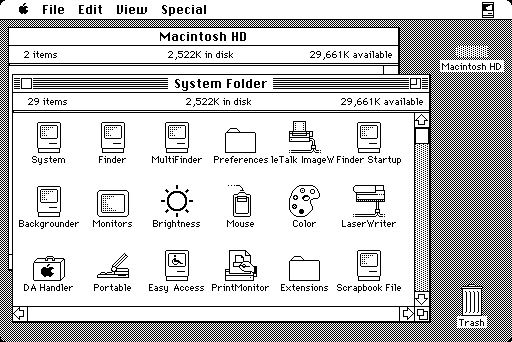


 Aside from curiosity about your experience and a desire to understand the consequences in GUI design needs, I'm also thinking about what's in store for me... getting ideas about what it might be like.
