

 ).
).Every time I export an audiomixdown in cubase it sounds crap
-
- KVRAF
- 2323 posts since 4 Mar, 2004 from Portugal (Lagos)
I don't have Cubase, but Muzys. Mixdowns sounded like crap at 32 bits too, but never had a problem since I do it at 16 bits (44.1, 16 bits ).
).Eventually something intelligent will appear written here. Watch this space.
-
- KVRAF
- 2608 posts since 26 Aug, 2002 from here
i don't and i don'tM'Snah........(aka HansM) wrote:What makes you think you can convince davor? and more important: why would you care?ericj23 wrote:christ on a bike - what is it i have to read more clearly ?
the problem here has nothing to do with perceiving sound quality OK - nothing - what the problem is you have not understood this
i have tried being nice - now its time to start getting getting nasty
go and read a book
my dinner is cooking - so im sitting here for about another 10 minutes with nothing better to do
sad ain't it

I believe every thread should devolve into character attacks and witch-burning. It really helps the discussion.
-
- KVRAF
- 6519 posts since 13 Mar, 2002 from UK
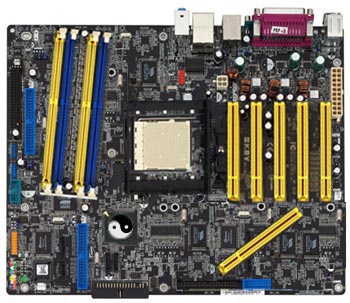
Congratulations davor. A worthy winner of the coveted feng shui motherboard award.
-
- KVRist
- 333 posts since 25 May, 2004
You are not comparing two mixdowns, pal. You're comparing a mixdown version with the version whic has not been mixed down, but is a multitrack project in your sequencer. How can you compare that other than with your ears, Mr. Genius.ericj23 wrote:davor wrote:ericj23 wrote:davor wrote:ericj23 wrote:
how do you explain my test of doig the mixdowns and reversing the phase and getting nothing left ?
if you cant go away - you have nothing to add to this debate
-
- KVRist
- 333 posts since 25 May, 2004
It's you who are either a moron, or cannot read. They played back the SAME BIT IDENTICAL MATERIAL THROUGH THE SAME DAC, with the same power cord, and the same word clock, and it sounded DIFFERENT. YOu should read something before you venture into commenting on it, and as a consequence not knowing what you're talking about.ericj23 wrote:i am not contradicting myself - your just a morondavor wrote:ericj23 wrote:davor wrote:Yes, I, and all the successful and sought after sound and mastering engineers who hear the difference, they all need their ears examined. And you, a would be amateur techno home quasi musician, you are the one to be taken as a judge. Sound is more than zeroes and ones, maybe after some 20 more years, you will come to be able to hear that. meanwhile I refer you to:ericj23 wrote:oops you and your friend - bloody typo
- this is simple maths 1+1 = 2 every time
if you hear a difference you need your ears examined
http://www.rogernichols.com/EQ/EQ_2000_02.html
http://nautiluspro.com/power_cords.htm
I'll quote Roger Nichols ( engineer for Steely Dan, and many others ) again ;
"Just remember, all of the expensive test gear said the pressings were perfect. The quality control people at the record company said we were crazy, the test equipment said the pressings were perfect. When asked if they listened to the CD pressing they said "No, do we need to?" Still the best piece of test gear is your ears."
He had similar problem when Steely Dan test cd didn't sound identical to the pressed one, although they were bit identical, and should have sounded identical according to the expensive test gear that the people like you used in the process of manufacturing. According to your mediocre ears, he would also be mildly insane.
from the same article
"Somehow the problem was in either the glass masters or the plating process afterwards that makes the stampers that press the CDs"
did you read those words - it was a fault with the glass mastering machine - nothing to do with digital generally
you are wrong OK
as for the cables article - yes a power supply improvement can reduce jitter - but that alas does not in any way affect how a computer adds up numbers
so the cord might reduce the noise in the output from your soundcard - but it will not in any way affect the mix within the box - becasue that is all time stamped maths
you really need to go and learn how computers work OK
No, now you're contradicting yourself pal. You sad that it's simple maths. If somethnig is mathematically bit identical, then it should sound identical, no? It' s all mather of maths. People like you called Mr nichols crazy, just like you call me insane, because mathematically there should not have been DIFFERENCE in sound, and all the test gear showed that there is no difference, it's only Mr. nichols ears, and the ears of his associates that spotted the difference, aALTHOUGH MATEMATHICALLY SPEAKING there should not have been any difference. Get it??
As regards the power cables, the difference was there also on playback. How do you explain that. Again the same zeroes and ones that MATHEMATICALLY speaking should sound the same, sounded differend upon the change of power cable. Get it?
"If somethnig is mathematically bit identical, then it should sound identical, no? " - well if played through differnt DAC's or the same one with a more efficient timing clock or a better power supply - NO
even though it is bit identical
the article clearly states the error was in the pressing machine - OK - nothing to do with maths
now this little debate is about the digital addition inside the computer - it has nothing to do with the DAC in this case
the reason the cables makes a difference on playback is that DAC used in your computer are outside the box they are a seperate digital device to your computers timestamped internal computations
-
- KVRAF
- 2608 posts since 26 Aug, 2002 from here
actually i am comparing a mixdown with a mixdowndavor wrote:ericj23 wrote:davor wrote:ericj23 wrote:davor wrote:You are not comparing two mixdowns, pal. You're comparing a mixdown version with the version whic has not been mixed down, but is a multitrack project in your sequencer. How can you compare that other than with your ears, Mr. Genius.ericj23 wrote:
how do you explain my test of doig the mixdowns and reversing the phase and getting nothing left ?
if you cant go away - you have nothing to add to this debate
didnt you notice that both files were mixdowns - the second one was a mixdown of a mixdown
sorry wrong, mr genius
I believe every thread should devolve into character attacks and witch-burning. It really helps the discussion.
-
- KVRAF
- 2608 posts since 26 Aug, 2002 from here
give me a direct link to the article and I will explain to you where your wrong - do it quickly tho as I am away to get my eatsdavor wrote:It's you who are either a moron, or cannot read. They played back the SAME BIT IDENTICAL MATERIAL THROUGH THE SAME DAC, with the same power cord, and the same word clock, and it sounded DIFFERENT. YOu should read something before you venture into commenting on it, and as a consequence not knowing what you're talking about.ericj23 wrote:i am not contradicting myself - your just a morondavor wrote:ericj23 wrote:davor wrote:Yes, I, and all the successful and sought after sound and mastering engineers who hear the difference, they all need their ears examined. And you, a would be amateur techno home quasi musician, you are the one to be taken as a judge. Sound is more than zeroes and ones, maybe after some 20 more years, you will come to be able to hear that. meanwhile I refer you to:ericj23 wrote:oops you and your friend - bloody typo
- this is simple maths 1+1 = 2 every time
if you hear a difference you need your ears examined
http://www.rogernichols.com/EQ/EQ_2000_02.html
http://nautiluspro.com/power_cords.htm
I'll quote Roger Nichols ( engineer for Steely Dan, and many others ) again ;
"Just remember, all of the expensive test gear said the pressings were perfect. The quality control people at the record company said we were crazy, the test equipment said the pressings were perfect. When asked if they listened to the CD pressing they said "No, do we need to?" Still the best piece of test gear is your ears."
He had similar problem when Steely Dan test cd didn't sound identical to the pressed one, although they were bit identical, and should have sounded identical according to the expensive test gear that the people like you used in the process of manufacturing. According to your mediocre ears, he would also be mildly insane.
from the same article
"Somehow the problem was in either the glass masters or the plating process afterwards that makes the stampers that press the CDs"
did you read those words - it was a fault with the glass mastering machine - nothing to do with digital generally
you are wrong OK
as for the cables article - yes a power supply improvement can reduce jitter - but that alas does not in any way affect how a computer adds up numbers
so the cord might reduce the noise in the output from your soundcard - but it will not in any way affect the mix within the box - becasue that is all time stamped maths
you really need to go and learn how computers work OK
No, now you're contradicting yourself pal. You sad that it's simple maths. If somethnig is mathematically bit identical, then it should sound identical, no? It' s all mather of maths. People like you called Mr nichols crazy, just like you call me insane, because mathematically there should not have been DIFFERENCE in sound, and all the test gear showed that there is no difference, it's only Mr. nichols ears, and the ears of his associates that spotted the difference, aALTHOUGH MATEMATHICALLY SPEAKING there should not have been any difference. Get it??
As regards the power cables, the difference was there also on playback. How do you explain that. Again the same zeroes and ones that MATHEMATICALLY speaking should sound the same, sounded differend upon the change of power cable. Get it?
"If somethnig is mathematically bit identical, then it should sound identical, no? " - well if played through differnt DAC's or the same one with a more efficient timing clock or a better power supply - NO
even though it is bit identical
the article clearly states the error was in the pressing machine - OK - nothing to do with maths
now this little debate is about the digital addition inside the computer - it has nothing to do with the DAC in this case
the reason the cables makes a difference on playback is that DAC used in your computer are outside the box they are a seperate digital device to your computers timestamped internal computations
I believe every thread should devolve into character attacks and witch-burning. It really helps the discussion.
-
- KVRAF
- 6740 posts since 25 Mar, 2002 from sheffield, england
You are BOTH a moron AND you have no f**king ears:davor wrote: They played back the SAME BIT IDENTICAL MATERIAL THROUGH THE SAME DAC, with the same power cord, and the same word clock, and it sounded DIFFERENT.
Not only have you failed to understand that two files that cancel when one is inverted are identical, but you have also managed to convince yourself that you can hear a difference..
Its actually pretty funny..
-
- KVRist
- 333 posts since 25 May, 2004
ericj23 wrote:davor wrote:ericj23 wrote:davor wrote:ericj23 wrote:actually i am comparing a mixdown with a mixdowndavor wrote: You are not comparing two mixdowns, pal. You're comparing a mixdown version with the version whic has not been mixed down, but is a multitrack project in your sequencer. How can you compare that other than with your ears, Mr. Genius.
didnt you notice that both files were mixdowns - the second one was a mixdown of a mixdown
sorry wrong, mr genius
It's not the same Mr Genius. You're exporting the stereo mixdown, and compare it to another stereo mixdown. This is not a comparison of summing up. What are you exactly summing up if you're exporting a single stereo file?
-
- KVRAF
- 2608 posts since 26 Aug, 2002 from here
i actually wonder if english isnt his native language
i would forgive all then because it is easy to misunderstand the nuances of complex articles if it's not in your native tongue
either that or he/she is a moron
i would forgive all then because it is easy to misunderstand the nuances of complex articles if it's not in your native tongue
either that or he/she is a moron
I believe every thread should devolve into character attacks and witch-burning. It really helps the discussion.
-
- KVRist
- 333 posts since 25 May, 2004
OK, I am a moron, Roger Nichols is a moron, John Vestman is a moron, Bob Katz is a moron. We are all morons, an you Platinum ears, you are a genious. I just pity those who pay you for your "audio services" if there are such people, cause your ears are far from being platinum.platinumears wrote:You are BOTH a moron AND you have no f**king ears:davor wrote: They played back the SAME BIT IDENTICAL MATERIAL THROUGH THE SAME DAC, with the same power cord, and the same word clock, and it sounded DIFFERENT.
Not only have you failed to understand that two files that cancel when one is inverted are identical, but you have also managed to convince yourself that you can hear a difference..
Its actually pretty funny..
Last edited by davor on Sun Apr 24, 2005 6:43 pm, edited 1 time in total.
-
- KVRAF
- 2608 posts since 26 Aug, 2002 from here
OK
remember we are talking about an audio mixdown - not digital summing
the two things are different -
but no reference to an article - not frightened are you ?
ah didums - the little troll is so cute
anyway dinner is here so bye bye
remember we are talking about an audio mixdown - not digital summing
the two things are different -
but no reference to an article - not frightened are you ?
ah didums - the little troll is so cute
anyway dinner is here so bye bye
I believe every thread should devolve into character attacks and witch-burning. It really helps the discussion.
-
- KVRist
- 333 posts since 25 May, 2004
What is the difference. You are turning a multitrack project into a stereo file in both cases. The little genius is so ignorant, apart from that his hearing ability is challenged. When you're exporting a stereo file you're normally doing mastering, and not mixdown. Here is the link, you mathematical geek with a weak hearing abilityericj23 wrote:OK
remember we are talking about an audio mixdown - not digital summing
the two things are different -
but no reference to an article - not frightened are you ?
ah didums - the little troll is so cute
anyway dinner is here so bye bye

http://www.rogernichols.com/EQ/EQ_2000_02.html
Last edited by davor on Sun Apr 24, 2005 6:54 pm, edited 1 time in total.
-
- KVRist
- 339 posts since 9 May, 2001 from Greece
Equilibrium...
Did you manage to sort it out?
What plugins did you use in the master bus? Try disabling them all and do a test mixdown. Perhaps there is a plug-in misbehaving on certain bitdepth/frequency settings you're using for mixdown?
Also try doing a real-time export (and if you are doing so, try a non-real-time one) and see if that changes anything. This setting is found in the export dialog I think.
Please report back with your findings.
Did you manage to sort it out?
What plugins did you use in the master bus? Try disabling them all and do a test mixdown. Perhaps there is a plug-in misbehaving on certain bitdepth/frequency settings you're using for mixdown?
Also try doing a real-time export (and if you are doing so, try a non-real-time one) and see if that changes anything. This setting is found in the export dialog I think.
Please report back with your findings.