Building The Most Advanced DAW On The Planet

Configure and optimize you computer for Audio.
RELATED
PRODUCTS

Post

Ashe37 wrote:how did they solve the problem of latency on the GPU memory? that seems to be the universal excuse among plugin developers.
still testing GPU utilization along with CPU so i will report more in the future.
here is what is happening right now with GPUDirect
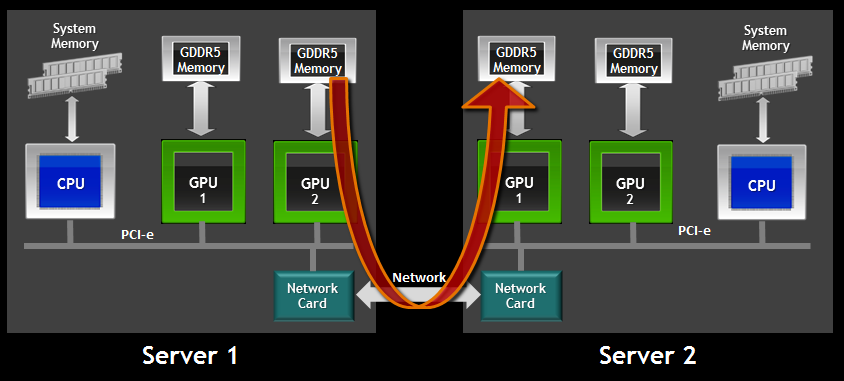
Image

Post

antonis2007 wrote:
Ashe37 wrote:how did they solve the problem of latency on the GPU memory? that seems to be the universal excuse among plugin developers.
still testing GPU utilization along with CPU so i will report more in the future.
here is what is happening right now with GPUDirect

Image
Basically the question of interest is: how many IPCs can you do per sample? That's the basic problem with many types of interesting audio processing.

Post

Maybe this thing has enough power to play chords with Spire. :)

Post

mystran wrote:
antonis2007 wrote:
Ashe37 wrote:how did they solve the problem of latency on the GPU memory? that seems to be the universal excuse among plugin developers.
still testing GPU utilization along with CPU so i will report more in the future.
here is what is happening right now with GPUDirect

Image
Basically the question of interest is: how many IPCs can you do per sample? That's the basic problem with many types of interesting audio processing.
finally. thank you for a true question that its spot on! Do want to elaborate on that a bit with me? do you want to give to people examples of other 'interesting audio processing systems' and how many IPCs can have to per sample. that will give us a big picture of what its out there and help me share with you some insight of the IPCs that a system with such a huge bandwidth and low latency interconnect can have !

Post

antonis2007 wrote:
mystran wrote:
antonis2007 wrote:
Ashe37 wrote:how did they solve the problem of latency on the GPU memory? that seems to be the universal excuse among plugin developers.
still testing GPU utilization along with CPU so i will report more in the future.
here is what is happening right now with GPUDirect

Image
Basically the question of interest is: how many IPCs can you do per sample? That's the basic problem with many types of interesting audio processing.
finally. thank you for a true question that its spot on! Do want to elaborate on that a bit with me? do you want to give to people examples of other 'interesting audio processing systems' and how many IPCs can have to per sample. that will give us a big picture of what its out there and help me share with you some insight of the IPCs that a system with such a huge bandwidth and low latency interconnect can have !
Well, you used "circuit simulation" as one example, and I think it illustrates the problem well. With small circuits (and relatively simple component models, so you probably don't want to do op-amps at transistor level, unless you only have one or two and they are critical for the sound) it's already a reality to use more or less standard methods, essentially doing transient simulation in real-time. Keep in mind that the two reasons why you'd want to do this in the first place are (often subtle) non-linear behavior and feedback interactions, so splitting things into sequential blocks kinda negates the whole point.

So with growing complexity the bottleneck generally becomes the matrix math involved. In theory such operations are very easy to do in parallel very efficiently, but if you're trying to do it in real-time then communication overhead quickly becomes an issue. If you'd like to take advantage of more computing power by raising the samplerates, then that makes things even worse.

So my question was essentially: can you do synchronization fast enough that you can split such processes (with plenty of global non-linear feedback, which you need to solve iteratively) to multiple nodes, or are you still stuck at whatever you can do on a single node and by cascading sequential processes?

Don't take me wrong, being able to dedicate complete CPU cores to individual plugins can let you do wonders.. but it only goes so far, unfortunately.

Post

Hmm. I work in Sunnyvale. Maybe I could beta test for them? ;)
Incomplete list of my gear: 1/8" audio input jack.

Post

mystran wrote:
antonis2007 wrote:
mystran wrote:
antonis2007 wrote:
Ashe37 wrote:how did they solve the problem of latency on the GPU memory? that seems to be the universal excuse among plugin developers.
still testing GPU utilization along with CPU so i will report more in the future.
here is what is happening right now with GPUDirect

Image
Basically the question of interest is: how many IPCs can you do per sample? That's the basic problem with many types of interesting audio processing.
finally. thank you for a true question that its spot on! Do want to elaborate on that a bit with me? do you want to give to people examples of other 'interesting audio processing systems' and how many IPCs can have to per sample. that will give us a big picture of what its out there and help me share with you some insight of the IPCs that a system with such a huge bandwidth and low latency interconnect can have !
Well, you used "circuit simulation" as one example, and I think it illustrates the problem well. With small circuits (and relatively simple component models, so you probably don't want to do op-amps at transistor level, unless you only have one or two and they are critical for the sound) it's already a reality to use more or less standard methods, essentially doing transient simulation in real-time. Keep in mind that the two reasons why you'd want to do this in the first place are (often subtle) non-linear behavior and feedback interactions, so splitting things into sequential blocks kinda negates the whole point.

So with growing complexity the bottleneck generally becomes the matrix math involved. In theory such operations are very easy to do in parallel very efficiently, but if you're trying to do it in real-time then communication overhead quickly becomes an issue. If you'd like to take advantage of more computing power by raising the samplerates, then that makes things even worse.

So my question was essentially: can you do synchronization fast enough that you can split such processes (with plenty of global non-linear feedback, which you need to solve iteratively) to multiple nodes, or are you still stuck at whatever you can do on a single node and by cascading sequential processes?

Don't take me wrong, being able to dedicate complete CPU cores to individual plugins can let you do wonders.. but it only goes so far, unfortunately.
Yes we can.

Post Reply

Return to “Computer Setup and System Configuration”