
Bazille - most misunderstood synth?

VST, AU, AAX, CLAP, etc. Plugin Virtual Instruments Discussion
Post Reply New Topic
RELATED
PRODUCTS
Bazille$149.00Buy

Post

ghettosynth wrote:
wagtunes wrote: Certainly no harder than something like Dune 2 or even Diva. The key is not looking at the whole screen at once and letting your eyes cross and glaze over.
I'm not sure that I agree that it's as easy as Diva and I don't think complexity of the synth proper is the issue either. The basic concept of subtractive synthesis is easy enough for people to grok, what is challenging about Bazille, and pretty much all FM/PD synths, is that the harmonics of the source material are not so trivial to define.

I think that fundamentally that's always going to limit the audience for programming of synths built around FM/PD oscillators.

Don't get me wrong, I'm sure that some tutorials will help some people. I just disagree that it can ever be as easy as a basic subtractive architecture.
Yes and no in the case of bazille. The synth is set up modular, which makes it "harder" (for some people) to comprehend how it works, what is possible and what not. But, although bazille uses PD/FM, the structure is the same as all other substractive synths, unlike VirtualCZ for instance.

If one is able to work out the modular (inner)workings of this synth, the rest is (almost) the same as any other modular synth (imho)
Post

I was getting into the programming when I first got it but would hit a point where patching one chord would silence the whole plugin. I would remove it to take a step back as I was sure I did something wrong but it wouldn't correct it... still silent until I re-initialized it ans started over. Like I said, was sure it was me not understanding something, but read later on it was a known bug that they did fix.

But I ended up buying a few sound sets between my first foibles and that bug fix and for the time being, simply rely on those.

For anyone using the Korg Legacy Cell, (polysix/ms-20) try using it as a guide for using Bazille/Diva in Blue Cat Patchwork. It's like Korg Cell on steroids.

Post

exmatproton wrote:
ghettosynth wrote:
wagtunes wrote: Certainly no harder than something like Dune 2 or even Diva. The key is not looking at the whole screen at once and letting your eyes cross and glaze over.
I'm not sure that I agree that it's as easy as Diva and I don't think complexity of the synth proper is the issue either. The basic concept of subtractive synthesis is easy enough for people to grok, what is challenging about Bazille, and pretty much all FM/PD synths, is that the harmonics of the source material are not so trivial to define.

I think that fundamentally that's always going to limit the audience for programming of synths built around FM/PD oscillators.

Don't get me wrong, I'm sure that some tutorials will help some people. I just disagree that it can ever be as easy as a basic subtractive architecture.
Yes and no in the case of bazille. The synth is set up modular, which makes it "harder" (for some people) to comprehend how it works, what is possible and what not. But, although bazille uses PD/FM, the structure is the same as all other substractive synths, unlike VirtualCZ for instance.

If one is able to work out the modular (inner)workings of this synth, the rest is (almost) the same as any other modular synth (imho)
Sure, the structure is the same as virtually all modern FM synths. Even FM8 is fundamentally a subtractive synth with complex oscillators. I disagree that it's the same as groking basic modular subtractive synthesis. In my experience FM, when elevated to the forefront as it is in Bazille, confuses many/most people.

I'd be willing to be that percentage-wise, the number of people who program FM8 or VirtualCZ is roughly similar to bazille. The modularity adds some complexity, however, I suspect that people are in general more comfortable with subtractive aspects of modular synths than they are with FM.

In fact, the vast majority of modular videos bears this out somewhat. People simply don't know what they're doing with FM. It's so easy to go from boring sin wave to shitty noise.

Post

We should like totally have an argument about whether some other people think Bazille is hard or not.

I mean why not, come on guys, it'll be fun!

Post

.jon wrote:We should like totally have an argument about whether some other people think Bazille is hard or not.

I mean why not, come on guys, it'll be fun!
Bullshit, we should have an argument about whether or not we should have an argument about whether some other people think Bazille is hard or not.

BTW: There's no argument to be had, history tells us that FM as a primary method of generating source sounds challenges people more than simply selecting from four or five predetermined spectral sources. The DX7 pretty much created the patch industry.

Post

ghettosynth wrote:
Sure, the structure is the same as virtually all modern FM synths. Even FM8 is fundamentally a subtractive synth with complex oscillators. I disagree that it's the same as groking basic modular subtractive synthesis. In my experience FM, when elevated to the forefront as it is in Bazille, confuses many/most people.
I am not saying that at all. To quote it;

"The synth is set up modular, which makes it "harder" (for some people) to comprehend how it works, what is possible and what not. But, although bazille uses PD/FM, the structure is the same as all other substractive synths, unlike VirtualCZ for instance."

By this, i mean that the signal path and the way one can change the sound, is similar to any other substractive synth. Unlike VirtualCZ, for instance. But also unlike FM8 (osc->filter->out *very easy*). These two synths work really different compared to a subtractive synth.

I find Bazille covering multiple grounds here (unlike VCZ andFM8); Subtractive, PD/FM synthesis by modular means. So, again, when you know how the modular part works, it is far more easy to work with Bazille, bacause it presents the same signal path (again, unlike VCZ and FM8 for instance).

*edit* Additionally:

Try to make a supersaw with bazille (4 osc's is a bit on the low side, i know). This is (albeit a bit scarse with 4 osc's) very good possible with Bazille, without even touching/using the PD/FM possibilities.
Try to do this (really subtractive) kind of sound with FM8 or VCZ.............that is what i mean with 'subtractive' (not saying it is impossible, but the way to get there is completely different compared to subtractive synthesis)
Last edited by exmatproton on Mon Dec 19, 2016 10:58 pm, edited 1 time in total.

Post

exmatproton wrote:
ghettosynth wrote:
Sure, the structure is the same as virtually all modern FM synths. Even FM8 is fundamentally a subtractive synth with complex oscillators. I disagree that it's the same as groking basic modular subtractive synthesis. In my experience FM, when elevated to the forefront as it is in Bazille, confuses many/most people.
I am not saying that at all. To quote it;

"The synth is set up modular, which makes it "harder" (for some people) to comprehend how it works, what is possible and what not. But, although bazille uses PD/FM, the structure is the same as all other substractive synths, unlike VirtualCZ for instance."
So is FM8, I'm not sure what you're trying to say. The subtlety of Bazille and FM8 isn't in the architecture.

I disagree with you. The issue is not understanding FM/PD which largely comes down to the variety in complexity of harmonic structure of the oscillators. History has taught us this, as I said, the DX7 created the patch industry.

Post

ghettosynth wrote:Bullshit, we should have an argument about whether or not we should have an argument about whether some other people think Bazille is hard or not.

BTW: There's no argument to be had, history tells us that FM as a primary method of generating source sounds challenges people more than simply selecting from four or five predetermined spectral sources. The DX7 pretty much created the patch industry.
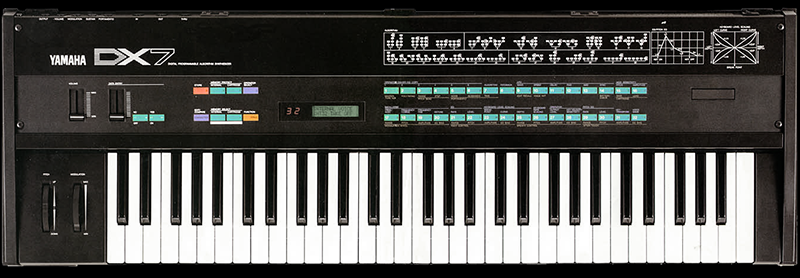
Gloves off! Look at this interface:

Image

DX7 must have been a real shard in the rear to program for people used to analog synths, the actual synthesis doesn't even matter with that control layout. Bazille is the opposite, one knob per function, with clearly visual connections between modules. And it's not even an FM synth ffs.

But yes, guess for people who think Repro is a masterfully implemented, expectation-exceeding ambitious labour of love, many things in life can be challenging.

Post

exmatproton wrote: Try to make a supersaw with bazille (4 osc's is a bit on the low side, i know). This is (albeit a bit scarse with 4 osc's) very good possible with Bazille, without even touching/using the PD/FM possibilities.
Try to do this (really subtractive) kind of sound with FM8 or VCZ.............that is what i mean with 'subtractive'
Yeah, um, we're not talking about the same thing. Once supersaws come into the conversation I have to leave before my eye-rolling starts affecting the local gravity field.

Post

ghettosynth wrote:
exmatproton wrote: Try to make a supersaw with bazille (4 osc's is a bit on the low side, i know). This is (albeit a bit scarse with 4 osc's) very good possible with Bazille, without even touching/using the PD/FM possibilities.
Try to do this (really subtractive) kind of sound with FM8 or VCZ.............that is what i mean with 'subtractive'
Yeah, um, we're not talking about the same thing. Once supersaws come into the conversation I have to leave before my eye-rolling starts affecting the local gravity field.
Hehehe///no, i am not stating that i want to do supersaws with bazille...i merely used it as an example. The lay-out makes it easy to make these kind of subtractive patches. Unlike the previous mentioned synths.

Post

<delete>
Last edited by egbert101 on Sun Feb 04, 2018 11:46 pm, edited 2 times in total.
<list your stupid gear here>

Post

.jon wrote:
ghettosynth wrote:Bullshit, we should have an argument about whether or not we should have an argument about whether some other people think Bazille is hard or not.

BTW: There's no argument to be had, history tells us that FM as a primary method of generating source sounds challenges people more than simply selecting from four or five predetermined spectral sources. The DX7 pretty much created the patch industry.
Gloves off! Look at this interface:

Image

DX7 must have been a real shard in the rear to program for people used to analog synths, the actual synthesis doesn't even matter with that control layout. Bazille is the opposite, one knob per function, with clearly visual connections between modules. And it's not even an FM synth ffs.

But yes, guess for people who think Repro is a masterfully implemented, expectation-exceeding ambitious labour of love, many things in life can be challenging.
IIRC, my dad used to program patches on a TX81Z. :P

Image
Nobody, Ever wrote:I have enough plugins.

Post

ghettosynth wrote:
So is FM8, I'm not sure what you're trying to say. The subtlety of Bazille and FM8 isn't in the architecture.

I disagree with you. The issue is not understanding FM/PD which largely comes down to the variety in complexity of harmonic structure of the oscillators. History has taught us this, as I said, the DX7 created the patch industry.
And that is where Bazille covers a bit more ground, because of it's lay-out. All i am saying, is that when one's able to understand Bazille's modular (inner)workings (which works the same as any other modular subtractive synth), one will quickly be able to make nice/good/whatever patches without even touch the PD/FM possibilities. That's all.

Post

.jon wrote:
ghettosynth wrote:Bullshit, we should have an argument about whether or not we should have an argument about whether some other people think Bazille is hard or not.

BTW: There's no argument to be had, history tells us that FM as a primary method of generating source sounds challenges people more than simply selecting from four or five predetermined spectral sources. The DX7 pretty much created the patch industry.
Gloves off! Look at this interface:

Image

DX7 must have been a real shard in the rear to program for people used to analog synths, the actual synthesis doesn't even matter with that control layout. Bazille is the opposite, one knob per function, with clearly visual connections between modules. And it's not even an FM synth ffs.
I've owned multiple DX/TX series synths, have you? I still have a TX802 and an SY77 but I cut my teeth on a DX-21. The DX stuff is dead easy to program, if, you understand FM. In fact the DX series are super fast because they are largely one button per function. Left hand on the data slider, right hand arming the buttons. There are few synths that are as complex that are faster. The TX and SY series are more powerful, but nowhere near as easy to program owing to the interface.

Now, if you don't understand FM, they are impossible to program.

The elimination of one knob per function was a cost saving measure. It was particularly important in the 80s where each knob meant a multiplexed line into an A2D converter. Many manufacturers followed suit with their analog synths. Pretty much every Roland from the JX-3 onward adopted the button plus data slider interface.

But you're just making my argument, FM is complex and to get good sounds out of it you have to pay close attention to how the parameters impact the harmonics of the source waveform. This was really important in the DX7 days, no filter. However, it's still where much of the character of modern FM synths comes from.

Post

ghettosynth wrote:
wagtunes wrote: Certainly no harder than something like Dune 2 or even Diva. The key is not looking at the whole screen at once and letting your eyes cross and glaze over.
I'm not sure that I agree that it's as easy as Diva and I don't think complexity of the synth proper is the issue either. The basic concept of subtractive synthesis is easy enough for people to grok, what is challenging about Bazille, and pretty much all FM/PD synths, is that the harmonics of the source material are not so trivial to define.

I think that fundamentally that's always going to limit the audience for programming of synths built around FM/PD oscillators.

Don't get me wrong, I'm sure that some tutorials will help some people. I just disagree that it can ever be as easy as a basic subtractive architecture.
Then if that's the case, you might as well all the non subtractive synths into the same "hard to program" category, which would include way too many synths to even start naming.

Post Reply

Return to “Instruments”