Malibuzios Psychoacoustic Compressor (beta, unlimited evaluation)

VST, AU, AAX, CLAP, etc. Plugin Virtual Effects Discussion
RELATED
PRODUCTS

Post

Image

Features:
  • The compressor’s internal units of measure are loudness units, which are consistent (± 1LU) with the ITU-R BS.1770 standard. Loudness units better approximate the human perception of loudness than traditional peak, RMS and VU levels.
  • Due to the adaptive nature of the underlying algorithms, the plugin does not provide independent attack and release settings. Instead, its dynamic character is configured through a range of pre-tuned profiles optimized towards high perceived responsiveness and transparency (mid transient sensitivity profile represents an attack time of approximately 1.5-3.5ms, whereas release velocity is highly variable and context-dependent).
  • Auto-compensation (also called automatic makeup gain) can assist in auditioning different settings by automatically maintaining the same overall perceived loudness as the original input signal. Optional "Suggest" mode visualizes the estimated compensation value through a secondary "ghost" handle on the compressor's output slider, without applying it.
  • The compressor stage is followed by a specialized limiter including true-peak metering (internally applying 4x oversampling). Aside from its -1 dBTP “hard” ceiling, the limiter also provides a configurable “soft” ceiling for allowing some amount of headroom to be smoothly maintained, which helps minimizing abrupt level drops when unexpected peaks are encountered.
  • Near-zero added latency: The compressor stage is zero latency. The limiter requires 5 samples for its internal oversampling (equivalent to about 0.1ms at 48kHz sampling rate).
  • User interface is functional in its design. Layout is optimized to maximize usability and feedback visibility. Every level setting is paired with one or more meters that directly monitor and assist its configuration. Meters are all linearly scaled and provide a large monitoring range and adequate adjustment headroom. Every stage can be individually toggled on and off and relevant metrics are provided to monitor the overall impact of the plugin.
  • Sidechain inputs are supported. When connected, their loudness is monitored through the compressor stage input level meter (titled "Threshold").
  • Expander mode can be toggled using the double-sided arrow icon on the top-right corner of the compressor panel, replacing the compressor stage with a fully-featured expander based on the same core algorithms.

The plugin allows for unlimited trial use, with no artificial limitations (no periodic silence or "beeps"). Use in published, broadcast or live material requires a certificate, which is a simple form of software license represented by a stamped PDF file. You can purchase a certificate at any price you choose (with a current minimum of 20 USD).

The website includes download links (currently only Windows VST3 64bit) as well as several audio demos:
https://malibuzios.com/psychoacoustic-compressor/
Last edited by malibuzios on Thu Mar 18, 2021 1:39 pm, edited 1 time in total.

Post

Looks interesting and very unrestricted trial terms. Thanks, will try it later!

Post

I’ve purchased a commercial licence. Sounds absolutely brilliant.
The only downside is that it isn’t able to produce a very compressed sound on a master channel that sounds already beefy, all I get is a subtle extra compression sound, but I like what I hear.

Post

Wow, very nice GUI !

Post

Looks nice but I'm intrigued about the description "Psychoacoustic" The term is usually used for methods of using sound to achieve changes in consciousness, such as binaural beats. What is it about this compressor that makes it psychoacoustic?

Post

Erisian wrote: Fri Mar 19, 2021 6:20 pm Looks nice but I'm intrigued about the description "Psychoacoustic" The term is usually used for methods of using sound to achieve changes in consciousness, such as binaural beats. What is it about this compressor that makes it psychoacoustic?
It's using a LUFS detector as opposed to peak or RMS, so I imagine that's why.
I don't know what to write here that won't be censored, as I can only speak in profanity.

Post

Burillo wrote: Fri Mar 19, 2021 7:45 pm
Erisian wrote: Fri Mar 19, 2021 6:20 pm Looks nice but I'm intrigued about the description "Psychoacoustic" The term is usually used for methods of using sound to achieve changes in consciousness, such as binaural beats. What is it about this compressor that makes it psychoacoustic?
It's using a LUFS detector as opposed to peak or RMS, so I imagine that's why.
I'll have to research that. My knowledge of this stuff is abysmal.

Post

To me, 'the only downside' seems to be "currently only Windows VST3 64bit". ;-)

Will there be an AU in due course?
If it were easy, anybody could do it!

Post

Erisian wrote: Fri Mar 19, 2021 6:20 pm Looks nice but I'm intrigued about the description "Psychoacoustic" The term is usually used for methods of using sound to achieve changes in consciousness, such as binaural beats. What is it about this compressor that makes it psychoacoustic?
psychoacoustics is the psychological / neuroscientific study of how we perceive and understand sound. Understand in the scientific sense ie what are the systems involved, how do they respond to the inputs. So more at the low level of perception rather than at the level of preference - although preference will have a material basis as well which will have a genetic component.
The binaural beats thing is really overdone / overclaimed , particularly when you take into account that the whole theta / alpha thing is to a large extent an artefact of averaging methods used in data acquisition

Post

Linux version please? 🤖

Post

Erisian wrote: Fri Mar 19, 2021 6:20 pm Looks nice but I'm intrigued about the description "Psychoacoustic" The term is usually used for methods of using sound to achieve changes in consciousness, such as binaural beats. What is it about this compressor that makes it psychoacoustic?
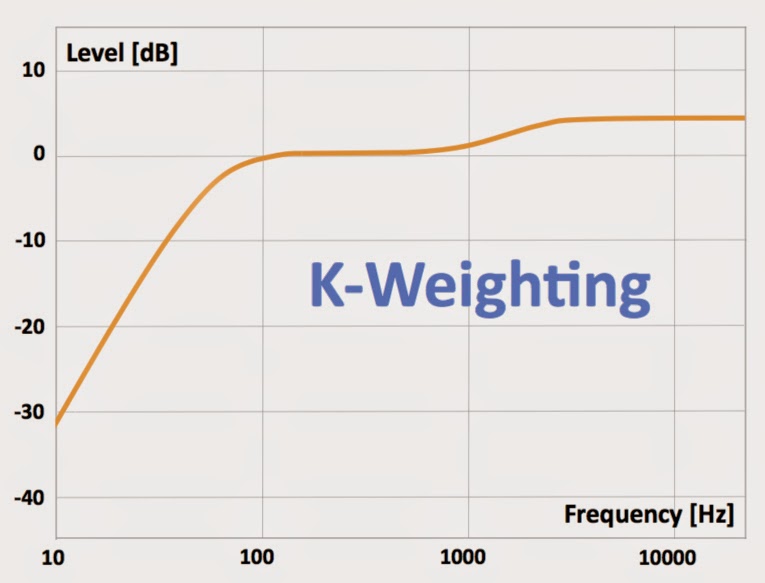
It is using a loudness estimator that prefilters the signal through an approximation of an inverted Fletcher-Munson equal-loudness curve. Currently it using K-weighting (though I could change it to a more complex weighting in the future). K-weighting is a simplified version of the inverted curve, it looks like this:

Image

So in general the term "psychoacoustic" simply means that it uses a loudness estimator that has been validated to be sufficiently accurate by scientifically-conducted listening tests (there are experimental results in the ITU-R BS.1770-4 paper). So in that sense it incorporates knowledge from the scientific area of "psychoacoustics". There isn't much more to it in that regard.

The actual character of the compressor: aspects like the exact attack and release characteristics it uses to achieve clarity and responsiveness, are the results of my own algorithms, which are not scientifically backed by themselves. The prefiltering cuts down a lot of low-frequency content under 100hz, which also significantly decreases "bass-pumping", which in turns allows for faster release times without significant artifacts. So the "psychoacoustic" prefiltering is more of an "enabler", it doesn't actually define how the compressor sounds.

This is not actually the first "Psychoacoustic" compressor ever made. There was a freeware plugin, released in 2007, called the PC2 Psychoacoustic Compressor (I only found out about it a few days ago actually). That plugin seems to have used different algorithms than this one.
Last edited by malibuzios on Sat Mar 20, 2021 7:57 pm, edited 4 times in total.

Post

Spitfire31 wrote: Fri Mar 19, 2021 8:53 pm To me, 'the only downside' seems to be "currently only Windows VST3 64bit". ;-)

Will there be an AU in due course?
The plugin is based on the JUCE framework, which is cross-platform, so there isn't really an issue with portability. The reason for the lack of macOS versions is simply because I don't currently own a Mac! (same for a Pro Tools license).

This work was done on basically a zero budget so far (all I have is a 7 year old PC and a pair of ATH-M50x headphones, that's it - I don't even own studio monitors or a professional audio interface). Unfortunately I can't really predict when I'll be able to afford the equipment and licensing costs.

Post

DJErmac wrote: Fri Mar 19, 2021 5:58 pm I’ve purchased a commercial licence. Sounds absolutely brilliant.
The only downside is that it isn’t able to produce a very compressed sound on a master channel that sounds already beefy, all I get is a subtle extra compression sound, but I like what I hear.
Hi, thanks for purchasing.

Just a clarification (for anyone reading) - the evaluation mode allows only for "private" use. It does not make the distinction between commercial or non-commercial use. The plugin can be used "freely" for evaluation, experimentation, learning (say for students who are only practicing techniques in audio engineering) or for works in progress that have not yet been published.

So live performances of any kind, or content published or broadcast on YouTube, SoundCloud, Twitch etc. requires a certificate.

I really hope this approach would be successful (I'm not aware of other developers who have used it, but it's likely I'm mistaken). In essence I'm introducing a new type / class of effect here with its own unique signature. I personally don't feel that a 30 day trial would be enough for prospective buyers to understand where exactly they want to use it / its strengths and weaknesses (and I also dislike adding "demo mode" restrictions like periodic noise or silence. I feel it distracts from being able to concentrate on evaluating the plugin).

It could also be that it would introduce a new type of "sound", same way that, say the "gated reverb" defined the 80s snare sound, so it could also be somewhat of an "acquired taste" subjectively. Ideally I would want that every audio engineer in the world to have a fully working copy, just so that they can have the option to test if it fits better than an alternative solution.

As for the response, in a sense, it is conceptually somewhat similar to RMS mode compression (though with pre-filtering and a different type of estimator). If the dynamic range of the input signal is already small (meaning it is already somewhat "compressed"), then the compression stage would produce virtually no audible impact, even with a high compression ratio.

It is not designed to produce the typical "compressed" or "dense" sound - say the kind common in metal, some pop, and in other genres. It has a signature that is intended to be "invisible", not color or augment the sound. This is the kind of signature that work well with acoustic instruments like drum kits, brass sections, backing vocals, live bands as well as video and film production, radio, computer games, etc.

Post

A really interesting concept and looks awesome.

Waiting for VST for macos. :tu:

Post

fairlyclose wrote: Fri Mar 19, 2021 9:20 pm
Erisian wrote: Fri Mar 19, 2021 6:20 pm Looks nice but I'm intrigued about the description "Psychoacoustic" The term is usually used for methods of using sound to achieve changes in consciousness, such as binaural beats. What is it about this compressor that makes it psychoacoustic?
psychoacoustics is the psychological / neuroscientific study of how we perceive and understand sound. Understand in the scientific sense ie what are the systems involved, how do they respond to the inputs. So more at the low level of perception rather than at the level of preference - although preference will have a material basis as well which will have a genetic component.
The binaural beats thing is really overdone / overclaimed , particularly when you take into account that the whole theta / alpha thing is to a large extent an artefact of averaging methods used in data acquisition
That was informative, thank you. I disagree with you about Binaural Beats, having studied and used them to good effect in the eighties when I first discovered them. One thing about them that surprised me though, is that not everybody can perceive them. They had a powerful effect on me, especially Kelly Howell's "Deep Meditation" and one who's artist I can't remember but it's called "Brian's Brain Buster." I suspect that like a lot of strange things, it starts with something very real and then gets gimmicky when the ignorant take it over and turn it into something trendy.

Post Reply

Return to “Effects”