When to use negative compression?

How to do this, that and the other. Share, learn, teach. How did X do that? How can I sound like Y?
RELATED
PRODUCTS

Post

Even after watching this video and reading through the thread (viewtopic.php?t=283417), I still can't wrap my head around the implication and application of negative (negative ratio; ratios less than zero) compression. Perhaps, the root of my confusion is that I didn't know if negative ratio compression is upward compression or expansion. Also, perhaps the way negative compression is implemented may differ between plugins. For example, the manual for DCIA3 states that its "negative" feature is "an alternative compression curve with negative ratios at more extreme input Settings. Comes in handy, when more aggressive, obvious, pumping compression is desired." (From the manual, I still don't know if this means upwards compression or expansion?)
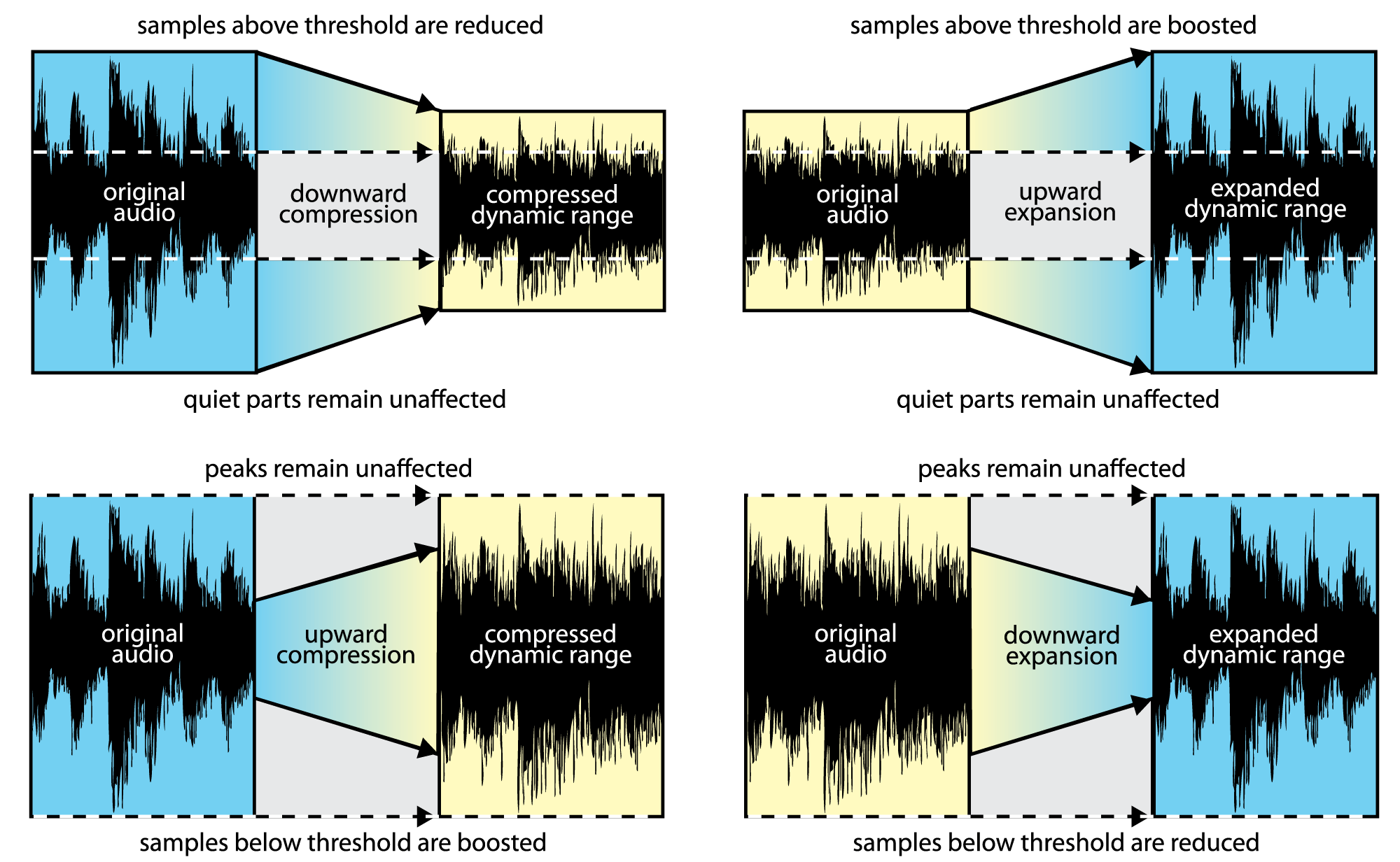
Guenon wrote: Sun Jun 05, 2011 5:47 am Upwards compression squashes the dynamics by making the quieter parts (below the threshold) louder, "normal" downwards compression by making the louder parts (above the threshold) quieter. Expansion, on the other hand, gives you more dynamic range by making the quiet sections even quieter, and/or loud sections even louder.
In the video example, negative compression applied much more compression after the attack than positive compression. I would have expected it to not have fully kicked in until the tone started to decay. Positive compression created a more consistent tone, while negative compression's sustain was much more compressed with an odd dynamic at the end when the note decayed.

What exactly is negative compression? In what situations would we use negative compression? Would we ever put it on the mix bus? Would we use it on drums, etc (think Dr. Seuss's Green Eggs and Ham--would you have it with a...?

Post

delete post
Eyeball exchanging
Soul calibrating ..frequencies

Post

TDR's NOVA GE offers two different threshold modes (above or below), giving a total of four different types of dynamic processing. In the above mode, above-threshold signals trigger traditional downward compression (when RATIO > 1:1) or upward expansion (when RATIO < 1:1). In the below mode, below-threshold signals trigger upward compression (when RATIO < 1:1) and downward expansion/gating (when RATIO > 1:1). In all four cases, the ratio is positive, not less than zero (0:1). DCIA3's "negative compression" deals with ratios lower than 0 (lower than 0:1, e.g. -2:1.). It reacts to above-threshold signals but it is neither standard downward compression nor upward expansion, both having positive ratios. What is it? What is negative ratio compression? The mystery continues.

Post

dfh

Post

AUTO-ADMIN: Non-MP3, WAV, OGG, SoundCloud, YouTube, Vimeo, Twitter and Facebook links in this post have been protected automatically. Once the member reaches 5 posts the links will function as normal.
I was asking myself the same a few days ago. I don't really know when to use it, but I found what it looks like in a diagram Level In/Level Out. Hope it helps. Cheers 🍀

You can find the manual here:
https://files.plugin-alliance.com/produ ... ual_en.pdf (https://plugin-alliance.sjv.io/c/4241666/2521506/30401?u=https%3A%2F%2Ffiles.plugin-alliance.com%2Fproducts%2Felysia_mpressor%2Felysia_mpressor_manual_en.pdf)
You do not have the required permissions to view the files attached to this post.

Post

Ditto. Never found a use for it, but imagine some folk have utilised its over the top result. It just seems to make envelopes sound a bit disjointed to me. Upwards compression is not negative compression either whoever said that
I

Post

I posted about this some time back, here's the link.

viewtopic.php?t=507806

Basically, upward compression, or de-expansion, amplifies signals below the threshold at the specified ratio. I find this extremely useful for reducing the dynamic range of quiet elements of ambient tracks. With de-expansion you avoid hearing the severe artifacts of compression following a gain increase which is what you might have to do with certain quiet elements, e.g., field recordings.

So, when you want the louder portions to sound completely natural but you want to reduce the dynamic range, choose de-expansion or upward
compression.

As I point out in my post, I like FLUX Solera for this as it allows you to use easily use a bit of both at the same time and gives you a nice visualization of how you're modifying the dynamic range of the track.

Post

I just stomped into an explanation and use for negative ratios.
You do not have the required permissions to view the files attached to this post.

Post

There is a brief explanation here on Elysia's website: https://www.elysia.com/plugins/mpressor ... ive-ratios
ghettosynth wrote: Thu Jul 01, 2021 5:45 am I posted about this some time back, here's the link.

viewtopic.php?t=507806

Basically, upward compression, or de-expansion, amplifies signals below the threshold at the specified ratio

...
This is not what mpressor does.

Post

The compressor in the new Arturia Bus FORCE plug-in also does negative compression. You may want to check that.

From the manual:

"Negative ratios mean that the sound under the threshold is “not touched” (as usual) but the louder a sound gets above that, the harder its gain is reduced (to a value lower than the initial value, not just attenuated as is the common compressor behavior). In a way, with force at max, the sounds that will sound loudest are the ones which are not “touched” by the compressor (the ones under the threshold value)."

I think this clearly explains what is negative compression.
Fernando (FMR)

Post

imrae wrote: Fri Jul 02, 2021 10:25 am There is a brief explanation here on Elysia's website: https://www.elysia.com/plugins/mpressor ... ive-ratios
ghettosynth wrote: Thu Jul 01, 2021 5:45 am I posted about this some time back, here's the link.

viewtopic.php?t=507806

Basically, upward compression, or de-expansion, amplifies signals below the threshold at the specified ratio

...
This is not what mpressor does.

"Negative compression" is a non-standard term that is subject to interpretation. What mpressor does is an "effect." So, when to use it is easy, you use it when it sounds cool.

Post

fmr wrote: Fri Jul 02, 2021 11:40 am The compressor in the new Arturia Bus FORCE plug-in also does negative compression. You may want to check that.

From the manual:

"Negative ratios mean that the sound under the threshold is “not touched” (as usual) but the louder a sound gets above that, the harder its gain is reduced (to a value lower than the initial value, not just attenuated as is the common compressor behavior). In a way, with force at max, the sounds that will sound loudest are the ones which are not “touched” by the compressor (the ones under the threshold value)."

I think this clearly explains what is negative compression.
Ah, I see, this is different than the four standard modes. I still am not convinced that this is interpreted uniformly as I seem to recall a vendor that used negative ratios to implement upward compression.

Post

The four modes:
ghettosynth wrote: Thu Jul 12, 2018 8:11 am
This image explains it nicely.

Image
Difference between top & bottom is just some gain/trim: difference in peak levels being compensated. :dog:
We are the KVR collective. Resistance is futile. You will be assimilated. Image
My MusicCalc is served over https!!

Post

BertKoor wrote: Sat Jul 03, 2021 6:17 am The four modes:
ghettosynth wrote: Thu Jul 12, 2018 8:11 am
This image explains it nicely.

Image
Difference between top & bottom is just some gain/trim: difference in peak levels being compensated. :dog:
No it's not. Look more closely. In any case, it's just an image to convey the basic ideas.

Post

Well, here is some confusion, yes. Negative compression and upward
compression are two very different things.

Here's an overview:

type -------------------> ratio-example -> what it does
------------------------------------------------------------------------------
normal (downward) --> 1: 4 -----------> makes loud tones quieter
upward ----------------> 4: 1 ----------> makes loud tones louder
negative --------------> 1: -4 ----------> makes loud tones much quieter - almost muting


The different modes are used for:

type -------------------> typical usage
------------------------------------------------------------------------------
normal (downward) --> tame dynamics, more sustain, gain a more substantial sound
upward ---------------> regain some dynamics
negative --------------> isolate the transients
Last edited by enroe on Sat Jul 03, 2021 4:55 pm, edited 1 time in total.
free mp3s + info: andy-enroe.de songs + weird stuff: enroe.de

Post Reply

Return to “Production Techniques”