

the things which are not rational but a kinda sorta- or tweaked- ET don't mean a lot to me.
The musical goal of it in that form is opaque to me. I see a quasi-multiply-Pure 5ths approach but I see it breaking down, eg., 800¢ compared w. 98 is suddenly kind of wide. I doubt it's going to do anything for me say Werckmeister 3 doesn't for that area of tonal music which is not a focus for me anyway.
Any scala I import into the thing I'm going to create .scl for (Vienna Instruments Pro) is going to be tempered by my ear, and it's going to be down to the actual intonation sampled, which is by nature not that stable or knowable to that extent. Theory and maths don't really out like that with real instruments and molecules vibrating in the air IME.
I get more interested in smaller intervals like in Indian Classical, on a Sarod particularly, no frets.
The most involved I got with seeking to create intonations was in interest of actual instrument design, which I don't have the technical wherewithal to finish in the end.
Novel Valotti-Young well temperament sibling
-

- KVRAF
- 26033 posts since 20 Oct, 2007 from gonesville
guitar is never really in tune globally, because of certain phenomena physically. the tension at the nut being a chief component of it.
EG: a pure-ish major third per E, say G# on the first fret/third string relative to the bass open E, vs the tuning of the open string for a G major chord and its 2:1 with the lower octave G, and that G's relationship to its major 3rd open B, already there's a compromise and we're still in open position (so people get interested in that nut).
Guitar setup is an art, and IMO strobe tuning a guitar is a bad idea because pure cents as a metric is not really a musical principle, it's just numbers, and I instantly note the above problem before even trying to set it up. And we're in 'close enough for rock 'n roll' territory always.
I should say I find things which bug the hell out of me on a piano I have to cut my losses as to worrying it after a point.
EG: a pure-ish major third per E, say G# on the first fret/third string relative to the bass open E, vs the tuning of the open string for a G major chord and its 2:1 with the lower octave G, and that G's relationship to its major 3rd open B, already there's a compromise and we're still in open position (so people get interested in that nut).
Guitar setup is an art, and IMO strobe tuning a guitar is a bad idea because pure cents as a metric is not really a musical principle, it's just numbers, and I instantly note the above problem before even trying to set it up. And we're in 'close enough for rock 'n roll' territory always.
I should say I find things which bug the hell out of me on a piano I have to cut my losses as to worrying it after a point.
-
- KVRAF
- 26033 posts since 20 Oct, 2007 from gonesville
- also, as pertains to ICM and instruments' intonation, frets are placable and done according to the notes of the desired effect in a raga, so this raga has a different intonation than the other, unless same family maybe. This owes to which are the prevalent targets of the raga, where pure P5s are sehr desirable. So if, say 'tonic' being D, a raga with a dominant F# and a subdominant C# are not the same notes as the one with a dominant F (do not confuse with harmonic western music terms, their terms are vadi and samvadi, those words a translation to English) and a subdominant C, say.
It may be said they have a basic 22 instead of 12 theoretically, although wide consensus of the why and/or how doesn't happen.
Maybe the two P5s there are in the naborhood of a syntonic comma distance apart if measured
It may be said they have a basic 22 instead of 12 theoretically, although wide consensus of the why and/or how doesn't happen.
Maybe the two P5s there are in the naborhood of a syntonic comma distance apart if measured
-
- KVRist
- Topic Starter
- 33 posts since 21 Aug, 2021
I am an electronic music person and havent played an accoustic instrument in many many years.
Not so much out of conviction but necessity.
I don't use samples except for granular synthesis, I am against sampling, though I do like old school sampling
and some of the old E-Mu stuff sometimes - but I am not using it.
And with digital electronic music, ET got annyoing after some years for several reasons,
to me it's not just that intervals are not just but that they always have the exact same beating pattern that just gets pitched up.
My scales here are just naive attempts, not very sophisticated or educated ones.
I am certainly not asking guitarists to try these scales although at some point if I find a really good one
I would like to know if and how real instruments could be tuned like that.
Not so much out of conviction but necessity.
I don't use samples except for granular synthesis, I am against sampling, though I do like old school sampling
and some of the old E-Mu stuff sometimes - but I am not using it.
And with digital electronic music, ET got annyoing after some years for several reasons,
to me it's not just that intervals are not just but that they always have the exact same beating pattern that just gets pitched up.
My scales here are just naive attempts, not very sophisticated or educated ones.
I am certainly not asking guitarists to try these scales although at some point if I find a really good one
I would like to know if and how real instruments could be tuned like that.
-
- KVRAF
- 26033 posts since 20 Oct, 2007 from gonesville
well, I know a guy who has a just intonation fretted bass, Hansford Rowe (Pierre Moerlen's Gong) but many cans of worms are opened talking about something like the intonation in the OP on guitar owing to the nature of the instrument physically.
-

- Rad Grandad
- 38041 posts since 6 Sep, 2003 from Downeast Maine
what I am trying to say is you're not getting a lot of feedback maybe because people really cant be bothered, it's not that big a deal...the old if it aint broke, dont fix itsqrt12 wrote: Tue Aug 24, 2021 5:03 pm I am not disagreeing, but I am also not sure what you want to say
I just wonder how you tune a guitar to ET, I am not sure how guitars are tuned in general
I assume some of the intervalls on your guitar are the same as above -?

As for the intervals on my guitar, my intervals are the same on my guitar as on my keyboards as on my hammered dulcimer...it's seems kinda an odd thing, when you do anything like this for 50 years there are certain things that stick over all those years of conditioning, the ears being subjective, adaptive as they are...what is to fix? (for me? and many others like me).
I do notice a lot of these type youtube vids lately, another person as vurt pointed out posted similar recently and as a mod I do have an obligation here to you and the other members as well

The highest form of knowledge is empathy, for it requires us to suspend our egos and live in another's world. It requires profound, purpose‐larger‐than‐the‐self kind of understanding.
-
- KVRAF
- 26033 posts since 20 Oct, 2007 from gonesville
Real instruments are different, for instance pianos are not tuned mechanically, always some stretch-tuning is applied by a professional tuner, again an art more than maths.sqrt12 wrote: Tue Aug 24, 2021 5:28 pm
And with digital electronic music [...]
they always have the exact same beating pattern that just gets pitched up.
That "against samples" is also naive, some of us have music which needs to happen and that's what's for dinner
One can build something to get eg., that difference at the major sixth in your rational version but why?
I'm probably the most interested person around here as to intonations and the practice, but this is pure theory...
there's like the one other guy interested in the maths, and that thread was... weird, no one is going to care about that fine a distinction, it's probably quite beyond everyone's ear physically.
I have a fine ear for pitch, I'll not soon forget this one note with a bad string in one of the cut-down VSL pianos (SE Percussion) I spent an inordinate amount of time correcting, significantly inside of 2¢ diff. But there's a limil, and I tend to doubt many are going to hear the diff between eg., 698 and 700 cents even in the vertical concord. The ET M3 @ 13.69¢ sharp to 5:4 is another matter.
Last edited by jancivil on Tue Aug 24, 2021 5:51 pm, edited 1 time in total.
-
- Rad Grandad
- 38041 posts since 6 Sep, 2003 from Downeast Maine
one of our mods makes his living tuning pianos (BD)
The highest form of knowledge is empathy, for it requires us to suspend our egos and live in another's world. It requires profound, purpose‐larger‐than‐the‐self kind of understanding.
-
- KVRAF
- 26033 posts since 20 Oct, 2007 from gonesville
probably isn't that into talk about it, practice over theory
I was interested in something on the order of Hans Rowe's instrument (but based in Danielou's 22 shrutis theory) but building it is a whole 'nother ballgame.
I was interested in something on the order of Hans Rowe's instrument (but based in Danielou's 22 shrutis theory) but building it is a whole 'nother ballgame.
-
- KVRist
- Topic Starter
- 33 posts since 21 Aug, 2021
Thats the things I care about at the moment, I dont have a fine ear for pitches at all
Friend of mine was a piano builder by profession, we didnt talk much about this yet but he's absoluetly not interested at all, possibly even slightly annoyed by my dilletant attempts
I wish though more poeple here or elsewhere would be interested in creating a non ET but still quite ordinary 12tone temperament
Right now I start tuning by ear and than search for the nearest intervall that matches
but this is like adjusting a blanket that is too small, you fix one intervall and break three others
-
- Rad Grandad
- 38041 posts since 6 Sep, 2003 from Downeast Maine
I'm not sure that I would want to play one, but give me a machine shop and I would love the challenge of making the neck/fingerboard. (actually I could get by with a bridgeport milling machine)
The highest form of knowledge is empathy, for it requires us to suspend our egos and live in another's world. It requires profound, purpose‐larger‐than‐the‐self kind of understanding.
-
- KVRAF
- 26033 posts since 20 Oct, 2007 from gonesville
These 12 quasi-ET things like Well- or Werckmeister 3 sought to retain some character of keys while providing viable modulation potential, and were before 12th root of 2 was a thing, talking about cents; ie., were rational intonations and "1/3 [or 1/6 etc] comma" correction type of thought; so there's not a lot of call for applied practice or need to improve on the extant models.
I don't see the world breaking down doors angling for that thing Hans uses either.
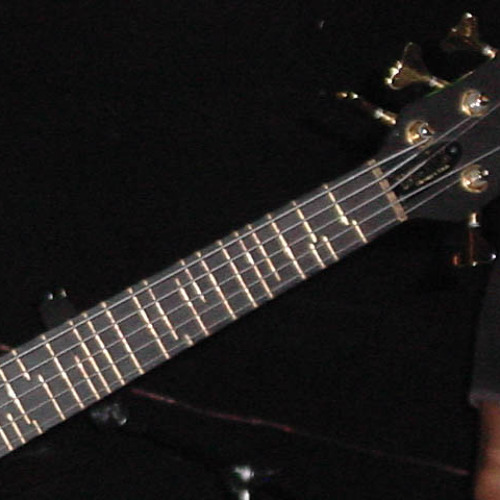
the thing I wanted was going to look pretty much like that
I don't see the world breaking down doors angling for that thing Hans uses either.
the thing I wanted was going to look pretty much like that
-
- KVRian
- 524 posts since 26 Nov, 2009
Of course, you will break stuff, that's the whole point. Or else we would have been stuck to using pentatonic or heptatonic "well-temperaments" as melodic scales.sqrt12 wrote: Tue Aug 24, 2021 6:03 pm
I wish though more poeple here or elsewhere would be interested in creating a non ET but still quite ordinary 12tone temperament
Right now I start tuning by ear and than search for the nearest intervall that matches
but this is like adjusting a blanket that is too small, you fix one intervall and break three others
12 notes scales can be approached as chromatic jazz/romantic extensions of standard system or as poly-diatonic systems. Well-temperaments are the most ineffective way to microtune (unless you are changing keys every few bars, I guess).
If you are interested in 12 ET temperaments (non-circular), information on many can be found on xenharmonic wiki: check pages of diaschismic, flattone and meantone (this one is the standard Western tuning for several centuries, the one that theory is based upon), augmented, diminished.The last two are optimal for 5-limit in 12 ET, but if you want bluesy intervals, you can try a selection of 12 tones from 27 ET for another type of augmented temperament flavour.
If you have any interest in Middle Eastern or North African music: you can't get orientalish like flavour and regular structure with only 12 tones, I think you need like 17 tones minimum as starting point.
-
- Rad Grandad
- 38041 posts since 6 Sep, 2003 from Downeast Maine
we had to learn to work to crazy tolerances and I enjoyed that (+/-.005" was common/typical but +/-.0005" was not uncommon, I can imagine making such a neck would be fun but also educational...the math would be interesting but also tolerances with wood is quite limiting. There is a lot of math to machining, of course a lot of trig...but so much more...if I had a lathe, bridgeport, a grinder and perhaps a cylindrical grinder (extremely accurate) I could make a set of machine heads for a guitar from scratch...most of my senior year was just how to calculate gears, set up the machine and cut them...but then that was 74-78, I'm sure with computers its much easier nowjancivil wrote: Tue Aug 24, 2021 6:56 pm These 12 quasi-ET things like Well- or Werckmeister 3 sought to retain some character of keys while providing viable modulation potential, and were before 12th root of 2 was a thing, talking about cents; ie., were rational intonations and "1/3 [or 1/6 etc] comma" correction type of thought; so there's not a lot of call for applied practice or need to improve on the extant models.
I don't see the world breaking down doors angling for that thing Hans uses either.
the thing I wanted was going to look pretty much like that

The highest form of knowledge is empathy, for it requires us to suspend our egos and live in another's world. It requires profound, purpose‐larger‐than‐the‐self kind of understanding.
-
- KVRAF
- 26033 posts since 20 Oct, 2007 from gonesville
the more I learned the less I realized I knew about what was required, first up was not enough maths, then that physicality. it would take a lifetime of work I wasn't doing.