Pashkuli: PMN (Plain Music Notation)

Chords, scales, harmony, melody, etc.
Locked New Topic
RELATED
PRODUCTS

Post

N__K wrote: Sat Jan 08, 2022 4:23 pm Sorry for out-of-order commenting, I'm picking and choosing what to reply to.
7°(0,5,7) - 8°(0,2,7) - 0°(0,3,5,7)
those digits with degree symbols, not sure what they mean: short way of the ones in parenthesis maybe?
I completely understand those interval structures. But they are just structures of relative distances.
When you show the "symbolic" score (you show us MIDI-roll) we could see the notes actually quite stay more or less the same... which is not evident form the relative interval structure.

That is why if you had used letter or notehead symbols, we could have seen that they "stay the same" as a direct correspondence.

Also you have to think about inversions, not only general "from root up" structures.

Also, we can see that 0° is actually intended to be the highest root in the actual "score" (MIDI-roll)
This, using numbers symbols only, could lead to confusion, because we use numbers in quantitative calculations as well, where 0 is always down, lower than 8.

Besides that, such interval structure you shared is used "behind the scenes" in all code of modern sound and audio recording programs related to arranging and composing music. Because computers understand\operate numbers better.

Post

Pashkuli wrote: Sat Jan 08, 2022 4:27 pm See, notation is 99% related to pitch\duration of notes.
No, that's just your indoctrination speaking, a wholesale regurgitative kowtowing to the limitations of one specific notation system as though it were an absolute definition of notation in general.
Your assertions are false, and embody an incredibly inadequate understanding of alternate forms of notation to the one you claim to reject, but have seemingly embraced wholesale except for the crudest attempt at a reskin.
Those are not music notation, rather sound attributes automations.
Some of them are present as sidenotes in music notation, such as dynamics, tempo, etc. but they are not crucial to the information.
No, that's just your indoctrination speaking.
Just open Youtube and see how mediocre most (99%) of the cover songs are, compared to original audio recording by the author. There are rare cases where "cover is better or exact on par" with the original.
irrelevant. can you stop ignoring my question, please? i made it very simple for you by asking for bullet points.

I do find it illuminating that you'd rather spend time rejecting anything but the most narrow of archaic limitations of the scope of notation than provide a comparison of your system against the legacy s system it purports to improve upon?
the only reasonable answer would appear to be that its because you cant provide an answer, because its not actually any kind of improvement, merely a transliteration, and that you have to handwave about something which was not the question on order to divert attention from that.

Anyway, dont bother responding. Your failure to provide a very simple list is already answer enough.
An idiot on Set Theory:
"In some cases there is an object called red that contains everything that is red. In much the same way a pot is a plate."

Post

Pashkuli wrote: Sat Jan 08, 2022 4:42 pm [...] such interval structure you shared is used "behind the scenes" in all code of modern sound and audio recording programs related to arranging and composing music.
Yep - that markup is actually intended to be machine-readable, so I can easily utilize scripts etc. to read the data. So its "codelikeness" is part of the design.

Just to make it clear, I wrote about it in this thread mainly as comparison of interval markup ideas, and I have nothing against your Plain Music Notation being presented here or any other forum :)

My own brain is not built for it, I have to admit - but I think that for people interested in alternative notations, PMN is worth taking a look at. At very least, it's an example of human creativity, and valuable as such.

Post

vurt wrote: Sat Jan 08, 2022 3:54 pm
whyterabbyt wrote: Sat Jan 08, 2022 3:43 pm Does someone have a list of bullet points on how this improves on what I'd call 'traditional western notation?'
1: the little icons are prettier.

2: i got nothing else
3. you can write toons using fuzzy felt.

4. apl programmers might like it.

err...I think I'm done now.

Post

99%?

LOL

The only thing left for us is David Dunning, "Why incompetent people think they're amazing".
Rhythm and time is but 1% of what needs to be conveyed in music, is that right?

This is the Twilight Zone at this point.

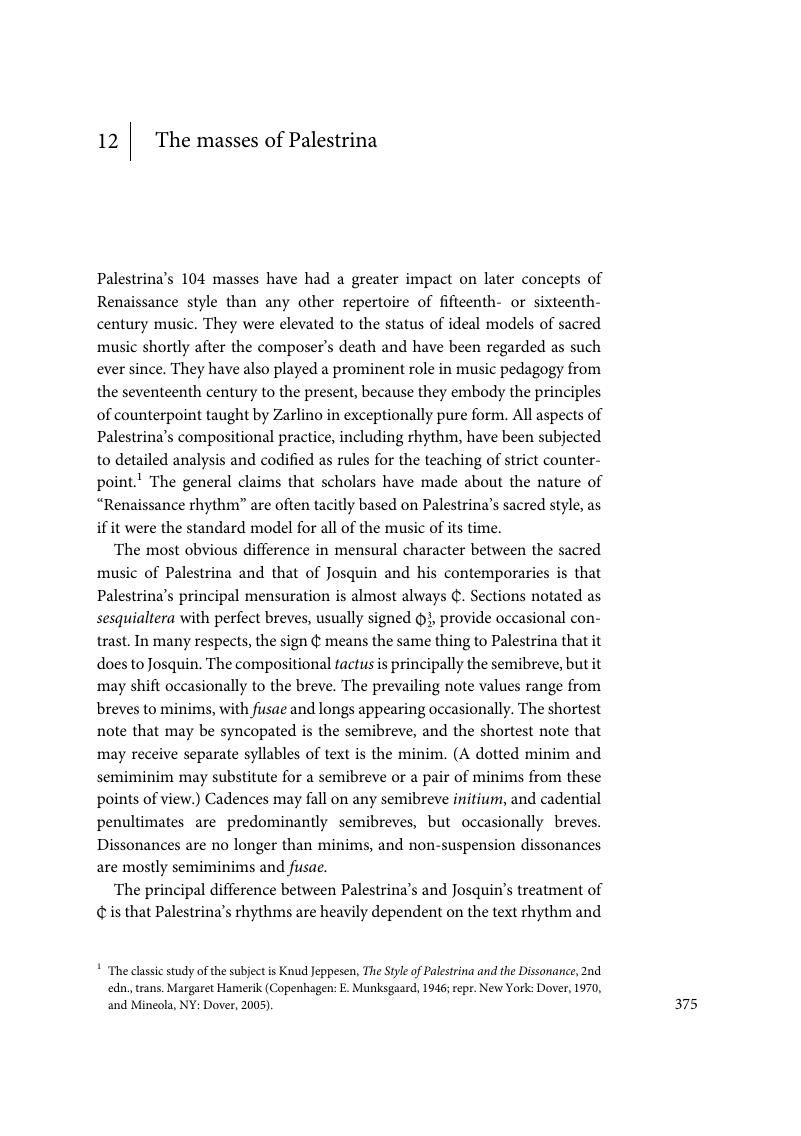
This starts with incompetence, an assertion that the problem dates to the Church polyphonic "vocal chant" (it's Plainchant, genius), which was not modern notation; see Mensural notation, before that neumatic. In my "Honors Music Theory" course (the two years, 'diatonic' and 'chromatic' rolled into one) we started many days singing from the mature form of the Mensural. The system met the needs when they arose; at the time of what we were singing, the number three ruled everything, they had an actual religious notion of perfection in that number. This was the way, before the emphasis in rhythmic conception of subdividing by factors of 2. (<-simplification)

Image

You have literally no concept of this, and started in with an unforced error posturing entirely ahistorically. Your ass has been on full display since.

We have a saying out west: All hat, no cattle.
Last edited by jancivil on Sat Jan 08, 2022 5:50 pm, edited 1 time in total.

Post

gaggle of hermits wrote: Sat Jan 08, 2022 5:38 pm
vurt wrote: Sat Jan 08, 2022 3:54 pm
whyterabbyt wrote: Sat Jan 08, 2022 3:43 pm Does someone have a list of bullet points on how this improves on what I'd call 'traditional western notation?'
1: the little icons are prettier.

2: i got nothing else
3. you can write toons using fuzzy felt.

4. apl programmers might like it.

err...I think I'm done now.
i do like fuzzy felts.
gonna get my granddaughter some when she's a bit older :)
:ud:

Post

jancivil wrote: Sat Jan 08, 2022 5:41 pm 99%?
LOL
The only thing left for us is David Dunning, "Why incompetent people think they're amazing".
Rhythm and time is but 1% of what needs to be conveyed in music, is that right?
pitch\duration

Post

whyterabbyt wrote: Sat Jan 08, 2022 4:51 pm
Pashkuli wrote: Sat Jan 08, 2022 4:27 pm See, notation is 99% related to pitch\duration of notes.
...except for the crudest attempt at a reskin.
Hey, actually say that to the other in the discussion. They will probably agree with you on this one, what do you think? :dog:

whyterabbyt wrote: Sat Jan 08, 2022 4:51 pm ...provide a comparison of your system against the legacy system it purports to improve upon?
...because its not actually any kind of improvement, merely a transliteration, and that you have to handwave about something which was not the question on order to divert attention from that.
PMN is not an improvement on the old. It is an alternative.
From your rant, I really could not understand what exactly you miss from a music notation?
Could you at least provide some bullet points with regards to those requirements of yours?

Post

N__K wrote: Sat Jan 08, 2022 5:08 pm My own brain is not built for it, I have to admit - but I think that for people interested in alternative notations, PMN is worth taking a look at. At very least, it's an example of human creativity, and valuable as such.
So, are you any good at coding? JavaScript, for example. I am trying to teach myself onto it (well form the 'Music and Coding' Youtube channel, to be more specific). Maybe you can through some ideas on how it can be implemented as a basic application to a 'digital music notation'?

Post

Pashkuli wrote: Sat Jan 08, 2022 6:03 pm Could you at least provide some bullet points with regards to those requirements of yours?
  • not designed by a disingenuous arsehole
An idiot on Set Theory:
"In some cases there is an object called red that contains everything that is red. In much the same way a pot is a plate."

Post

whyterabbyt wrote: Sat Jan 08, 2022 3:02 pm for something beyond the legacies of the 15th Century.
Ah well, never mind.
If it understood the 15th c. it'd not make the fundamental error of confounding modern notation with the system in place then, to begin with. That sign told all, from the very outset.

Post

Pashkuli wrote: Sat Jan 08, 2022 6:03 pm Could you at least provide some bullet points with regards to those requirements of yours?
Burden of evidence is 100% on you. There is one person here that apparently feels they've something to prove, & the standard western musical notation system's universal use for the purpose for around 6 centuries speaks for itself.

Could you at least make a better argument than "I'm rubber, you're glue"?
That's a rhetorical question btw.

Post

jancivil wrote: Sat Jan 08, 2022 5:41 pm 99%?

LOL

The only thing left for us is David Dunning, "Why incompetent people think they're amazing".
Rhythm and time is but 1% of what needs to be conveyed in music, is that right?
The highest form of knowledge is empathy, for it requires us to suspend our egos and live in another's world. It requires profound, purpose‐larger‐than‐the‐self kind of understanding.

Post

I tried to locate the original with no preface but it was all Ted Talks and the like at YT

It's funny how this one postures pitch is 99% of music, after starting in talking about "vocal chants" and revealing they don't recognize this fundamental mistake, it wasn't the modern system in use. If they studied that era at_all they'd know about the rhythms; the sea change in rhythm at the sort of early days of the Renaissance that follows (CF: Palestrina), it's all about the concept of time.

For me it's by far the most interesting aspect of the whole era.

Book Review extract:
Ruth DeFord's “Tactus,” Mensuration, and Rhythm in Renaissance Music is the latest and most comprehensive in a series of books that seek to describe the proper understanding of mensural notation.
Although the title's key terms suggest a range of topics encompassing music making, composition, analysis, speculative thought, and philosophies of time, DeFord focuses primarily, and reasonably, on practical matters—theories of temporal organization and concerns that inform the performance and analysis of Renaissance music.


https://www.cambridge.org/core/books/ab ... CE10C5F00A

Post

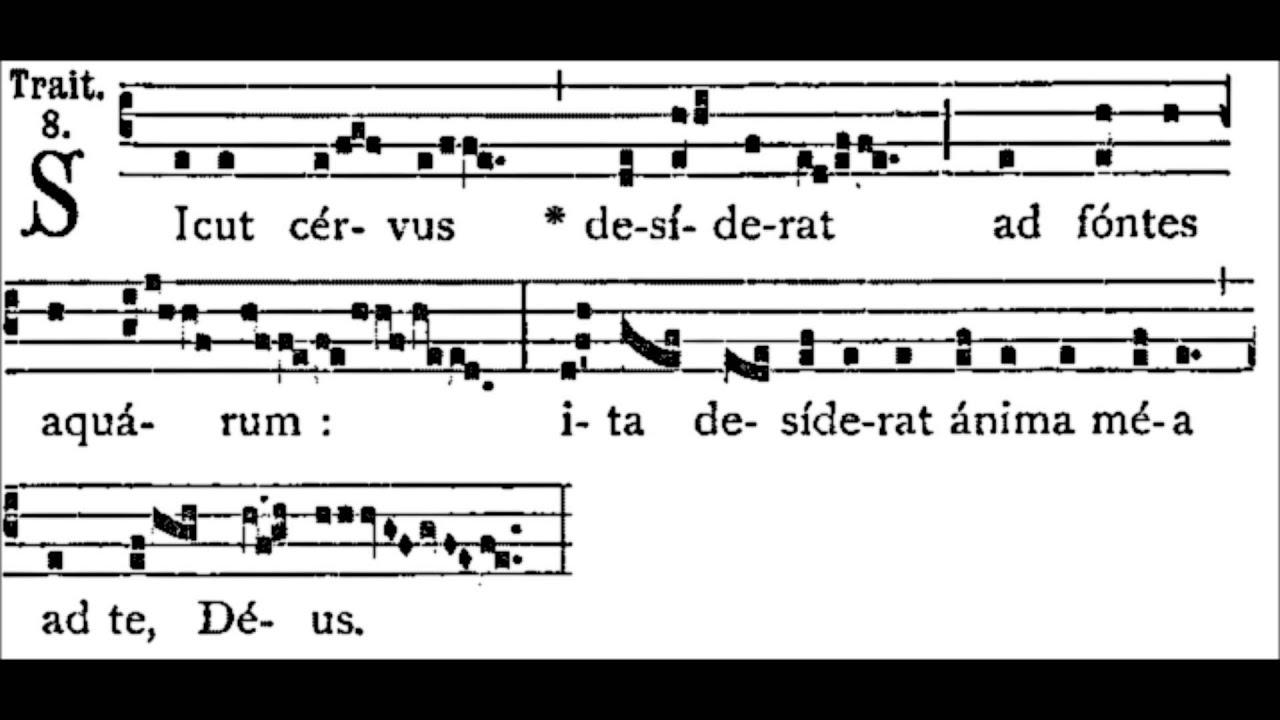
Palestrina: Sicut Cervus

Image

Locked

Return to “Music Theory”