

I have a problem that no one really seems to be able to help me solve... How do I mix a drum machine track that is summed through a distortion pedal to have have the same depth and impact as dry individual tracks? People have mentioned they do this in techno but without any explanation and I can't find any guides to it. Everyone seems to be using either individual outputs, USB, or doing it all in a daw with individual stems. If they bus the drums together it's a dry signal? but most people that talk about doing that are coming at it from rock music. I like the sound of saturation, overdrive, distortion on a whole drum mix, it provides this really nice compressed glued sound where instruments merge into each other but at the same time I need the drums (particularly the kick) to punch through the mix and have as much impact and power as other techno/house tracks. From my brief experiments I found that saturating the drum mix takes the power and punch out of the low end and smears the sound, I guess that's to be expected as that's what forms of distortion do... just dialing out the level of distortion or drive in the pedal the dynamics come right back again but I lose all the buzzy distortion that makes it all so fun. How are people able to retain that? Or bring it back?
In my efforts to try and figure this out I tried running a stereo to two mono cable out of my drum machine main out with one of the mono ends going into a pedal then into the interface while the other one went straight dry into the interface. The result was weird, in some recordings the tracks layered together were phasing in and out of time, and the polarity of the phase was also reversed. I'm not quite sure how that works? I thought the stems would be be identical in terms of timing and phase, just with totally different colour?
I am going to try reamping the signal of the original dry recording and sending that through the pedal again, I am guessing that this should surely mean the two drum tracks will be easy to line up wet/dry in a daw with no phasing issues?..
trying to come up with ideas on how to do this... I thought maybe I could chop the drum stems into 4 bar loops then layer the wet with the dry once it's all synced up and no phasing issues, then try to eq each one for each instrument. I guess it's going to be a bit of a nightmare to try and process a kick if another drum instrument hits on the same step right? the way I have previously been doing my processing is that I tend to put more focus onto the kick and making that punchy and less processing on the other elements because in dance music that is the most important.
for reference I have been previously using this excellent guide for mixing electronic which has been linked on many subreddits. but I can't find anything that uses this type of process
the first tutorial is great but he's using stems for all the instruments, I can see around 14 tracks just on the drums. I need some sort of walkthrough guide on how to do this with a distorted drum bus like on the next video but that has the same level of professionalism jc uses, if its not up to club standards no one will take my stuff seriously.
making professional recordings with a whole drum bus instead of stems
-

- KVRAF
- 16803 posts since 8 Mar, 2005 from Utrecht, Holland
Base, snare, hats... I pan them smack in the middle.
Is that drum machine really stereo? Because differences in channels seems your battle.
How much do you lose by taking only L or R from it?
Embrace mono. Stereo is overrated.
Is that drum machine really stereo? Because differences in channels seems your battle.
How much do you lose by taking only L or R from it?
Embrace mono. Stereo is overrated.
We are the KVR collective. Resistance is futile. You will be assimilated. 
My MusicCalc is served over https!!
My MusicCalc is served over https!!
-

- KVRAF
- 11312 posts since 18 Aug, 2007 from NYC
There’s likely a few issues here…
Sounds like you need to look at what distortion is doing to the sound. You should be able to find YouTube videos that visually demonstrate this.
Why I’m saying this is because there are multiple ways of approaching using saturation and distortion. Most of it depends on what’s you like it (if it sounds good it then it’s good). In your case you know what’s missing and are struggling to get that sound (as I believe I understand your post).
EQ is one way, allowing you possibly keep the harmonics introduced in the distorted/saturated track while EQing the dry track to keep what you want from it.
This is basically layering and designing your sound. It won’t be frustrating once you get past the idea of things just working when mixing. EQ is your friend in mixing and the role is making it work together to sound good.
Phasing issue. There’s likely a slight delay introduced by the distortion pedal. I would start with a google search to see if someone else already posted how much delay it introduces. If not there then be prepared to manually delay the other tracks in milliseconds to realign the *phase.
*aligning the phase (between dry and wet tracks) is now going to result in a louder master, or summed drum bus. Again, EQ is your friend to eliminate competing frequencies.
If none of the above starts you in the right direction, might want to provide specifics of what drum machine, what pedal and what DAW.
Sounds like you need to look at what distortion is doing to the sound. You should be able to find YouTube videos that visually demonstrate this.
Why I’m saying this is because there are multiple ways of approaching using saturation and distortion. Most of it depends on what’s you like it (if it sounds good it then it’s good). In your case you know what’s missing and are struggling to get that sound (as I believe I understand your post).
EQ is one way, allowing you possibly keep the harmonics introduced in the distorted/saturated track while EQing the dry track to keep what you want from it.
This is basically layering and designing your sound. It won’t be frustrating once you get past the idea of things just working when mixing. EQ is your friend in mixing and the role is making it work together to sound good.
Phasing issue. There’s likely a slight delay introduced by the distortion pedal. I would start with a google search to see if someone else already posted how much delay it introduces. If not there then be prepared to manually delay the other tracks in milliseconds to realign the *phase.
*aligning the phase (between dry and wet tracks) is now going to result in a louder master, or summed drum bus. Again, EQ is your friend to eliminate competing frequencies.
If none of the above starts you in the right direction, might want to provide specifics of what drum machine, what pedal and what DAW.
-
- KVRer
- Topic Starter
- 7 posts since 4 Sep, 2022
only one out so looks to be mono. the only cable I had to split the signal was a stereo headphone jack with a quarter inch adapter to two quarter inch mono's, I thought that this might work as that way for instance the right could be dry while the left could be processed through the pedal. any rec's on the best type of cable for the job?BertKoor wrote: Sun Sep 04, 2022 1:15 pm Base, snare, hats... I pan them smack in the middle.
Is that drum machine really stereo? Because differences in channels seems your battle.
How much do you lose by taking only L or R from it?
Embrace mono. Stereo is overrated.
-
- KVRer
- Topic Starter
- 7 posts since 4 Sep, 2022
on some takes i've recorded I can reverse the polarity of one drum stem and it sounds better, when looking closer I can see its out of phase (one wave is going up while the other down). but things start to get weird when I try to line up the stem onto a daw's grid. I can grab all stems, use markers to put all stem transients on grid and then things start phasing wildly and I am pretty sure one or two takes I did had both the dry and wet drum stems phasing in and out without putting markers on? this was using reaper. I have access to other daw's so I can try those if they have a similar tool to get it all on grid. I usually do this so I can drop other sounds in the mix and have it all running in sync nicely.elxsound wrote: Sun Sep 04, 2022 1:44 pm There’s likely a few issues here…
Sounds like you need to look at what distortion is doing to the sound. You should be able to find YouTube videos that visually demonstrate this.
Why I’m saying this is because there are multiple ways of approaching using saturation and distortion. Most of it depends on what’s you like it (if it sounds good it then it’s good). In your case you know what’s missing and are struggling to get that sound (as I believe I understand your post).
EQ is one way, allowing you possibly keep the harmonics introduced in the distorted/saturated track while EQing the dry track to keep what you want from it.
This is basically layering and designing your sound. It won’t be frustrating once you get past the idea of things just working when mixing. EQ is your friend in mixing and the role is making it work together to sound good.
Phasing issue. There’s likely a slight delay introduced by the distortion pedal. I would start with a google search to see if someone else already posted how much delay it introduces. If not there then be prepared to manually delay the other tracks in milliseconds to realign the *phase.
*aligning the phase (between dry and wet tracks) is now going to result in a louder master, or summed drum bus. Again, EQ is your friend to eliminate competing frequencies.
If none of the above starts you in the right direction, might want to provide specifics of what drum machine, what pedal and what DAW.
i'm guessing when people work using a whole recorded drum bus track they use loops and copy and paste these across the track? that might be a way to get around phasing too? if I only have a shorter measure to align up then I can get that right and copy and paste.
I will try reamping once I get my head around the sends and returns, interface daw setups.
will definitely try eq work to pull some dynamics out of the drum mix. but what about all the other processing that is involved in modern production? compression and shaping the kick specifically. I use kshmr essentials kick, which I believe has transient shaping, compression, some saturation and widening tools built in, and then a channel plugin this one https://plugins4free.com/plugin/2789/ which has controls for further compression gating limiting and eq, I also use an lfo tool to shape the kick, and trackspacer for sidechaining. this is all done on a song by song basis and how much or little I dial in for each depends on the song. I tend to go with what sounds good to me, but since I am processing a whole drum track would this introduce problems?
would I have to basically change my workflow and find a new way of doing this?
-
- KVRAF
- 16803 posts since 8 Mar, 2005 from Utrecht, Holland
May I ask what drum machine you have?
If you used a 3.5mm stereo plug (in the headphone outs?) and that was split to left+right, and both channels are audible, then in principle the machine outputs two channels. If these are identical, I call that dual-mono instead of stereo. So the cable is not the problem.
Anything in the signal path may introduce delays or phase shifts. You can try to align the recordings again by shifting them some samples. Or avoid it by doing everything in the DAW or use only the processes audio.
In your case I'd first do some distortion, then EQ to beef up the kick again. Trial & error, we all had to do so much of it...
If you used a 3.5mm stereo plug (in the headphone outs?) and that was split to left+right, and both channels are audible, then in principle the machine outputs two channels. If these are identical, I call that dual-mono instead of stereo. So the cable is not the problem.
Anything in the signal path may introduce delays or phase shifts. You can try to align the recordings again by shifting them some samples. Or avoid it by doing everything in the DAW or use only the processes audio.
In your case I'd first do some distortion, then EQ to beef up the kick again. Trial & error, we all had to do so much of it...
We are the KVR collective. Resistance is futile. You will be assimilated.
My MusicCalc is served over https!!
My MusicCalc is served over https!!
-
- KVRer
- Topic Starter
- 7 posts since 4 Sep, 2022
it's a drum brute, but there are other things I would like to use in the future like a volca sample or moog dfam. i've had it setup with this cable and adapter type;BertKoor wrote: Sun Sep 04, 2022 5:17 pm May I ask what drum machine you have?
If you used a 3.5mm stereo plug (in the headphone outs?) and that was split to left+right, and both channels are audible, then in principle the machine outputs two channels. If these are identical, I call that dual-mono instead of stereo. So the cable is not the problem.
Anything in the signal path may introduce delays or phase shifts. You can try to align the recordings again by shifting them some samples. Or avoid it by doing everything in the DAW or use only the processes audio.
In your case I'd first do some distortion, then EQ to beef up the kick again. Trial & error, we all had to do so much of it...
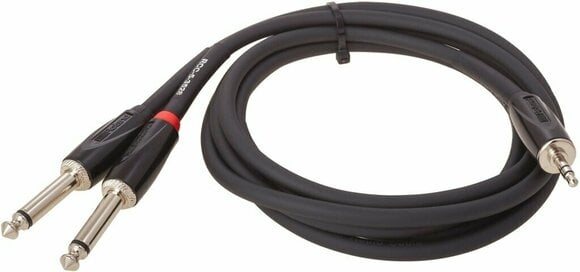
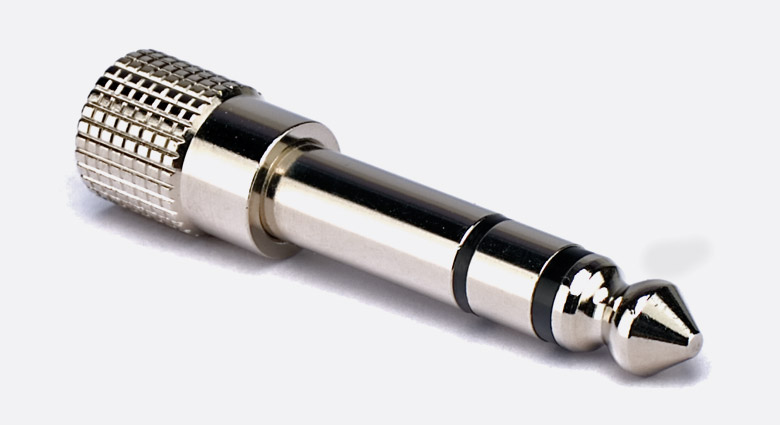
-
- KVRAF
- 16803 posts since 8 Mar, 2005 from Utrecht, Holland
Cable & adapter looks good. But what is the output labelled on the device you plugged it into?
Never mind, I've read the Arturia Drum Brute owner's manual. Either mix or headphone out would be OK, these are very similar.
Page 5: "connect to" does not discuss any of the analog connections. Usually one of the last pages gives technical specifications of inputs & outputs, but this manual has none of that. There is no pan control per instrument. If you search for the word "stereo" in the manual it's mentioned only when briefly discussing the trigger connector.
Seems this device is essentially totally mono, but compatible with stereo gear. Going through the distortion effect in mono is the only thing you can do.
Never mind, I've read the Arturia Drum Brute owner's manual. Either mix or headphone out would be OK, these are very similar.
Page 5: "connect to" does not discuss any of the analog connections. Usually one of the last pages gives technical specifications of inputs & outputs, but this manual has none of that. There is no pan control per instrument. If you search for the word "stereo" in the manual it's mentioned only when briefly discussing the trigger connector.
Seems this device is essentially totally mono, but compatible with stereo gear. Going through the distortion effect in mono is the only thing you can do.
We are the KVR collective. Resistance is futile. You will be assimilated.
My MusicCalc is served over https!!
My MusicCalc is served over https!!
-
- KVRist
- 175 posts since 1 Apr, 2022
I always use analog mixer for the drum distortion.
Apart from the EQing,
BBE, dbx 1BX, dbx 4BX, Cassette Tape Rec with DolbyB/C ---> Tape Play without Dolby
are my tricks to bring back the punch.
Apart from the EQing,
BBE, dbx 1BX, dbx 4BX, Cassette Tape Rec with DolbyB/C ---> Tape Play without Dolby
are my tricks to bring back the punch.
-
- KVRAF
- 2719 posts since 2 Jul, 2010
Not sure what the techno people are doing, but...
If I have to distort a drum bus I'd use emphasis/de-emphasis processing to buy the low end some headroom and beef it up again afterwards.
This can be done with EQ before and after the distortion, or a plugin like Reelbus that builds it in. I actually built a Eurorack module to do this signal chain but it's only mono.
If I have to distort a drum bus I'd use emphasis/de-emphasis processing to buy the low end some headroom and beef it up again afterwards.
This can be done with EQ before and after the distortion, or a plugin like Reelbus that builds it in. I actually built a Eurorack module to do this signal chain but it's only mono.
-

- KVRian
- 631 posts since 10 Jan, 2017
First thing I would ask is what sort of results are you aiming for - as "club standard" production in techno will vary a great deal from the really underground stuff to the sort that's being played on big festival stages. Take Adam Beyer for example - I could be wrong but it's unlikely he's producing his drums in the way you describe here, whereas someone doing a raw improvised live set might be?
-
- KVRer
- Topic Starter
- 7 posts since 4 Sep, 2022
how are underground techno producers creating tracks? what kind of workflow would they use in terms of plugins once they have created the initial drum track? or are they not using plugins and doing this all with hardware?andymcbain wrote: Mon Sep 05, 2022 6:38 pm First thing I would ask is what sort of results are you aiming for - as "club standard" production in techno will vary a great deal from the really underground stuff to the sort that's being played on big festival stages. Take Adam Beyer for example - I could be wrong but it's unlikely he's producing his drums in the way you describe here, whereas someone doing a raw improvised live set might be?
-
- KVRian
- 631 posts since 10 Jan, 2017
Production methods will vary from person to person. I'm more thinking about the overall approach to producing your drums - as in, putting your drum machine master outs through a distortion pedal and working with that. This is likely to give you a raw sound that might lend itself to more underground styles of techno, but you might struggle to match the production of the more commercial stuff - where there's likely to be more attention to the individual stems. It's all about your personal taste and what you're trying to achieve.synthhelp wrote: Mon Sep 05, 2022 7:38 pmhow are underground techno producers creating tracks? what kind of workflow would they use in terms of plugins once they have created the initial drum track? or are they not using plugins and doing this all with hardware?andymcbain wrote: Mon Sep 05, 2022 6:38 pm First thing I would ask is what sort of results are you aiming for - as "club standard" production in techno will vary a great deal from the really underground stuff to the sort that's being played on big festival stages. Take Adam Beyer for example - I could be wrong but it's unlikely he's producing his drums in the way you describe here, whereas someone doing a raw improvised live set might be?
-
- KVRAF
- 8686 posts since 24 May, 2002 from Tutukaka, New Zealand
I'd be wary about taking stuff on the internet for granted - especially about how people are mixing techno. There's a lot (and I mean an awful lot) of very dubious shite out there that is accepted as gospel when in actual fact, f**k knows where it came from. E.g. there's no reason not to put things through a distortion pedal, but do you really believe anyone puts stuff like drums through a distortion pedal and retains clarity? That's simply not what distortion pedals do. At all. In the slightest. No doubt some use (and abuse) all kinds of plugins that add harmonics etc, there a hundreds of tape emus etc. But a distortion pedal? As in overdrive and fuzz - that's more what I call f**k-stuff-up FX. So if you want to f**k your drums up then that's OK. Just don't expect crisp clarity, isolation, punch and cleanliness from anything through a distortion pedal.
There have been loads of genres where extreme distorted kicks have been used - fine if that's what you want, but their dynamics are never the same as standard kicks unfuckedup. I used to occasionally do that myself in the past but knew my drums were then not going to sound anything like a standard drum set I'd do with anything else.
I think you're maybe chasing your own tail here. If you want subtle harmonics from tape/saturation/etc that's doable and you might get powerful sizzling drums that still have power and cut through. A fuzz pedal ain't going to do that.
There have been loads of genres where extreme distorted kicks have been used - fine if that's what you want, but their dynamics are never the same as standard kicks unfuckedup. I used to occasionally do that myself in the past but knew my drums were then not going to sound anything like a standard drum set I'd do with anything else.
I think you're maybe chasing your own tail here. If you want subtle harmonics from tape/saturation/etc that's doable and you might get powerful sizzling drums that still have power and cut through. A fuzz pedal ain't going to do that.
-
- KVRer
- Topic Starter
- 7 posts since 4 Sep, 2022
that could be it, maybe these people are just making lofi techno? and maybe a lot of it isn't meant to sound consistent with modern stuff? I can't compare how this sounds on a club system, I haven't really heard stuff like this on a big soundsystem vs modern business techno. most of what I have heard in clubs has been pretty standardised and clean.kritikon wrote: Tue Sep 06, 2022 9:19 am I'd be wary about taking stuff on the internet for granted - especially about how people are mixing techno. There's a lot (and I mean an awful lot) of very dubious shite out there that is accepted as gospel when in actual fact, f**k knows where it came from. E.g. there's no reason not to put things through a distortion pedal, but do you really believe anyone puts stuff like drums through a distortion pedal and retains clarity? That's simply not what distortion pedals do. At all. In the slightest. No doubt some use (and abuse) all kinds of plugins that add harmonics etc, there a hundreds of tape emus etc. But a distortion pedal? As in overdrive and fuzz - that's more what I call f**k-stuff-up FX. So if you want to f**k your drums up then that's OK. Just don't expect crisp clarity, isolation, punch and cleanliness from anything through a distortion pedal.
There have been loads of genres where extreme distorted kicks have been used - fine if that's what you want, but their dynamics are never the same as standard kicks unfuckedup. I used to occasionally do that myself in the past but knew my drums were then not going to sound anything like a standard drum set I'd do with anything else.
I think you're maybe chasing your own tail here. If you want subtle harmonics from tape/saturation/etc that's doable and you might get powerful sizzling drums that still have power and cut through. A fuzz pedal ain't going to do that.
it would be interesting to know about people's workflow though with this sort of music using this sort of technique because most of the focus out there tends to be on very clean production. i'm probably gonna have to change my approach completely and just use trial and error and just hope people aren't disappointed with my results I guess.