Well, of course not. You'd need an actual audience for that.
Is it ok to render to a different sample rate than your DAW session?
- KVRAF
- 2195 posts since 8 Jan, 2005
I got you... clever but..
The actual point is, to just make it and not care about minuscule differences in supposed quality of sound.
MacMini M2 Pro …… MacOS Tahoe ……… Reason 14
- KVRAF
- 7673 posts since 2 Sep, 2019
It's not hard to just render to 96kHz and then convert your mixdown with Acon or r8brain, or Wavelab or iZotope.
You may not care about aliasing now, but just wait until Wytse or or Paul Turd runs your mix through Plugin Doctor and calls it snake oil! You'll be ruined! Or worse yet, you could get called out by the Voice Of God himself, Whore-all.
THIS MUSIC HAS BEEN MIXED TO BE PLAYED LOUD SO TURN IT UP
- KVRAF
- 2195 posts since 8 Jan, 2005
Until that happens, I'll do everything 44.1k. No need to convert anything to anything. Just - as already written - what you hear is what you get
edit: fukk Paul Turd!!!!
MacMini M2 Pro …… MacOS Tahoe ……… Reason 14
- KVRAF
- 3688 posts since 21 Nov, 2015
Plugins can sound quite different @48kHz or @96kHz, just something to keep in mind.
You can be creative in any right place on Earth, and not only in the wealthiest cities. Bring the world feelings from everywhere, and not only feelings of capitalistic or jail environment.
― Aleksey Vaneev
https://linuxdaw.org
― Aleksey Vaneev
https://linuxdaw.org
- KVRAF
- 7673 posts since 2 Sep, 2019
I avoid those plugins. There’s not too many like that now. None that I use. I think Nomad Factory had that problem. I don’t know if they still do.
I switch back and forth between 96kHz for recording and rendering, and 48kHz for mixing without issue.
Last edited by jamcat on Sun Aug 27, 2023 9:55 pm, edited 1 time in total.
THIS MUSIC HAS BEEN MIXED TO BE PLAYED LOUD SO TURN IT UP
- KVRAF
- 3688 posts since 21 Nov, 2015
Even the ones working fine will sound sightly different, so making mixing decisions @48kHz then might sound sightly different when rendered @96kHz.
You can be creative in any right place on Earth, and not only in the wealthiest cities. Bring the world feelings from everywhere, and not only feelings of capitalistic or jail environment.
― Aleksey Vaneev
https://linuxdaw.org
― Aleksey Vaneev
https://linuxdaw.org
- KVRAF
- 7673 posts since 2 Sep, 2019
That’s true. I suppose it would sound slightly different since it is different. After all, if there was no difference, what would be the point?
But the difference should only be in the clarity, with less artifacts at 96kHz. Your EQ bands shouldn’t shift and your delay times shouldn’t change, though. Those are the kind of problem I recall with Nomad Factory.
I think one of the reasons you don’t really see disparities in plugin behaviour at different samplerates anymore is because of internal oversampling. Regardless of what samplerate the audio is when it goes in, it gets upsampled to 96kHz or 192kHz or such for processing, then packed back in at the original samplerate on its way out of the plugin.
This gets back to why I suggest recording and/or rendering at 96kHz: because the numerous in & out conversions from one plugin to another are much gentler, if not non-existent.
But the difference should only be in the clarity, with less artifacts at 96kHz. Your EQ bands shouldn’t shift and your delay times shouldn’t change, though. Those are the kind of problem I recall with Nomad Factory.
I think one of the reasons you don’t really see disparities in plugin behaviour at different samplerates anymore is because of internal oversampling. Regardless of what samplerate the audio is when it goes in, it gets upsampled to 96kHz or 192kHz or such for processing, then packed back in at the original samplerate on its way out of the plugin.
This gets back to why I suggest recording and/or rendering at 96kHz: because the numerous in & out conversions from one plugin to another are much gentler, if not non-existent.
THIS MUSIC HAS BEEN MIXED TO BE PLAYED LOUD SO TURN IT UP
-
- KVRist
- Topic Starter
- 195 posts since 16 Feb, 2004
This is partly my thinking. My sessions tend to get pretty bloated, so mixing at 96 kHz becomes unwieldy. This is not an academic matter with regard to sound quality as some have asserted, especially with regard to VST synths, some of which sound clearly superior at higher sample rates.CrystalWizard wrote: Sun Aug 27, 2023 3:32 am You will get more tracks, plug ins, etc while working at 48, then you render it out non real time at higher resolution. that is, if you care to have the higher resolution.
-
- KVRist
- Topic Starter
- 195 posts since 16 Feb, 2004
I notice you recommend minphase for SRC. In my experience, many of the most highly rated SRCs (like FinalCD) are linear phase. In your opinion, is the pre-ringing that great a sin, or are there other reasons for leaning toward minphase conversion?jamcat wrote: Sun Aug 27, 2023 9:05 am The law of internal oversampling: whatever goes up must come down.
And much like gravity, it's the impact of packing it back in to 44.1 or 48kHz over and over again that kills.
Rendering at 96kHz avoids that, and then you do a single high quality offline minphase conversion on your mixdown with a dedicated SRC of far greater quality than the plugin's internal conversion.
Also, am I correct in thinking that the quality of the SRC is more important with regard to downsampling than upsampling? It would seem to me that increasing the audio bandwidth would involve less loss/distortion than the reverse. Am I off base on this point? Does imaging need to be taken into consideration?
Thanks to you and everyone else who has contributed thus far.
- KVRAF
- 7673 posts since 2 Sep, 2019
Primarily just because of the pre-ringing, I think. Every SRC that does minphase also has a linphase mode, but minphase is generally recommended over linphase by those developers.MaxC wrote: Mon Aug 28, 2023 1:53 am I notice you recommend minphase for SRC. In my experience, many of the most highly rated SRCs (like FinalCD) are linear phase. In your opinion, is the pre-ringing that great a sin, or are there other reasons for leaning toward minphase conversion?
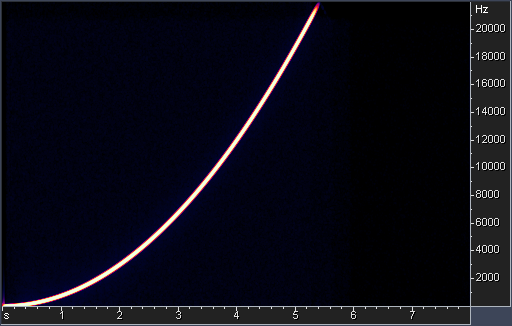
Here is a comparison of 96kHz to 44.1kHz conversion with minphase vs linphase in one of the most regarded SRCs, r8brain PRO.
minphase

linphase

https://src.infinitewave.ca/?Top=r8brai ... &Spec=0100
You can see, while both perform very well, minphase is the clear winner, performing essentially flawlessly. It introduces a minuscule amount of low level white noise, which is evenly distributed across the frequency spectrum. There is absolutely no trace of aliasing or pre-ringing at all, unlike linphase.
For context, this could be what the downsampling of a typical plug-in’s oversampling might look like:

(96 to 44.1 internal conversion in NI Kontakt 5.7)
Yes, I think downsampling is more critical. But keep in mind that when a plugin upsamples from 44.1kHz before processing, it has to downsample back down to 44.1kHz when it’s done. And every plugin on every track may be doing this. Again, I direct everyone to the image above.MaxC wrote: Mon Aug 28, 2023 1:53 am Also, am I correct in thinking that the quality of the SRC is more important with regard to downsampling than upsampling? It would seem to me that increasing the audio bandwidth would involve less loss/distortion than the reverse. Am I off base on this point? Does imaging need to be taken into consideration?
THIS MUSIC HAS BEEN MIXED TO BE PLAYED LOUD SO TURN IT UP
-
- KVRist
- Topic Starter
- 195 posts since 16 Feb, 2004
So no regard given to the phase response or the high frequency rolloff then? Surely the two methods are debated on account of tradeoffs, no? What would be the use case for linear phase SRC otherwise?jamcat wrote: Mon Aug 28, 2023 3:07 am Here is a comparison of 96kHz to 44.1kHz conversion with minphase vs linphase in one of the most regarded SRCs, r8brain PRO.
You can see, while both perform very well, minphase is the clear winner, performing essentially flawlessly. It introduces a minuscule amount of low level white noise, which is evenly distributed across the frequency spectrum. There is absolutely no trace of aliasing or pre-ringing at all, unlike linphase.
Yes, I appreciate your point here. I was just thinking, if I want to upsample a mixdown prior to mastering, I can be less discriminating with the upsampling algorithm than the downsampling algorithm if upsampling, by its very nature, doesn't impart as much distortion.jamcat wrote: Mon Aug 28, 2023 3:07 am Yes, I think downsampling is more critical. But keep in mind that when a plugin upsamples from 44.1kHz before processing, it has to downsample back down to 44.1kHz when it’s done. And every plugin on every track may be doing this. Again, I direct everyone to the image above.
I realize in the grand scheme of things we're getting into the weeds here, but sometimes I enjoy the weeds
- KVRAF
- 7673 posts since 2 Sep, 2019
Well, this is just my opinion here, but minphase is much more "analogue" in its result. Zero digital artifacts with a little bit of noise and some high frequency rolloff... what's not to love?MaxC wrote: Tue Aug 29, 2023 1:51 am So no regard given to the phase response or the high frequency rolloff then? Surely the two methods are debated on account of tradeoffs, no? What would be the use case for linear phase SRC otherwise?
The high frequency rolloff is quite gradual and slight, starting at 4k and hitting only about .5dB by 20k. And if you want, this could easily be compensated for with pre-emphasis before mixdown, or during mastering.
There isn't a specific use case for linphase. It's just a different filtering technique which some may prefer. There's always a trade-off and it comes down to personal taste and what works best in practice for the particular situation.
I would assume that upsampling x2 would be very easy math that just interpolates between the original samples on either side and introduces no significant problems, but someone will probably be along shortly to prove otherwise.MaxC wrote: Tue Aug 29, 2023 1:51 am Yes, I appreciate your point here. I was just thinking, if I want to upsample a mixdown prior to mastering, I can be less discriminating with the upsampling algorithm than the downsampling algorithm if upsampling, by its very nature, doesn't impart as much distortion.
Of course if you record your audio at 96kHz to begin with, you won't have to worry about that either way, and you will be moving your ADC's anti-aliasing filter up an octave, where its own phase ripple and rolloff will be outside the audible spectrum. So that's a win-win.
THIS MUSIC HAS BEEN MIXED TO BE PLAYED LOUD SO TURN IT UP