

Do they also think rock music peaked in 1971?zerocrossing wrote: Fri Mar 01, 2024 3:45 am Part of my pessimism may come from spending too much time on Gearspace, where there’s a contingent who think that the Jupiter 8 is the pinnacle of technology, and we should go back and pretend everything that happened afterwards never occurred.

What is conventionality/novelty in electronic music?
-
- KVRAF
- 7533 posts since 23 Nov, 2016 from a small city
-
- KVRian
- Topic Starter
- 1194 posts since 28 May, 2010 from Finland
But there's no musician without an instrument engineer.vurt wrote: Thu Feb 29, 2024 7:50 pmi did, for university
you could notice a pattern, where a lot of techniques are first invented using "manual means". E.g. a bass resampler is just samplers. Then some developer figures to package to process into an algorithm so that one doesn't have to do it with samplers. This:
Another example is glitch plug-ins. They were originally made using manual edits and the "process audio" function. Yet, with the glitch plug-in you can now do the work of e.g. 50 sample slicers and process audio functions.
- broadens knowledge about the technique to new producers
- allows building more complex instruments by basing on the new one, rather than the old ones.
we have a very different idea of what innovation and novelty means.

Music like some other art forms is a combination of available technology and views/taste about how to utilize it. Therefore also novelty in these genres is. The room for novelty grows smaller the fewer technologies there are.

-
- KVRian
- Topic Starter
- 1194 posts since 28 May, 2010 from Finland
Reductio ad subjectivity. But it's true that people are satisfied by different things.seafire wrote: Fri Mar 01, 2024 8:16 am I say, do whatever makes you happy!
If you are worrying about being original, or innovative or whatever, you won't get much done or much pleasure from it.
-

- KVRAF
- 4066 posts since 3 Jul, 2022
That's an excellent point actually, I fully agree. And I am pretty sure than the people who really innovated in music weren't the one trying to innovate.seafire wrote: Fri Mar 01, 2024 8:16 am I say, do whatever makes you happy!
If you are worrying about being original, or innovative or whatever, you won't get much done or much pleasure from it.
-
- KVRAF
- 7533 posts since 23 Nov, 2016 from a small city
Singers?
-

- Beware the Quoth
- 35529 posts since 4 Sep, 2001 from R'lyeh Oceanic Amusement Park and Funfair
Some music, like some other art forms. Never heard of singing?soundmodel wrote: Fri Mar 01, 2024 8:00 am But there's no musician without an instrument engineer.
Music like some other art forms
No, the music is not a combination of those things. If technology is involved, then the music is the result of an application of available technology.is a combination of available technology and views/taste about how to utilize it.
Novelty in these genres is what?Therefore also novelty in these genres is.
And your 'therefore' is unsupported by evidence. Saying 'x is y so q is y' isnt proof that q is y by the way. Just because you dont recognise any other factors in novelty, that doesnt mean there are no other factors.
And yet the number of technologies actually always increases.The room for novelty grows smaller the fewer technologies there are.
Also, the room for novelty grows larger the more of those technologies you combine.
But so what? The scope for novelty isnt solely a factor of available technologies.
And also, since your own comments about the history of electronic music technology indicated an ironically big shortfall of your own knowledge of that, then we get back to that point about your perception of what is novel being artificially delimited by a restricted awareness of other technologies and other uses of that technology.
The room for thinking something is novel grows larger the more ignorant you are of prior and available technologies, and the pre-existing applications of those technologies.
An idiot on Set Theory:
"In some cases there is an object called red that contains everything that is red. In much the same way a pot is a plate."
"In some cases there is an object called red that contains everything that is red. In much the same way a pot is a plate."
-
- KVRian
- Topic Starter
- 1194 posts since 28 May, 2010 from Finland
You're wrong. There's no genre that relies on an instrument such as a TB-303 without the TB-303. There's fewer film music if there's no Omnisphere or VSL or something. ...whyterabbyt wrote: Fri Mar 01, 2024 10:02 amNo, the music is not a combination of those things. If technology is involved, then the music is the result of an application of available technology.soundmodel wrote: Fri Mar 01, 2024 8:00 am is a combination of available technology and views/taste about how to utilize it.
These are genre-defining technologies. And their source is musical engineers. Not only the musician.
I believe a lot of dance music is based on Roland sounds and a lot of film and ad music is based on Spectrasonics sounds. The musicians didn't create those sounds.
I would say electronically produced music is about 50% technology and 50% art. So e.g. on a TR-808 the sounds and the controls are the tech, the programmed sequences are the art.
However, the significant bit is that the technology must precede the art. Except for singers (maybe something else too), the musicians cannot do a particular thing (e.g. image synthesis), before there's an accessible tech for it.
-
- Beware the Quoth
- 35529 posts since 4 Sep, 2001 from R'lyeh Oceanic Amusement Park and Funfair
Firstly, genres arent 'music', they're classifications for music. Seconfly, tools arent music. If a genre relies on a specific instrument, that's not a limitation of music, its a limitation of tools.soundmodel wrote: Fri Mar 01, 2024 11:15 am You're wrong. There's no genre that relies on an instrument such as a TB-303 without the TB-303.
And so what? Are you trying to argue that the musicians who used a 303 wouldnt have just created music any other way? Absolute tosh.
Nonsense. It would be different, not less.There's fewer film music if there's no Omnisphere or VSL or something. ...
Genre isnt music.These are genre-defining technologies. And their source is musical engineers. Not only the musician.
I think you'll find that musicians did create those sounds. Eric Persing is a composer.I believe a lot of dance music is based on Roland sounds and a lot of film and ad music is based on Spectrasonics sounds. The musicians didn't create those sounds.
Im sure you would.I would say electronically produced music is about 50% technology and 50% art.
An idiot on Set Theory:
"In some cases there is an object called red that contains everything that is red. In much the same way a pot is a plate."
"In some cases there is an object called red that contains everything that is red. In much the same way a pot is a plate."
-
- Boss Lovin' DR
- 14312 posts since 15 Mar, 2002 from the grimness of yorkshire
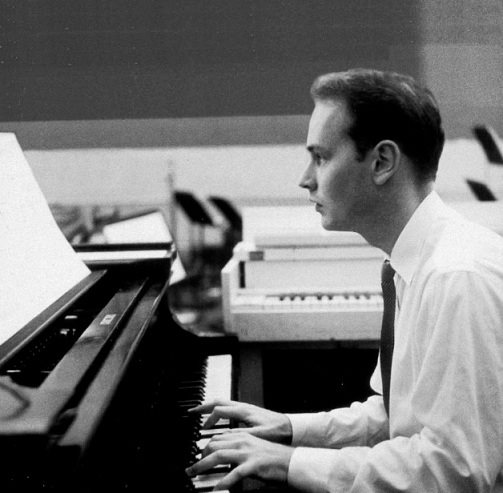
Here we see John Williams writing the theme from Star Wars using Omnisphere (out of picture).whyterabbyt wrote: Fri Mar 01, 2024 11:37 amNonsense. It would be different, not less.There's fewer film music if there's no Omnisphere or VSL or something. ...
-
- KVRian
- Topic Starter
- 1194 posts since 28 May, 2010 from Finland
In electronically produced music tools are an unremovable part of what's possible in the first place. No 303, no 303 sounds and sequences. No piano, no Star Wars theme. Or no [a particular piano], no particular sound and performance of Star Wars theme. It can also be less, because better and worse gear are not equivalent.whyterabbyt wrote: Fri Mar 01, 2024 11:37 amFirstly, genres arent 'music', they're classifications for music. Seconfly, tools arent music. If a genre relies on a specific instrument, that's not a limitation of music, its a limitation of tools.soundmodel wrote: Fri Mar 01, 2024 11:15 am You're wrong. There's no genre that relies on an instrument such as a TB-303 without the TB-303.
And so what? Are you trying to argue that the musicians who used a 303 wouldnt have just created music any other way? Absolute tosh.
Nonsense. It would be different, not less.There's fewer film music if there's no Omnisphere or VSL or something. ...
I think you'll find that musicians did create those sounds. Eric Persing is a composer.I believe a lot of dance music is based on Roland sounds and a lot of film and ad music is based on Spectrasonics sounds. The musicians didn't create those sounds.
You cannot have digitally manipulated sounds without electronics. Simple as that. Once there's some instrument, after that it's possible to have those sounds and performances.
The musicians using the sounds and the sample engine I meant.
It could be possible to analyze and see if there's a pattern in some genre before Omnisphere and after Omnisphere, or some other tool.
-
- KVRAF
- 4066 posts since 3 Jul, 2022
It looks more like neo just before being chased by the agent smith.donkey tugger wrote: Fri Mar 01, 2024 11:44 amHere we see John Williams writing the theme from Star Wars using Omnisphere (out of picture).whyterabbyt wrote: Fri Mar 01, 2024 11:37 amNonsense. It would be different, not less.There's fewer film music if there's no Omnisphere or VSL or something. ...
-

- KVRAF
- 16890 posts since 8 Mar, 2005 from Utrecht, Holland
Nonsense. As a creative individual you use whatever is at your disposal.soundmodel wrote: Fri Mar 01, 2024 11:54 am In electronically produced music tools are an unremovable part of what's possible in the first place. No 303, no 303 sounds and sequences.
You can use anything to replace a 303 and no one cares.
We are the KVR collective. Resistance is futile. You will be assimilated. 
My MusicCalc is served over https!!
My MusicCalc is served over https!!
-
- KVRAF
- 7533 posts since 23 Nov, 2016 from a small city
So you're saying that if those instruments didn't exist, then the composer wouldn't make music? It's only because someone made those instruments that music can happen. If nobody made those instruments then no music can happen. These instruments were made out of the scope of the desire to make musicsoundmodel wrote: Fri Mar 01, 2024 11:54 am In electronically produced music tools are an unremovable part of what's possible in the first place. No 303, no 303 sounds and sequences. No piano, no Star Wars theme. Or no [a particular piano], no particular sound and performance of Star Wars theme. It can also be less, because better and worse gear are not equivalent.
You cannot have digitally manipulated sounds without electronics. Simple as that. Once there's some instrument, after that it's possible to have those sounds and performances.
The musicians using the sounds and the sample engine I meant.
It could be possible to analyze and see if there's a pattern in some genre before Omnisphere and after Omnisphere, or some other tool.
Therefore music doesn't exist, except vocal music.
-
- KVRian
- Topic Starter
- 1194 posts since 28 May, 2010 from Finland
Yes, and the main point in the thread is that "novelty" is partly about tools.Bunny_boy wrote: Fri Mar 01, 2024 12:00 pmSo you're saying that if those instruments didn't exist, then the composer wouldn't make music? It's only because someone made those instruments that music can happen. If nobody made those instruments then no music can happen. These instruments were made out of the scope of the desire to make musicsoundmodel wrote: Fri Mar 01, 2024 11:54 am In electronically produced music tools are an unremovable part of what's possible in the first place. No 303, no 303 sounds and sequences. No piano, no Star Wars theme. Or no [a particular piano], no particular sound and performance of Star Wars theme. It can also be less, because better and worse gear are not equivalent.
You cannot have digitally manipulated sounds without electronics. Simple as that. Once there's some instrument, after that it's possible to have those sounds and performances.
The musicians using the sounds and the sample engine I meant.
It could be possible to analyze and see if there's a pattern in some genre before Omnisphere and after Omnisphere, or some other tool.
Therefore music doesn't exist, except vocal music.