Glue compressor before or after clipper?

How to do this, that and the other. Share, learn, teach. How did X do that? How can I sound like Y?
RELATED
PRODUCTS

Post

WackyZoundz wrote: Tue Jul 23, 2024 9:09 am
_leras wrote: Tue Jul 23, 2024 7:02 am You might be surprised how much you can get away with for high hats and snares - especially if the recording or samples are not already clipped and processed.
That's true. But realistically - how large are the transients of hi-hats/cymbals/etc compared to those of kicks and snares? It's usually the latter which reaches the clipper threshold first, long before the cymbals do...
In which case your samples are already clipped and limited and you can skip straight to the compressor.

Talking about spiky transients. hh, cymbals and snares all of which have a loud fast initial spike when hit.

As I said already this may not be an issue with modern samples.

Post

WackyZoundz wrote: Tue Jul 23, 2024 9:09 am
_leras wrote: Tue Jul 23, 2024 7:02 am You might be surprised how much you can get away with for high hats and snares - especially if the recording or samples are not already clipped and processed.
That's true. But realistically - how large are the transients of hi-hats/cymbals/etc compared to those of kicks and snares? It's usually the latter which reaches the clipper threshold first, long before the cymbals do...
In which case your samples are already clipped and limited and you can skip straight to the compressor.

I'm taking about spiky transients. hh, cymbals and snares all of which have a loud fast initial spike when hit. You can see the shape. Kick drums usually don't have a spike.

As I said already this may not be an issue with modern samples, and it can also be addressed on individual tracks before drum bus compression.

I just think you don't want a compressor reacting to a spike in an unexpected way.

Post

The right answer is both

Post

jamcat wrote: Mon Jul 22, 2024 11:07 pm Don't use a clipper. Use an ISP limiter instead, as the last processor.
Whaa?? :o :o

Post

Inter-Sample Peak limiter.

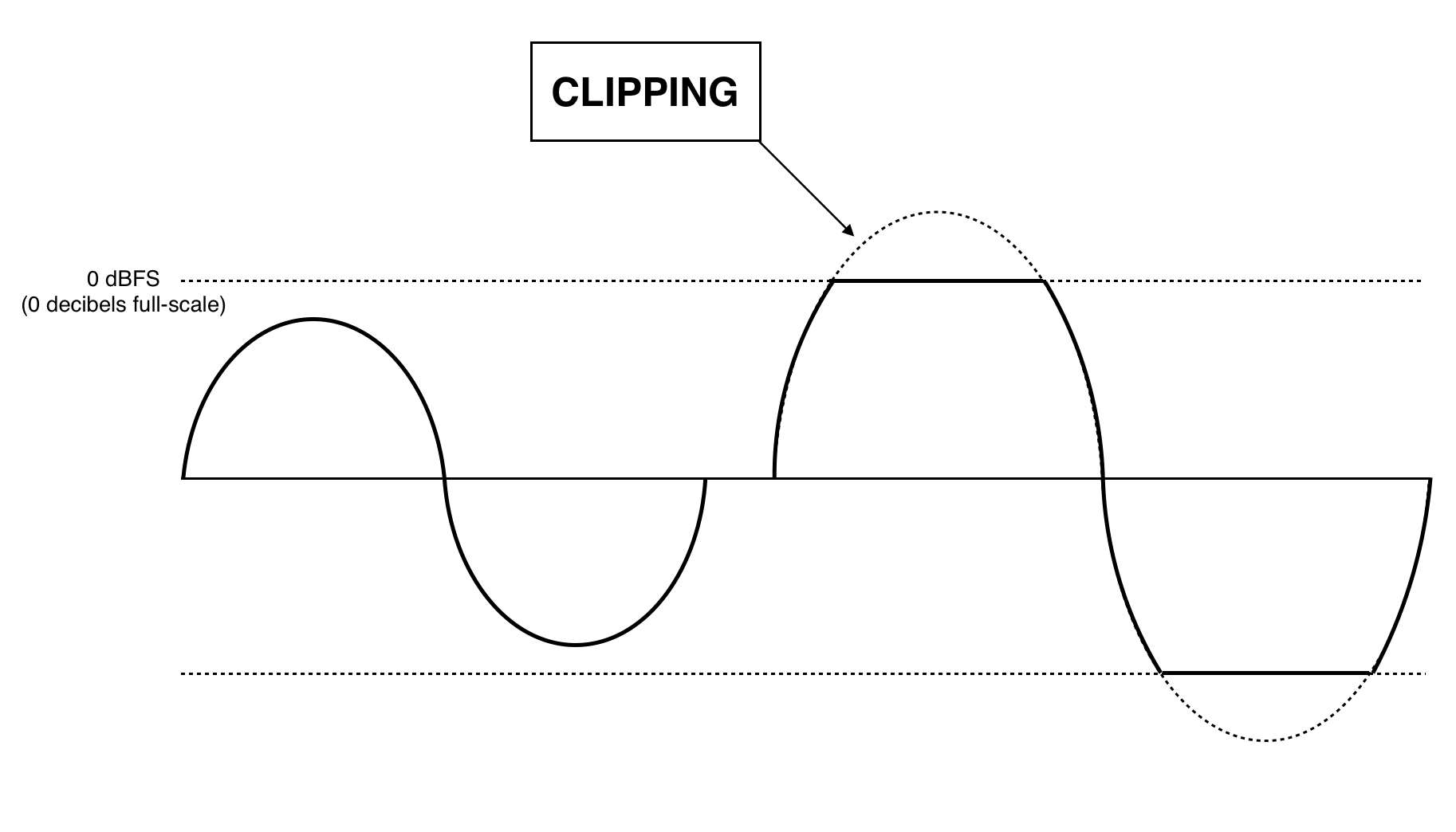
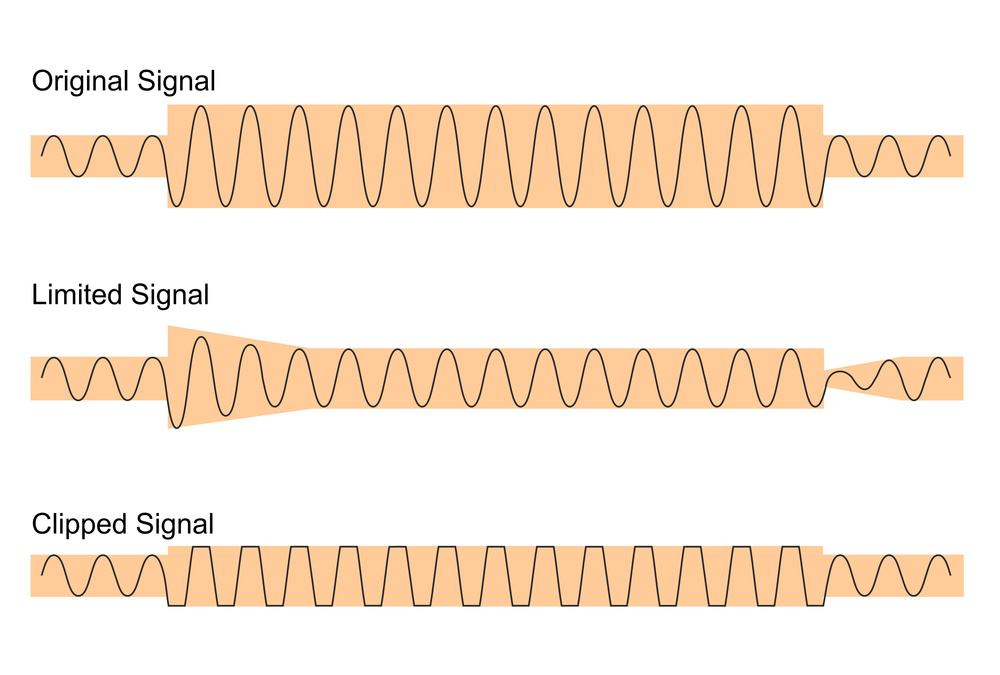
A clipper will still leave implied peaks in place, or even create new ones. These invisible peaks get rendered by the D/A reconstruction filter, and are heard as crackling and pops in your speakers.

Image


Also, clipping isn't transparent and doesn't retain perceived dynamics, unlike limiting.


Image
THIS MUSIC HAS BEEN MIXED TO BE PLAYED LOUD SO TURN IT UP

Post

Opaque wrote: Mon Jul 22, 2024 11:32 am To me, it seems more logical to use a clipper first, if you have the intention of using it on the drum buss. That way, you shave off all the extra spiky/sharp transients that stick out, and then compress the sound. Otherwise, those sharp, short attacks will trigger the compressor too hard every time, as those are the loudest parts of course. Afterwards, the compressor can actually react more gently and further glue the sound.
This makes most sense to me. At first I was thinking it might be better the other way around, but it makes total sense to clip first in order to get better glue. Thanks!
Ableton 12 Suite, Analog Rytm

Post

The transients will go above the compressor threshold anyway. Except if you set the compressor threshold high enough, making it useless.

Post

synthesized wrote: Wed Jul 24, 2024 8:37 am
Opaque wrote: Mon Jul 22, 2024 11:32 am To me, it seems more logical to use a clipper first, if you have the intention of using it on the drum buss. That way, you shave off all the extra spiky/sharp transients that stick out, and then compress the sound. Otherwise, those sharp, short attacks will trigger the compressor too hard every time, as those are the loudest parts of course. Afterwards, the compressor can actually react more gently and further glue the sound.
This makes most sense to me. At first I was thinking it might be better the other way around, but it makes total sense to clip first in order to get better glue. Thanks!
This sounds like it makes sense,and it does make sense to clip before a final limiter but a compressor will completely miss the transient peaks and actually increase them due to any makeup gain applied,so putting the clipper first you will likely end up with similar peaks as you started with before the clipping and compression .You could clip before and after the compressor but clipping twice in one stage of the process is unnecessary and adds artifacts which also stack up. I usually gently clip the kick and snare individually before the drum group (especially if they are going to hit together on the down beat) then compress and clip a little bit again on the drum group and clip a little bit again before the final limiter, however this is not suitable for some types of music .Probably best to put a o-scope on the end of the chain and move the clipper before and after the compressor and see what happens.

Post

jamcat wrote: Tue Jul 23, 2024 7:38 pm Inter-Sample Peak limiter.

A clipper will still leave implied peaks in place, or even create new ones. These invisible peaks get rendered by the D/A reconstruction filter, and are heard as crackling and pops in your speakers.

Image


Also, clipping isn't transparent and doesn't retain perceived dynamics, unlike limiting.


Image
I don't think the ISPs are heard as crackles or pops by themselves, the problem with them is that if one did a final master render with a ceiling of 0 or -0.1 or so, then those peaks might actually cross the 0 in a rendered file and be heard as pops or crackles (this is why there's a suggestion to render at a slightly lower ceiling, along with possible format conversion artifacts). ISP enabled limiters solve that issue.
Also, this means that within digital, the ISPs do not exist for the compressor any more than they would after a limiter - the compressor is not going to react to those peaks if just a clipper is used.

And I would argue that clippers are still better than limiters in this case. They produce distortion, but the clipped part is already a short and sharp transient, you're not clipping a pad or bassline here, so that distortion might actually be beneficial if it manages to retain the energy of what was an already essentially white noise peak of a sound, bot now with lower volume (e.g. shaving off 0.5db, 1db, or so of spiky percussion).
On the other hand, the way limiters reduce level without distorting is by reacting very fast and ducking the signal basically (which can be heard if you smash any good limiter), so by doing that they might actually impact the groove/feel of percussion much more so than a clipper.

P.S. Again, I might be wrong... if someone has experience working with Dua Lipa or Skrillex, please correct me.

Post

jamcat wrote: Tue Jul 23, 2024 7:38 pm Inter-Sample Peak limiter.

A clipper will still leave implied peaks in place, or even create new ones. These invisible peaks get rendered by the D/A reconstruction filter, and are heard as crackling and pops in your speakers.

Image


Also, clipping isn't transparent and doesn't retain perceived dynamics, unlike limiting.


Image
Good diagrams. But limiting is simply turning the volume down (quite aggressively), clipping is simply distortion. Theres uses for both. Saying to not use clippers at all, is kinda crazy. Having said that you can ofc make a limiter distort, and act like a clipper, if the attack is fast enough and theres lookahead and 0ms release.
in fact id wager a clipper is better for taming harsh peaks/transients than a limiter.

And to the point of ISP limiting, thats doesnt really have much to do with either limiting nor clipping. But clipping does take care of ISPs aswell, (since its distortion) while a compressor might not. Apples and oranges imho

Post

Opaque wrote: Wed Jul 24, 2024 3:20 pm
jamcat wrote: Tue Jul 23, 2024 7:38 pm Inter-Sample Peak limiter.

A clipper will still leave implied peaks in place, or even create new ones. These invisible peaks get rendered by the D/A reconstruction filter, and are heard as crackling and pops in your speakers.

Image


Also, clipping isn't transparent and doesn't retain perceived dynamics, unlike limiting.


Image
I don't think the ISPs are heard as crackles or pops by themselves, the problem with them is that if one did a final master render with a ceiling of 0 or -0.1 or so, then those peaks might actually cross the 0 in a rendered file and be heard as pops or crackles (this is why there's a suggestion to render at a slightly lower ceiling, along with possible format conversion artifacts). ISP enabled limiters solve that issue.
Also, this means that within digital, the ISPs do not exist for the compressor any more than they would after a limiter - the compressor is not going to react to those peaks if just a clipper is used.

And I would argue that clippers are still better than limiters in this case. They produce distortion, but the clipped part is already a short and sharp transient, you're not clipping a pad or bassline here, so that distortion might actually be beneficial if it manages to retain the energy of what was an already essentially white noise peak of a sound, bot now with lower volume (e.g. shaving off 0.5db, 1db, or so of spiky percussion).
On the other hand, the way limiters reduce level without distorting is by reacting very fast and ducking the signal basically (which can be heard if you smash any good limiter), so by doing that they might actually impact the groove/feel of percussion much more so than a clipper.

P.S. Again, I might be wrong... if someone has experience working with Dua Lipa or Skrillex, please correct me.
Imho, you are spot on with your analysis!

Post

_leras wrote: Mon Jul 22, 2024 10:13 pm If clipping really spiky transients (obvious in the wave form), they are usually distorted transient sounds anyway like sharp high hats, cymbals, snares, maybe acoustic guitar initial transients. So im these cases clipping can go fairly unnoticed.
Exactly. If you can hear it and it sounds bad, just clip less. It's still helping the compressor behave more smoothly even when you can't hear it.

Post Reply

Return to “Production Techniques”