Real amps vs modelling and plugin amps

A forum for discussion of all things guitar!
Post Reply New Topic
RELATED
PRODUCTS

Post

Scotty wrote: Sat Jul 05, 2025 11:41 am For my own studio use I go with amp sims..etc
Scotty - think there’s 2 debates really.
If the guitarist is playing his real amp in the room he’s probably happy.
You are capturing the DI in parallel and using amp sims in the control room. That’s awesome.

I’m saying if the guitarist was playing an amp modelling combo or a processor +cab in the room he probably ain’t happy. Cos that doesn’t feel or sound right . He’d probably not be able to play his parts with enthusiasm at the least.

I’m coming from the guitar player POV.

What sims are you using and comparing to what kind of live amp tones .fenders /Voxes/Marshalls etc. you find the sim tone equally as good in the control room then hey. Interesting.

Post

@nailerz78

Hmmm, wonder what a phase90 does? Have to Google and see if it makes a square wave lol you lost any hope of credibility to me with this statement. Bless ya still say what I said originally "use what works for you"

Post

YnJ wrote: Sat Jul 05, 2025 12:03 am I've played my digital Yamaha DG1000 almost every day since I got it, the lead tones you can get out of it are awesome. They even make profiles of the preamp for Kemper, which makes me wonder, why didn't the digital amp go more in the direction of having it's own sound instead of with different degrees of success profiling tube and solid state amps, as well as the few digital amps which actually went in that direction?
I can't say for sure, but my theory is that since 1920s, amp designers have been trying different things. Much was discarded for not sounding good, so we just don't know about those designs. Technology was pretty stable until the transistor, so after that, there was an explosion of different amp designs and pedal boosters and gain boxes. Countless versions of these have been made. Some succeeded, some failed. By the time digital came to be, most tonal variations had been tried.
Zerocrossing Media

4th Law of Robotics: When turning evil, display a red indicator light. ~[ ●_● ]~

Post

Perhaps, it doesn't stop manufacturers from developing new tube and solid state amps though. It's not really my field, so perhaps I'm wrong, I would think digital amps should have more potential for creating something new than tube or solid state amps now though. I get the whole get models of all the amps you wish you could afford in a single unit thing, it's more tempting and it probably sell a lot more than any original digital amp would, and I guess that's why not many have been developed in more recent years

Post

YnJ wrote: Sat Jul 05, 2025 8:29 am I might keep an eye out for it then. I tend to get at least rack mounted preamps quite cheap, as it seems that over here I make out most of the buyers market for second hand units
Well, I'd hate to steer you wrong because I don't think it's the kind of sound you're after, but it was used by The Edge, Adrian Belew, and Brian Eno. Also, I found that it's noisy when used as an effects processor after a preamp, it should be first in line. The A5 was the most advanced version of it (there was an A4 but I don't think it added much) and there were footpedal versions that I think were lower quality.

Post

zerocrossing wrote: Sat Jul 05, 2025 3:59 pm I can't say for sure, but my theory is that since 1920s, amp designers have been trying different things. Much was discarded for not sounding good, so we just don't know about those designs. Technology was pretty stable until the transistor, so after that, there was an explosion of different amp designs and pedal boosters and gain boxes. Countless versions of these have been made. Some succeeded, some failed. By the time digital came to be, most tonal variations had been tried.
My "ah-ha" moments when designing amps have always been the mundane stuff, like wiring, transformers, and the preamp biasing that I mentioned in the other thread. There's not much else that can be done with analog circuits because RF and hum start becoming issues.

Post

YnJ wrote: Sat Jul 05, 2025 4:54 pm Perhaps, it doesn't stop manufacturers from developing new tube and solid state amps though. It's not really my field, so perhaps I'm wrong, I would think digital amps should have more potential for creating something new than tube or solid state amps now though. I get the whole get models of all the amps you wish you could afford in a single unit thing, it's more tempting and it probably sell a lot more than any original digital amp would, and I guess that's why not many have been developed in more recent years
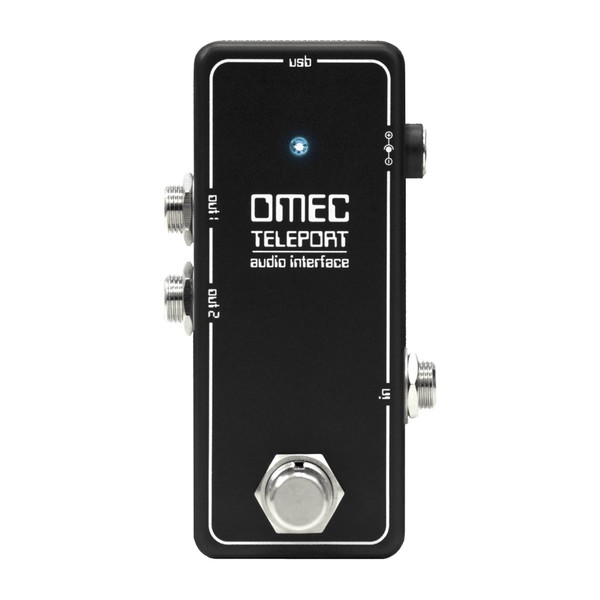
Try using a computer interface pedal (such as the Orange OMEC) with your tube power amp and speakers. I bet doing that with something like iZotope Trash or Blue Cat Audio Destructor would give you much more unique results than some old digital preamp, and the power amp and speakers would make them sound better than when they're just in your computer.

Post

Uncle E wrote: Sat Jul 05, 2025 5:09 pm Well, I'd hate to steer you wrong because I don't think it's the kind of sound you're after, but it was used by The Edge, Adrian Belew, and Brian Eno. Also, I found that it's noisy when used as an effects processor after a preamp, it should be first in line. The A5 was the most advanced version of it (there was an A4 but I don't think it added much) and there were footpedal versions that I think were lower quality
I'm not looking for any sound in particular, I have the basic sounds I need in my Marshalls and the Framus, I just like to find something new and different once in a while. Everybody uses much the same gear in metal it seems, and sound very much the same. I like something that makes me take a different approach and perhaps sound a little different

Post

Uncle E wrote: Sat Jul 05, 2025 5:29 pm Try using a computer interface pedal (such as the Orange OMEC) with your tube power amp and speakers. I bet doing that with something like iZotope Trash or Blue Cat Audio Destructor would give you much more unique results than some old digital preamp, and the power amp and speakers would make them sound better than when they're just in your computer.
Sounds interesting, is it this?

Image

Post

Uncle E wrote: Sat Jul 05, 2025 5:09 pm
YnJ wrote: Sat Jul 05, 2025 8:29 am I might keep an eye out for it then. I tend to get at least rack mounted preamps quite cheap, as it seems that over here I make out most of the buyers market for second hand units
Well, I'd hate to steer you wrong because I don't think it's the kind of sound you're after, but it was used by The Edge, Adrian Belew, and Brian Eno. Also, I found that it's noisy when used as an effects processor after a preamp, it should be first in line. The A5 was the most advanced version of it (there was an A4 but I don't think it added much) and there were footpedal versions that I think were lower quality.
I had the AI that I used in front of my Ampeg Reverbrocket that I thought was great. Loved that spring loaded expression button.
Zerocrossing Media

4th Law of Robotics: When turning evil, display a red indicator light. ~[ ●_● ]~

Post

YnJ wrote: Sat Jul 05, 2025 6:08 pm Sounds interesting, is it this?

Image
Yes. IK Multimedia and Hotone also make versions, among others. Maybe something like the Tonex One is the best option, that way you can capture whatever sound you make and use it without your computer later.

Post

I don’t really understand the “looking for new tones” people. How many amps are there, both currently in production and on the used market? How many gain, compressor, and EQ boxes are there? How many guitars? Pickups? Speakers? Now imagine the fact that most of those things have settings, often many. Oh, add microphones and mic placements and even room treatments. Next, let’s explore studio effects…

I hate to say it, but if you’re unable to find new sounds, it’s probably not that amp simulators aren’t exploring new designs.
Zerocrossing Media

4th Law of Robotics: When turning evil, display a red indicator light. ~[ ●_● ]~

Post

FrettedSynth wrote: Sat Jul 05, 2025 3:46 pm @nailerz78

Hmmm, wonder what a phase90 does? Have to Google and see if it makes a square wave lol you lost any hope of credibility to me with this statement. Bless ya still say what I said originally "use what works for you"


Thanks for letting me know.
Of course yes I forgot that one must know what a phase 90 pedal does and all about phasing to have any credible opinion when talking about guitar sounds. I must obviously know nothing at all if all my statements are not 100% accurate and informed on every aspect I touch on.

And of course, digital modelling amp combos are totally dominating the market cos they sound just like the real thing now too. Sure. The proof is out there . I gotta ‘just believe ‘ it sounds good /is there now.

Stop nitpicking dude.
‘Use what works for you’ is easily the most pointless and useless comment on a discussion forum. Well done for dropping that in (twice) :tu:
Last edited by Naillerz78 on Sat Jul 05, 2025 11:19 pm, edited 3 times in total.

Post

"new tones" in analog circuitry is gonna be tricky as there are tons of good electrical engineers that are also guitar players and most things have been done. Most things that haven't been done to death are that way for a good reason (finicky parts, prohibitively expensive, doesn't actually sound good, very electrically inefficient, etc). Finding the best way to get your guitar into an ADC ( proper impedance, proper gain, relatively neutral tone) is a good way to spend your time, and then I find using a modular DSP environment like max MSP or reaktor is a wealth of interesting options. In addition to "DSP only" tricks and the joys of buffer based effects, I've found that getting a really interesting and playable tone can be achieved with minimal effort. Arbitrary poles in each tone stage. Arbitrary gain per gain stage arbitrary transfer function for waveshapers. Then add the wealth of feed forward and feedback topologies to manipulate how the signal interacts with your system and you get quite a fancy situation quite quickly.
Don't F**K with Mr. Zero.

Post

Ah_Dziz wrote: Sat Jul 05, 2025 8:44 pm "new tones" in analog circuitry is gonna be tricky as there are tons of good electrical engineers that are also guitar players and most things have been done. Most things that haven't been done to death are that way for a good reason (finicky parts, prohibitively expensive, doesn't actually sound good, very electrically inefficient, etc).
Good point and agreed.
Ah_Dziz wrote: Sat Jul 05, 2025 8:44 pm Finding the best way to get your guitar into an ADC ( proper impedance, proper gain, relatively neutral tone) is a good way to spend your time,
Disagree. It was initially. and seemed to be straightforward , go to red and back off a bit.
It’s gotten a lot more complicated now with all this gain staging nonsense with Amplitube ( a top tier best seller sim)and other newer sims . With user setting spreadsheets and emails to devs requesting clarification.
In 2025 .. 15 years or more into the existence of amp sim software. People are still debating the basics of how to operate the software.
‘Gain staging in’ is still a critical variable being argued over and unclear?

That’s all very confusing bro. And very illogical .and exhausting. And a bit of a joke situation.

Imo it’s software, powerful computers and it’s 2025. There ought to be a big green button on the GUI labelled “ optimise” . I press it and the software calibrates itself . That’s what I’m paying money for , I don’t want to “buy a problem” to be firstly solved to make the sound software sound “right” to some artibrary made up idea.
Making the software sound “correct” isn’t the customers or users job - that’s the Devs job before releasing the product,

I have no reference to make it sound “right” in the first place (?) I don’t own all the real world amps to compare .it’s a tail chasing pain is the ass exercise with no measurable end point.

Apparently AI can set me up an entire website in a minute from a typed command to do so. But devs can’t program their own amp sim to calibrate itself. That’s a joke. Worse tho it feels like a scam and a trick.

These sims apparently have machine learning and AI tech , neural networks etc . That sounds pretty clever. Why am I solving the devs input calibration problems ? Put an Optimise button in and let me use the software as it was designed and judge the sound from there.
Ah_Dziz wrote: Sat Jul 05, 2025 8:44 pm and then I find using a modular DSP environment like max MSP or reaktor is a wealth of interesting options. In addition to "DSP only" tricks and the joys of buffer based effects, I've found that getting a really interesting and playable tone can be achieved with minimal effort. Arbitrary poles in each tone stage. Arbitrary gain per gain stage arbitrary transfer function for waveshapers. Then add the wealth of feed forward and feedback topologies to manipulate how the signal interacts with your system and you get quite a fancy situation quite quickly.
Sounds pretty straightforward. (lol) just kidding I have no idea what any of that means. But would love to and just build my own tones using Saturn (?) or wave shaper software , Saturation stages etc. something like that. ( I’m spitting out words I’ve read here and don’t understand fully ) And skip the disappointing amp sims and bad GUIs entirely. I feel with Sims most people that have success, have firstly to reverse engineer the whole software and figure it all out themselves. That’s not what I signed up for buying the product . I bought it on the basis of the advertising. That it gives amazing guitar sounds. Apparently.
Last edited by Naillerz78 on Sat Jul 05, 2025 11:14 pm, edited 9 times in total.

Post Reply

Return to “Guitars”