Ardour 9 was released recently and I think you should take a look at it.

Audio Plugin Hosts and other audio software applications discussion
Post Reply New Topic
RELATED
PRODUCTS

Post

Tiles wrote: Tue Feb 10, 2026 5:19 pm Where I disagree is the implicit conclusion that this makes UX principles largely subjective or unfalsifiable. While preference varies, usability is not purely a matter of taste. There is a large body of empirical research in HCI and UX that shows consistent patterns across users. Nielsen’s usability heuristics, Norman’s concepts of mental models and affordances, and decades of usability testing all demonstrate that certain design choices systematically reduce error rates, learning time, and cognitive load across very different user groups. Even color theory plays a role, and we take available themes into account in our design decisions.
That's not what I said. What I said is that UX will matter for certain basic operations that you want the user to carry out easily. Once you go beyond a certain level of complexity, I suspect that UX design becomes increasingly harder and yields less of a result.
For example, consistency, both internal and external, is not an ideological preference. It is measurable. In controlled studies, consistent interaction patterns lead to faster task completion and fewer errors, even when users initially prefer a different style. Similarly, discoverability is not subjective. If a significant portion of users cannot find a function without documentation or prior instruction, that is a usability problem regardless of whether a core group of experienced users is comfortable with it.
Things that may seem "consistent" often aren't. Compare this with overloading in programming languages. Also, reading the manual is seen as anathema in UX circles, but... really... you do need to RTFM for most things anyway.
As a concrete example, a common complaint in many DAWs, including Ardour, is the confusing audio routing system. Sends, busses, and outputs are often hard to distinguish, hidden in nested menus, and labeled inconsistently, which increases cognitive load and errors. A simple fix would be clearer labeling, color-coded grouping, and an inline drag-and-drop routing editor to make these functions immediately visible and easier to use.
Reaper does this to an extent. It works... ish. It's fine when it's few tracks. If routing becomes complex, as often is the case in mixing scenarios, then no amount of colour coding and hand holding will make the process that more enjoyable and less error-prone.
Workflow differences also do not invalidate UX evaluation. Good UX does not mean forcing everyone into the same workflow. It means making the underlying model legible, predictable, and learnable. Two users can work very differently and still benefit from clear state representation, visible modes, reversible actions, and sensible defaults. Modal versus non-modal editing is a good example. Both can work well, but hidden or implicit modes are repeatedly shown to cause errors and frustration, especially for new or returning users.
In what way does Ardour work badly on this regard? (Honest question).
The vi and emacs comparison actually supports this point rather than undermining it. Both editors have extremely strong internal consistency and very clear underlying models. That is why they remain usable despite their differences. Tools that lack a coherent model or violate their own rules tend to be the ones users describe as inscrutable, regardless of personal taste.
And yet they are the respective butt of jokes of the opposing team.

Again, what I'm saying isn't that UX is bollocks (although I might have jokingly implied so). I'm saying that it matters up to a certain point. And that point is often very superficial when it comes to professional software.

Post

The only problems I have had with this software is some minor bugs with the UI on MacOs. Selecting colors to change the color themes would leave a promt window open and I was unable to close it.

Also the themes are not color blind friendly at all and I wish the transport buttons were bigger.

I do like the look and feel of ardour though I dont care if it looks old or out of date I actually like it. How is something supposed to look out of date or up to date. Its just following the dragon of ui trends at some point.

I dont think the dev needs to come on here and feel like he needs to defend his decisions. This was his software he started he can do what he wants. He is giving the tech to everyone if they want it.

Post

Oh, I don't feel like I need to "defend my decisions". I do feel a need to make it clear that there have been decisions, that the way things are is almost always for a reason (or more than one reason) and this software has evolved with the input of at least hundreds and possibly thousands of users.

I'm well aware of the defects in Ardour (possibly more than anyone else), but the most tiresome thing (*) is to hear people talking about a particular aspect of the program as if we have no idea what we're doing. It could easily be that we made a suboptimal (or occasionally even outright stupid) choice here and there, but it didn't happen because we were not thinking (hard, even) (**).

(*) well, the most tiresome thing is, of course, "it's not free!"

(**) mostly. see c0a20f62048b for a counter-example.

Post

Nathanananan wrote: Tue Feb 10, 2026 9:25 pm Also the themes are not color blind friendly at all
Could you please be more specific on that?

I ran all themes through color blindness simulation filters, and only Blueberry Milk and Captain Light present major issues when looking at e.g. clock or icons. Additionally, Clear Gray is generally low-contrast, which makes it difficult to read the UI text, but that has little to do with color blindness.

I'm happy to fix things, but I need to know more.

Post

dawhead wrote: Tue Feb 10, 2026 9:36 pm Oh, I don't feel like I need to "defend my decisions". I do feel a need to make it clear that there have been decisions, that the way things are is almost always for a reason (or more than one reason) and this software has evolved with the input of at least hundreds and possibly thousands of users.

I'm well aware of the defects in Ardour (possibly more than anyone else), but the most tiresome thing (*) is to hear people talking about a particular aspect of the program as if we have no idea what we're doing. It could easily be that we made a suboptimal (or occasionally even outright stupid) choice here and there, but it didn't happen because we were not thinking (hard, even) (**).

(*) well, the most tiresome thing is, of course, "it's not free!"

(**) mostly. see c0a20f62048b for a counter-example.
Let me put diplomacy aside for a brief moment. You seem to feel attacked by my comments, and in response you have been adding one snide remark after another. That is not really my style to leave unanswered.

What I am describing is a very typical open source pattern: a strong “we do it our way” mentality. That is not inherently bad. It is probably one of the reasons why so many open source projects has survived for so many years, and that deserves respect.

From a UI and UX perspective, though, many decisions simply ignore very basic design principles. Not because no one thought about them, but because they were approached from a programmer’s mindset. Programming and design are two very different disciplines, sometimes even contradictory. You cannot apply rules you were never trained to see.

There is imho also a classic survival bias at play. The core users adapt. The more complex or inconsistent the design, the stronger the adaptation. The core users are happy because they got used to it. The developer sees happy core users and concludes everything is fine. And so the cycle reinforces itself.

My goal was never to make you listen to some random forum user. Quite the opposite. Ideally, you would pick up some serious UX literature and form your own independent view, maybe revisiting a few past decisions along the way. A quick look at my profile might have helped with the context, by the way.

And no, the “it’s not free” angle was never my point. I understand long term sustainability very well. The “free for one dollar” joke just genuinely made me laugh. Had I known what it would unleash, I might have laughed even louder ;)

In short, i am not your enemy. I am just a passionated long time developer and UI UX designer that shared some thoughts. Maybe we could leave it at that.
“The biggest crime of a musician is to play notes instead of making music.”
Isaac Stern

Post

Tiles wrote: Wed Feb 11, 2026 7:06 am What I am describing is a very typical open source pattern: a strong “we do it our way” mentality
It's a very typical software development pattern. You won't find any particularly effective way to give any feedback on UX or anything at all to almost any proprietary DAW developer. That's why every DAW has its fans and its detractors - the developers either get it "right" for a user, or they don't, and the chances of the user being able to alter that are slim to zero. Even people within a company find themselves in this position - look at the group that left Ableton to start Bitwig because they couldn't get Ableton to see the wisdom of their ideas about design and modulation capabilities. It's also true of design frameworks like Material and the equivalent for macOS - they do it their way, and if you happen to be a UX expert who has come to some different conclusions than the framework, your chances of changing that way are still pretty close to zero. That's why the online world is full of people complaining about software design - because the people who develop it, open source or not, "do it their way".

You seem to frequently fall back on the assertion that anyone who knows enough about UX agrees on a set of basic stuff about design, and that therefore any software that doesn't display signs of that agreement must have been created by people who don't know anything about UX. My position on this is that (a) I've never seen any evidence that this agreement really exists (b) to whatever extent it does it tends to be highly constrained by the nature of intended user base (c) it tends to be even more constrained by the nature and capabilities of the software in question (which is why, for example, lots of Apple "pro" software does not follow their design guidelines).

I don't know if you've ever watched Tantacrul's videos about the redesign process for both Musescore and Audacity. I think he's a very, very good UX person (and I'm not alone in that assessment), but I don't agree that his decisions are obviously correct across the entire (potential) user base, and more importantly, neither does he.
My goal was never to make you listen to some random forum user. Quite the opposite. Ideally, you would pick up some serious UX literature and form your own independent view, maybe revisiting a few past decisions along the way. A quick look at my profile might have helped with the context, by the way.
This is exactly what I mean by "the need to establish that decisions have been made". Like many other folks over the years, you look at the results (some current version of Ardour) and imagine that you know the process by which that was arrived at (e.g. "they never read any serious UX literature, because if they had they would NEVER have done things this way").
And no, the “it’s not free” angle was never my point.
Yet it was the very first thing that you raised on this thread, and continued to discuss at some length until we switched into UX stuff. You even went so far as to say:
These are unclean and misleading descriptions. In fact, this kind of wording could even be legally challenged as misleading advertising.
So for a while at the start of this thread, that very much was your point.
In short, i am not your enemy. I am just a passionated long time developer and UI UX designer that shared some thoughts. Maybe we could leave it at that.
I do not regard you or (almost) anyone else as my enemy.

Post

Can we get some mods in here? This is ridiculous. This stupid conversation is been going on for several pages.

Post

There is nothing stupid about it. It’s just a discussion between people experienced in their field, which can make it hard to follow if you’re not familiar with the background.
Yet it was the very first thing that you raised on this thread, and continued to discuss at some length until we switched into UX stuff. You even went so far as to say:

These are unclean and misleading descriptions. In fact, this kind of wording could even be legally challenged as misleading advertising.
No, my initial comment referred to the running gag, not to any legal issue. The legal aspect only came up later, after I was criticized for the joke. And yes, I still hold that view. In some countries, using the term “free” in this context could potentially be considered misleading advertising. That’s my opinion. You’re free to disagree.
You seem to frequently fall back on the assertion that anyone who knows enough about UX agrees on a set of basic stuff about design, and that therefore any software that doesn't display signs of that agreement must have been created by people who don't know anything about UX. My position on this is that (a) I've never seen any evidence that this agreement really exists (b) to whatever extent it does it tends to be highly constrained by the nature of intended user base (c) it tends to be even more constrained by the nature and capabilities of the software in question (which is why, for example, lots of Apple "pro" software does not follow their design guidelines).
Imagine someone saying you should never use singletons. Or that you should never use global variables, recursion, or exceptions. These rules ignore context and practical constraints. The same applies to design principles. Context always matters, and rigid dogma rarely leads to good results. This is exactly what makes it hard for non-experts to understand why certain decisions are made. An expert in any field, however, can always explain the reasoning behind their choices.

When you search for proof, It’s hard to examine that properly if the possibility is ruled out upfront.

There is quite a bit of documented consensus around core usability principles. Nielsen’s heuristics, Shneiderman’s rules, ISO 9241, and decades of HCI research all describe recurring fundamentals such as consistency, feedback, error prevention, visibility of system status, and recognition over recall. These are not stylistic preferences but well established usability foundations. Many of these principles are reflected not only in literature but also in international standards and widely adopted platform guidelines. That is the kind of evidence the field itself relies on, what you could reasonably call proof.

I’m not claiming that every designer agrees on every detail. Every designer works a bit differently, just like every programmer does. However, there are well established principles that experienced designers consistently rely on, forming a shared baseline within the field. Ignoring these fundamentals usually reflects a stronger focus on implementation than on user experience, rather than a lack of diversity in UX thinking.
It's a very typical software development pattern.
This is typical programmer driven design. The next step, UI and UX considerations, is something not all programmers reach, which is natural given their focus on coding and the different mindset involved. When it comes to UI and UX design, it is usually better to ask a UX designer.

I know it can be hard to tell who is truly capable, after all even a blacksmith could call themselves a UX designer. From what you describe, it seems you have already had your share of such experiences. That is exactly what a portfolio is for, just as it is in programming.
... I don't know if you've ever watched Tantacrul's video ...
I can’t speak for that video, but I do know the Ardour UI firsthand, and I’ve formed my own conclusions.
Like many other folks over the years, you look at the results (some current version of Ardour) and imagine that you know the process by which that was arrived at ...
No, this isn’t about imagining. I’m not one of those people. I recognize certain programmer driven design decisions from experience, having approached design that way myself. That’s all I wanted to point out.

It seems we’re both set in our ways, and further debate would likely go in circles. I’ll leave it at that for the moment.
Last edited by Tiles on Wed Feb 11, 2026 6:24 pm, edited 1 time in total.
“The biggest crime of a musician is to play notes instead of making music.”
Isaac Stern

Post

prokoudine wrote: Wed Feb 11, 2026 1:50 am
Nathanananan wrote: Tue Feb 10, 2026 9:25 pm Also the themes are not color blind friendly at all
Could you please be more specific on that?

I ran all themes through color blindness simulation filters, and only Blueberry Milk and Captain Light present major issues when looking at e.g. clock or icons. Additionally, Clear Gray is generally low-contrast, which makes it difficult to read the UI text, but that has little to do with color blindness.

I'm happy to fix things, but I need to know more.
Yes, thanks for asking.
The biggest problem for me is red text on black backgrounds, its very hard to see.
Im mostly talking about the time/beats view at the top of the screen.

Also in the piano roll I can not see the notes because (I think) they are red

and the red record button is not bright enough.

I know there is the theme editor but I was not able to find the settings to change these issues for me.

I would prefer that all red be changed to yellow. I can see that. Im not asking you to change the whole program or really go out of your way for me though. Im just one colorblind user.

Post

If you don’t mind, Adobe Color lets you create barrier‑free color themes. It even has a tab specifically for accessible design.

https://color.adobe.com/create/color-contrast-analyzer
“The biggest crime of a musician is to play notes instead of making music.”
Isaac Stern

Post

Tiles wrote: Wed Feb 11, 2026 6:15 pm There is nothing stupid about it. It’s just a discussion between people experienced in their field, which can make it hard to follow if you’re not familiar with the background.
Yet it was the very first thing that you raised on this thread, and continued to discuss at some length until we switched into UX stuff. You even went so far as to say:

These are unclean and misleading descriptions. In fact, this kind of wording could even be legally challenged as misleading advertising.
No, my initial comment referred to the running gag, not to any legal issue. The legal aspect only came up later, after I was criticized for the joke. And yes, I still hold that view. In some countries, using the term “free” in this context could potentially be considered misleading advertising. That’s my opinion. You’re free to disagree.
You seem to frequently fall back on the assertion that anyone who knows enough about UX agrees on a set of basic stuff about design, and that therefore any software that doesn't display signs of that agreement must have been created by people who don't know anything about UX. My position on this is that (a) I've never seen any evidence that this agreement really exists (b) to whatever extent it does it tends to be highly constrained by the nature of intended user base (c) it tends to be even more constrained by the nature and capabilities of the software in question (which is why, for example, lots of Apple "pro" software does not follow their design guidelines).
Imagine someone saying you should never use singletons. Or that you should never use global variables, recursion, or exceptions. These rules ignore context and practical constraints. The same applies to design principles. Context always matters, and rigid dogma rarely leads to good results. This is exactly what makes it hard for non-experts to understand why certain decisions are made. An expert in any field, however, can always explain the reasoning behind their choices.

When you search for proof, It’s hard to examine that properly if the possibility is ruled out upfront.

There is quite a bit of documented consensus around core usability principles. Nielsen’s heuristics, Shneiderman’s rules, ISO 9241, and decades of HCI research all describe recurring fundamentals such as consistency, feedback, error prevention, visibility of system status, and recognition over recall. These are not stylistic preferences but well established usability foundations. Many of these principles are reflected not only in literature but also in international standards and widely adopted platform guidelines. That is the kind of evidence the field itself relies on, what you could reasonably call proof.

I’m not claiming that every designer agrees on every detail. Every designer works a bit differently, just like every programmer does. However, there are well established principles that experienced designers consistently rely on, forming a shared baseline within the field. Ignoring these fundamentals usually reflects a stronger focus on implementation than on user experience, rather than a lack of diversity in UX thinking.
It's a very typical software development pattern.
This is typical programmer driven design. The next step, UI and UX considerations, is something not all programmers reach, which is natural given their focus on coding and the different mindset involved. When it comes to UI and UX design, it is usually better to ask a UX designer.

I know it can be hard to tell who is truly capable, after all even a blacksmith could call themselves a UX designer. From what you describe, it seems you have already had your share of such experiences. That is exactly what a portfolio is for, just as it is in programming.
... I don't know if you've ever watched Tantacrul's video ...
I can’t speak for that video, but I do know the Ardour UI firsthand, and I’ve formed my own conclusions.
Like many other folks over the years, you look at the results (some current version of Ardour) and imagine that you know the process by which that was arrived at ...
No, this isn’t about imagining. I’m not one of those people. I recognize certain programmer driven design decisions from experience, having approached design that way myself. That’s all I wanted to point out.

It seems we’re both set in our ways, and further debate would likely go in circles. I’ll leave it at that for the moment.
You keep refraining from pointing out specific issues. That would help a lot, otherwise it only sounds that you're breaking balls for the sake of breaking them.

Post

Okay. I’ll point out all the issues for free, just 120 euros per hour, no extra charge :)

Sorry, couldn’t resist :D

With all due respect, if the goal is to stop me from discussing, then I shouldn’t be dragged permanently back into the conversation. I’m not here to ‘break balls’, but I’m not a punching bag either.

I already pointed out a specific issue, but it seems to have been overlooked. Instead, the discussion shifted to the value of UI/UX design, designers, and forum users, which I respectfully disagree with.

The same will probably happen with my hint about the Adobe Color tool, which can help fix the themes. Another user has already pointed out that the themes could be improved. So that’s actually two specific issues already, which I will not fix. Not my job. And the wrong place to ask for.
“The biggest crime of a musician is to play notes instead of making music.”
Isaac Stern

Post

Like, copy me. I installed it and right away...

On Windows:
- the setup wizard once installed proposes a variety of scaling factors, but 125% or so is not available, and switching scaling factors does not rescale widgets. ("Yes, yes, we know, it's a known limitation of GTK2...", well, then, what are you waiting for? Address it yourself!). It is then available in the preferences, or so I assume, since there is more than one "notch" in between 100% and 200% on the scaling slider.

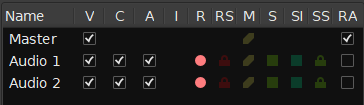
- Here is a minor graphical issue that cannot be fixed by the user and which is easily preventable by the developer (through a variety of possible solutions).

Image

"Name" is not aligned with the text beneath it. The other column headers are chopped off.
Last edited by ampetrosillo on Wed Feb 11, 2026 7:29 pm, edited 1 time in total.

Post

Tiles wrote: Wed Feb 11, 2026 7:23 pm Okay. I’ll point out all the issues for free, just 120 euros per hour, no extra charge :)

Sorry, couldn’t resist :D

With all due respect, if the goal is to stop me from discussing, then I shouldn’t be dragged permanently back into the conversation. I’m not here to ‘break balls’, but I’m not a punching bag either.

I already pointed out a specific issue, but it seems to have been overlooked. Instead, the discussion shifted to the value of UI/UX design, designers, and forum users, which I respectfully disagree with.

The same will probably happen with my hint about the Adobe Color tool, which can help fix the themes. Another user has already pointed out that the themes could be improved. So that’s actually two specific issues already, which I will not fix. Not my job. And the wrong place to ask for.
No, it's just that ranting without being helpful is pointless.

Post

Like you here? Yeah, that is indeed pointless.
“The biggest crime of a musician is to play notes instead of making music.”
Isaac Stern

Post Reply

Return to “Hosts & Applications (Sequencers, DAWs, Audio Editors, etc.)”