


BuzzCut (The Erosion Clipper)
-
- KVRian
- 623 posts since 8 Dec, 2025
It would apply jitter to frequencies folding back, yes. Instead of the usual screech/drone sound caused by harmonic content you would get something closer to hiss, especially if you use parallel instances and if the pseudorandomization range is large. But does it sound as good as simple oversampling? Of course not. Does it require less CPU resources? Hell no, just syncing the instances will toast your processor. And on top of everything you still need oversampling anyway, otherwise you'll end up with noise levels higher than the original aliasing levels. I had that idea in the early 2000s and tested it with a friend. I was dumb.
-
Andreya_Autumn Andreya_Autumn https://www.kvraudio.com/forum/memberlist.php?mode=viewprofile&u=553235
- KVRian
- 506 posts since 21 Feb, 2022
Haha.Bohmes DSP wrote: Mon Feb 23, 2026 3:19 pmI was so close to being that guy but I talked myself out of it at the last second. Came, went back and found you'd just wrote thisAndreya_Autumn wrote: Mon Feb 23, 2026 3:03 pm It is of course true that aliasing and quantization noise can both be solved with higher sample rates or bit depths. At least if by solved we mean rendered entirely unproblematic for human listeners. A truly nitpicky player of the "who is right" game would contend that those things don't solve the problems at all, and they would be strictly correct but also a bit of a jerk.Your point stands that removing aliasing without replacing it with any noise is in fact possible.
I have a question though:
"Point is, if the process that generates the harmonics is randomized in an appropriate way, the periodicity which caused the folded-back harmonics goes away! The method does in fact replace aliasing with noise, not just mask it."
Why do you get aliasing on cymbal hits or a crowd clapping? There are loads of none periodic sounds that create aliasing.

About the cymbal. Aliased noise is just more noise. But (as you know if you've ever tried to synthesize a realistic one) real cymbals are not just noise. They also have a bunch of sine components. Those sine components are inharmonic, that is they don't fit in the same overtone series, which is why they usually don't have a single clear pitch to our ears. But each of those sine components is a periodic wave, which can alias just like anything else.
The square wave thing is kind of an approximation anyway. It helps build intuition about aliasing but glosses over the actual cause of aliasing, breaking the shannon/nyquist/kotelnikov theorem: If the signal we're trying to represent has content above the limit, there will be aliasing. The naive square wave aliases because our model of the wave has unlimited harmonics, obviously violating the theorem. Feed a complex signal (like a cymbal) into a naive clipper, and the resulting wave, while well-defined in theory, will violate the theorem in practice.
What the jitter strategy does is changes our model of the wave we're trying to create into an erratic one. The model will still be "wrong" in the same sense as before (contain energy past nyquist), but if we dial the noise in just right we can make it so that all that energy is noise. Which may be more pleasant or interesting than the aliased sine components would be. Or not! All up to aesthetic preference at that point. But it does "work", if by work you mean "does what the dev claimed: replace aliased partials with noise".
-
LusiD_Music_UK LusiD_Music_UK https://www.kvraudio.com/forum/memberlist.php?mode=viewprofile&u=786254
- KVRist
- 49 posts since 17 Feb, 2026
Look Zeisner, you’re confidently accusing me of lying to thousands of people (which is very insulting by the way) simply because you don’t understand OR you are misinterpreting my claims or are being overly pedantic about the term “solving aliasing” when that’s not technically what’s happening. I’ll give you the benefit of the doubt you’re just a skeptical person and not a troll. I’ll try to explain it differently.Zeisner wrote: Mon Feb 23, 2026 9:49 amI quote from your webpage:LusiD_Music_UK wrote: Sun Feb 22, 2026 6:36 pm What BuzzCut offers is “choice” - do you want “foldback aliasing” or “noise”.
That is nonsense. Without oversampling (and filtering the frequencies above the Nyquist frequency) there is still aliasing. By adding noise above Nyquist you only make that noise alias as well. You can "mask" aliasing without oversampling by simply adding noise filtered with a highpass filter. But does it sound good? For certain genres that require noise, sure. But as a general tool? Forget it.LusiD_Music_UK wrote: Sun Feb 22, 2026 6:36 pm By modulating the threshold with shaped noise that shatters the source of inharmonic foldback aliasing before it happens.
The solution to quantization noise is not dithering, it's higher bit depths, the equivalent to higher samplerates.LusiD_Music_UK wrote: Sun Feb 22, 2026 6:36 pm Just like dithering doesn’t “solve” truncation distortion, it replaces it.
No, you're simply adding noise to preexisting noise.LusiD_Music_UK wrote: Sun Feb 22, 2026 6:36 pm Likewise erosion clipping doesn’t “solve” foldback aliasing. It replaces it.
But what sounds best? No noise at all.LusiD_Music_UK wrote: Sun Feb 22, 2026 6:36 pm Most people agree that random noise sounds better than digital artefacts.
Dude. Streaming services offer more and more ofzen 24-bit streams. Because the quantization noise of such a bit depth falls below the audibility threshold of humans which means no more dithering is required.LusiD_Music_UK wrote: Sun Feb 22, 2026 6:36 pm This is why dithering is basically universally accepted as superior.
If foldback aliasing was a block of wood, oversampling is the chainsaw, erosion clipping is the sandpaper. Erosion clipping randomises the aliasing normal clipping would cause. This “smooths the aliasing out”. That’s why I’ve included BOTH oversampling AND “erosion clipping”.
If you want your low level aliasing to be randomised more to make it more like noise than the more stable inharmonic frequencies then erosion clipping does that. Like it, don’t like it. Irrelevant. Also, whether dithering is necessary or not for modern bit depth is irrelevant to the concept itself.
It simply DOES in fact do what I claim. I suspect you’re probably going to dig your heels in further regardless. I would appreciate it if you’d simply ASK ME TO CLARIFY instead of straight up accusing me of lying to thousands of people based on your own ignorance

Unless I’m just incorrect (I’m not) in which case, I’m not LYING. I just “dont understand” (I do).
Either way, appreciate the hardball questions.
-
Andreya_Autumn Andreya_Autumn https://www.kvraudio.com/forum/memberlist.php?mode=viewprofile&u=553235
- KVRian
- 506 posts since 21 Feb, 2022
Well I haven't tried this strategy myself but now I kinda want to make a little jitter oscillator for Shortcircuit XT haha.Zeisner wrote: Mon Feb 23, 2026 4:20 pm It would apply jitter to frequencies folding back, yes. Instead of the usual screech/drone sound caused by harmonic content you would get something closer to hiss, especially if you use parallel instances and if the pseudorandomization range is large. But does it sound as good as simple oversampling? Of course not. Does it require less CPU resources? Hell no, just syncing the instances will toast your processor. And on top of everything you still need oversampling anyway, otherwise you'll end up with noise levels higher than the original aliasing levels. I had that idea in the early 2000s and tested it with a friend. I was dumb.
(I won't, we have enough to do)It *is* true as you say:
- The noise will almost certainly be louder/more noticeable than the aliasing would have been.
- Oversampling will reduce the aliasing more than this strat would
- Possibly at a lower cpu cost (depends how either is implemented)
All I'm saying is: The dev hasn't claimed otherwise! Accusing them of trying to mislead folks seems a bit unfair and reading it made me a bit sad. Indeed if you want a super clean noiseless nyquist-theorem-respecting clipper you should look elsewhere. But I bet their tool is great for what it is. That's all from me.
-
- KVRian
- 623 posts since 8 Dec, 2025
LusiD_Music_UK wrote: Mon Feb 23, 2026 4:27 pm If you want your low level aliasing to be randomised more to make it more like noise than the more stable inharmonic frequencies then erosion clipping does that.
No, it only randomizes the level of the frequencies folded back which isn't enough. That's just gain jitter, anyone can replicate that with a DAW that features automation pseudorandomization. You only need a simple clipper and panning to test it. You need to randomize the position of folded back frequencies on the spectrum. To do this you need to randomize the samplerate itself. That would be the equivalent to quantization noise modulation or "erosion".
-
LusiD_Music_UK LusiD_Music_UK https://www.kvraudio.com/forum/memberlist.php?mode=viewprofile&u=786254
- KVRist
- 49 posts since 17 Feb, 2026
Sure, you could potentially make an American cola replica of what I’ve built inside your DAW. That’s the case with 99% of all plugins. What’s your point? And no, it doesn’t “only randomize the level of the frequencies folded back” it fundamentally changes what harmonics are being produced. When you change the waveshaping you change the “wave shape” the wave shape determines the harmonics (and vice versa). It’s changing the SOURCE of the aliasing.Zeisner wrote: Mon Feb 23, 2026 4:53 pmLusiD_Music_UK wrote: Mon Feb 23, 2026 4:27 pm If you want your low level aliasing to be randomised more to make it more like noise than the more stable inharmonic frequencies then erosion clipping does that.
No, it only randomizes the level of the frequencies folded back which isn't enough. That's just gain jitter, anyone can replicate that with a DAW that features automation pseudorandomization. You only need a simple clipper and panning to test it. You need to randomize the position of folded back frequencies on the spectrum. To do this you need to randomize the samplerate itself. That would be the equivalent to quantization noise modulation or "erosion".
-
- KVRian
- 623 posts since 8 Dec, 2025
That is just gain jitter applied to aliasing artifacts, ranging from "The clipper does not clip anything" (The equivalence to infinite gain reduction) to "The clipper clips the crap out of everything" (Highest aliasing level). That's exactly like randomly switching between a unclipped and a clipped sound with all kinds of states in between.LusiD_Music_UK wrote: Mon Feb 23, 2026 5:14 pm And no, it doesn’t “only randomize the level of the frequencies folded back” it fundamentally changes what harmonics are being produced.
-
LusiD_Music_UK LusiD_Music_UK https://www.kvraudio.com/forum/memberlist.php?mode=viewprofile&u=786254
- KVRist
- 49 posts since 17 Feb, 2026
You’re putting the cart before the horse. There is no aliasing until AFTER the clipping happens. My plugin is modulating the clipping threshold, not adding jitter to the signal. It only subtracts from the signal, it never adds to it. Honestly, I’m not sure we’re singing from the same hymn sheet. Did you see the plugin doctor analysis? Why don’t you give it a download yourself. There’s a 14 day trial. The aliasing is replaced with noise provided you drag the buzz threshold down far enough. That’s just what happens. If you can come up with a better explanation for why it appears to work as advertised inside plugin doctors harmonic analysis other than “because it works” I’d be curious to hear it.
Last edited by LusiD_Music_UK on Mon Feb 23, 2026 6:49 pm, edited 1 time in total.
-
- KVRian
- 623 posts since 8 Dec, 2025
This adds gain jitter to the aliasing artifacts. You're switching pseudorandomly between no clipping and full clipping = inf. gain reduction and no gain reduction of aliasing artifacts.LusiD_Music_UK wrote: Mon Feb 23, 2026 6:28 pm You’re putting the cart before the horse.
My plugin is modulating the clipping threshold, not adding jitter to the signal.
You mean the one which shows the result with oversampling? With the lowpass filter slope being visible near the Nyquist frequency? Why did you choose to include that instead of an image without oversampling if your "stochastic erosion" really works?
-
LusiD_Music_UK LusiD_Music_UK https://www.kvraudio.com/forum/memberlist.php?mode=viewprofile&u=786254
- KVRist
- 49 posts since 17 Feb, 2026
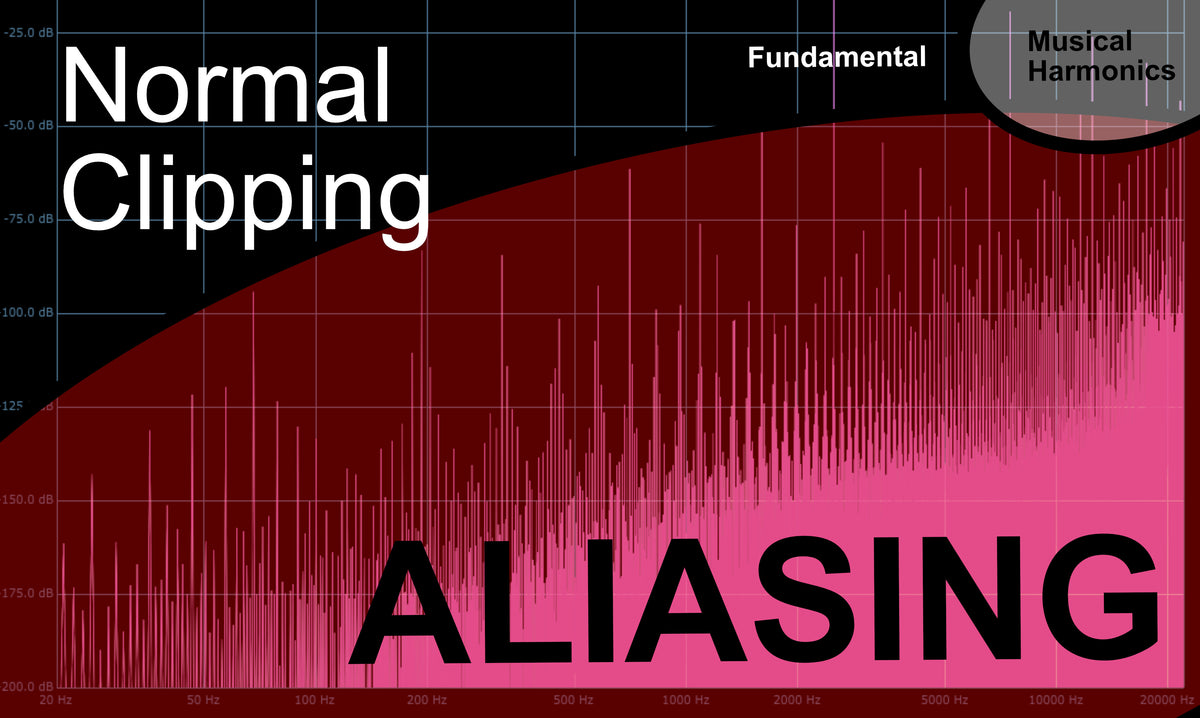
Ahhhh. I see what’s going on now. You’re taking issue with the non-disclosure of the fact that the comparison image on my website is also oversampled. Fair enough. I did originally have 3 images “normal clipping”, “16x oversampling”, “16x oversampling plus erosion”. However, I felt a simple A/B comparison was more compelling and digestible for the average Joe. So the choice was, better comparison or worse comparison. Is it dishonest? I can see why you’d think that. But the images simply compare “normal clipping” to “what BuzzCut can do”. I think most people can look past a little “marketing flare”. McDonald’s cheeseburgers should use real pictures not fake ones right? That’s dishonest too. Does anyone care? No. Personally, I think it’s fine. My goal is not absolute scientific precision on that page, it’s a marketing funnel for the average Joe so I can actually succeed financially.
-
- KVRian
- 623 posts since 8 Dec, 2025
Your "stochastic erosion" is not a solution regarding aliasing. Only oversampling is. There would be no issue if you didn't claim that both are related. Absolutely none. But you still try to justify it, now with a false McDonald's analogy. Come on.
-
LusiD_Music_UK LusiD_Music_UK https://www.kvraudio.com/forum/memberlist.php?mode=viewprofile&u=786254
- KVRist
- 49 posts since 17 Feb, 2026
Again, the goal of stochastic erosion is not to “solve” aliasing. It’s to replace it. Just like dithering replaces truncation. I’ve been VERY consistent on this point. I am very aware that oversampling is necessary which is why the plugin has 16x oversampling too. Hence my chainsaw, sandpaper analogy. I make no apologies for marketing in a way that is digestible and increases my likelihood of success. I’d like to actually be able to have the resources available to make and release more genuinely useful tools in the future. I think we’re going to have to agree to disagree.Zeisner wrote: Mon Feb 23, 2026 7:59 pm Your "stochastic erosion" is not a solution regarding aliasing. Only oversampling is. There would be no issue if you didn't claim that both are related. Absolutely none. But you still try to justify it, now with a false McDonald's analogy. Come on.
-

- KVRist
- 412 posts since 22 May, 2023
Just to be clear, we're saying the audio in this image was NOT oversampled:
...but the audio in this image WAS oversampled?
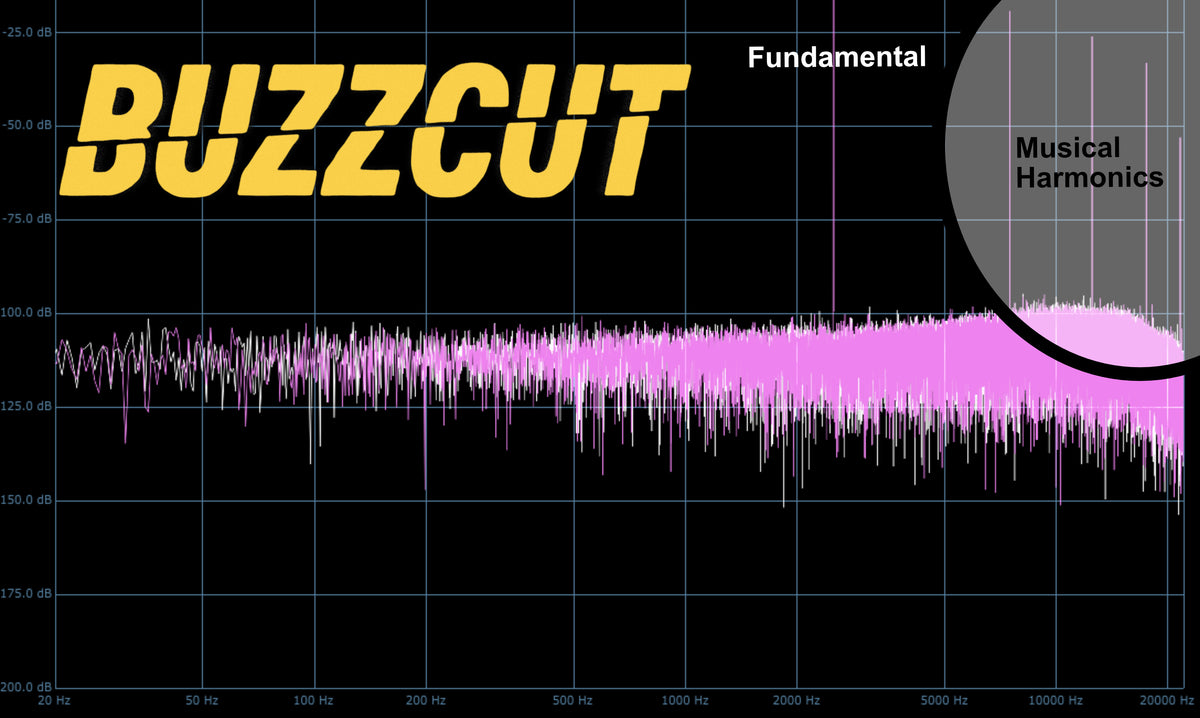
If that were the case, it would certainly seem a bit dishonest to me.
...but the audio in this image WAS oversampled?
If that were the case, it would certainly seem a bit dishonest to me.
-
- KVRian
- 623 posts since 8 Dec, 2025
It doesn't replace it.LusiD_Music_UK wrote: Mon Feb 23, 2026 8:16 pm Again, the goal of stochastic erosion is not to “solve” aliasing. It’s to replace it.
Dithering does not replace quantization noise, it only masks it. Technically there is no way to replace quantization noise. You can only mask it or push it below audibility levels with high bit depth.
So you're admitting that you're lying. I give you credit for that. The point is though: You don't need to lie. It might look like a good solution at first but it's not. Be honest and you will attract the type of customers you need the most: Trusting long-term users. Because they will buy each new version of your plugins without thinking much about it. They don't have to if you're always honest and upfront about what your plugins really do.LusiD_Music_UK wrote: Mon Feb 23, 2026 8:16 pm I make no apologies for marketing in a way that is digestible and increases my likelihood of success.
-
- KVRian
- 623 posts since 8 Dec, 2025
That's the whole point about "stochastic erosion shattering aliasing". It's the oversampling, not the clipping.hey212 wrote: Mon Feb 23, 2026 8:33 pm ...but the audio in this image WAS oversampled?
If that were the case, it would certainly seem a bit dishonest to me.