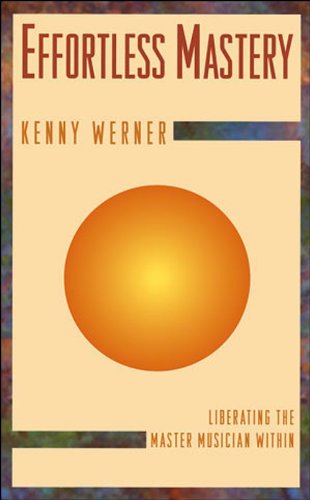
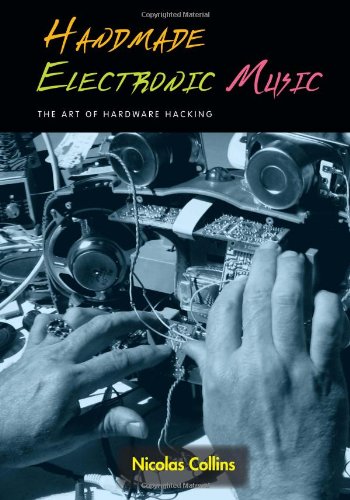
--Sean
Which couple of music related books have inspired you most?
- KVRAF
- 7422 posts since 19 Apr, 2002 from Utah
Unfortunately, not much was contributed to it anyway.... 
--Sean
--Sean
Vendor‑Dependent Copy Protection: Customers lose. Pirates win.
(Also: I'm Accused of lying about Linux—it boots, runs my pro audio workflow, stays stable, updates--though yearly dismissed as “niche”. Yet I'm the deluded one.)
-
- KVRAF
- 21348 posts since 26 Jul, 2005 from Gone
It would end up being mostly a book about cats and the virtues of Macs vs. PCsaudiojunkie wrote:It's too bad we can't somehow group, index, and organize a lot of the valuable information that has been posted over the last decade here on KVR (too big of a job). I have learned more here than from books.
- KVRAF
- 25849 posts since 20 Jan, 2008 from a star near where you are
Would probably include a couple of chapters about 32 vs 64 bit plugins toorobojam wrote:It would end up being mostly a book about cats and the virtues of Macs vs. PCsaudiojunkie wrote:It's too bad we can't somehow group, index, and organize a lot of the valuable information that has been posted over the last decade here on KVR (too big of a job). I have learned more here than from books.
- KVRAF
- 7422 posts since 19 Apr, 2002 from Utah
Too true!
--Sean
--Sean
Vendor‑Dependent Copy Protection: Customers lose. Pirates win.
(Also: I'm Accused of lying about Linux—it boots, runs my pro audio workflow, stays stable, updates--though yearly dismissed as “niche”. Yet I'm the deluded one.)
- KVRAF
- 4287 posts since 6 Nov, 2009
KVR best of HPC, Vol 1Numanoid wrote:Would probably include a couple of chapters about 32 vs 64 bit plugins toorobojam wrote:It would end up being mostly a book about cats and the virtues of Macs vs. PCsaudiojunkie wrote:It's too bad we can't somehow group, index, and organize a lot of the valuable information that has been posted over the last decade here on KVR (too big of a job). I have learned more here than from books.
The good old years
- KVRAF
- 8088 posts since 9 Jan, 2003 from Saint Louis MO
-
- KVRAF
- 1585 posts since 13 Nov, 2005 from St. Paul
These are some great books, thanks to everyone for sharing. I especially like the books Music the Brain and Ecstasy and This is Your Brain on Music. I get more inspiration out of these books that ask "why do we do music in the first place?" than from a set of principles, although I do like books that give you some starting points for trying new things out as well.
Three more to add to the pile:
Derek Bailey's Improvisation: Its Nature and Practice in Music
http://www.amazon.com/Improvisation-Its ... 0306805286
This is a really thought provoking discussion on creative inspiration; absolutely not a technique book. Bailey doesn't just confine himself to the total improvisation approach that he's taken, but interviews artists ranging from Jerry Garcia to John Zorn to classical French organ improvisers and hits many other improvised styles of music along the way. He also includes some interviews with musicians like Gavin Bryars who question the value of improvisation in an engaging way.
Mark Levine's Jazz Piano Book
http://www.amazon.com/Jazz-Piano-Book-M ... 7W7613AKKP
You could use this to learn how to play jazz, but it's also a great sourcebook for learning about harmony and voicing in general even for the non-jazz performer. I like to just noodle around with some of the concepts in these chapters for a while on a synthesizer or two, checking out different styles until something grabs my imagination and I can start writing. Helps to overcome the blank page/empty sequencer syndrome.
The Rest is Noise
http://www.amazon.com/The-Rest-Noise-Li ... 0312427719
Nice, relatively down-to-earth review of lots of different styles and ideas in 20th century concert music.
Three more to add to the pile:
Derek Bailey's Improvisation: Its Nature and Practice in Music
http://www.amazon.com/Improvisation-Its ... 0306805286
This is a really thought provoking discussion on creative inspiration; absolutely not a technique book. Bailey doesn't just confine himself to the total improvisation approach that he's taken, but interviews artists ranging from Jerry Garcia to John Zorn to classical French organ improvisers and hits many other improvised styles of music along the way. He also includes some interviews with musicians like Gavin Bryars who question the value of improvisation in an engaging way.
Mark Levine's Jazz Piano Book
http://www.amazon.com/Jazz-Piano-Book-M ... 7W7613AKKP
You could use this to learn how to play jazz, but it's also a great sourcebook for learning about harmony and voicing in general even for the non-jazz performer. I like to just noodle around with some of the concepts in these chapters for a while on a synthesizer or two, checking out different styles until something grabs my imagination and I can start writing. Helps to overcome the blank page/empty sequencer syndrome.
The Rest is Noise
http://www.amazon.com/The-Rest-Noise-Li ... 0312427719
Nice, relatively down-to-earth review of lots of different styles and ideas in 20th century concert music.
- KVRAF
- 26033 posts since 20 Oct, 2007 from gonesville
http://www.ancient-future.com/atfp.html
"Offers a series of enjoyable exercises based on authentic rhythms and mnemonic found in the featured cultures [West African drum music, Balinese gamelan, and Indian tala]. Appropriate for grade 3+ though adult expert, all can be performed using hands, voice, body or desks, cans, etc. or traditional instruments." – World Music at West MUSIC
"A very useful contribution to musical scholarship." – Lou Harrison
while I was reading
Music and the Power of Sound
The modern approach renders every observation confusing and will never allow the establishment of a logical theory of sounds in accordance with musical reality. This will be easily understood by musicians who have reached the dead end that is formed by the representation of sounds by their frequencies, a representation that, although theoretically simple and accurate, places an insurmountable barrier of complication and inaccuracy in the way of any analysis of musical relations and “mystifies the subject by enveloping it in a cloud of mathematicism.”10
The ratio of two sounds is of a different nature and only incidentally refers to their frequencies. The same ratio expresses the relative rank of the sounds in the scale of harmonics; 25/24, for example, is the interval between the twenty-fourth and the twenty-fifth harmonics. Inverted, it also represents the length ratio of pipes or strings used to produce the notes. These ratios are therefore the expression of general laws of sound that are applicable to the frequency of vibrations, but not exclusively so.
"Offers a series of enjoyable exercises based on authentic rhythms and mnemonic found in the featured cultures [West African drum music, Balinese gamelan, and Indian tala]. Appropriate for grade 3+ though adult expert, all can be performed using hands, voice, body or desks, cans, etc. or traditional instruments." – World Music at West MUSIC
"A very useful contribution to musical scholarship." – Lou Harrison
while I was reading
Music and the Power of Sound
The modern approach renders every observation confusing and will never allow the establishment of a logical theory of sounds in accordance with musical reality. This will be easily understood by musicians who have reached the dead end that is formed by the representation of sounds by their frequencies, a representation that, although theoretically simple and accurate, places an insurmountable barrier of complication and inaccuracy in the way of any analysis of musical relations and “mystifies the subject by enveloping it in a cloud of mathematicism.”10
The ratio of two sounds is of a different nature and only incidentally refers to their frequencies. The same ratio expresses the relative rank of the sounds in the scale of harmonics; 25/24, for example, is the interval between the twenty-fourth and the twenty-fifth harmonics. Inverted, it also represents the length ratio of pipes or strings used to produce the notes. These ratios are therefore the expression of general laws of sound that are applicable to the frequency of vibrations, but not exclusively so.