

ok i learned and read a bit more about those 2 but still it seems both to use is a matter of taste.
1. what do you use of those 2?
2. what is the difference between those two?
3. limiter should always be used at the end of the order, the clipper too?

Limiter vs. Clipper
-
- KVRAF
- 4692 posts since 28 Jan, 2003 from In these very interwebs
-
- KVRist
- 230 posts since 28 Mar, 2004 from Germany
1. i like both. Depending on source and goal
2. differences are optical and hearable. I made the experience that a limiter with incorrect settings can tend to pump the volume down and raise it slowly after that on transient-rich material. A Clipper "cuts" without asking which will result in more distortion if driven too hot.
3. A matter of taste. If you use an transparent limiter in the final stage it will surely suit well on acoustic mixes, where a (hard) clipper may be well suited in Hardstyle, Hardtrance etc...
2. differences are optical and hearable. I made the experience that a limiter with incorrect settings can tend to pump the volume down and raise it slowly after that on transient-rich material. A Clipper "cuts" without asking which will result in more distortion if driven too hot.
3. A matter of taste. If you use an transparent limiter in the final stage it will surely suit well on acoustic mixes, where a (hard) clipper may be well suited in Hardstyle, Hardtrance etc...
JJSR Productions
AMD Ryzen 7 1800X - 16 GB Ram- Win11 Pro @64bit
Cubase 13, Wavelab 13
VST: Tone2, Steinberg, NI, Roland Cloud, Arturia and many other
AMD Ryzen 7 1800X - 16 GB Ram- Win11 Pro @64bit
Cubase 13, Wavelab 13
VST: Tone2, Steinberg, NI, Roland Cloud, Arturia and many other
-
- KVRist
- 474 posts since 26 Jul, 2005 from Mexico City
Again, a matter of taste, source material and desired results. I would say neither is genre-specific (as in "use limiters for hip-hop, clippers for country rock.")Caine123 wrote:thanks a lot, i will check the link, but overall what would you recommend for Hip Hop beats and EBM?
-
- KVRist
- 296 posts since 9 Feb, 2009
For hip hop, i would say a clipper. It'll let you get loud with minimum messing around, and it's harder to f**k up the dynamics. You can just push it, until the distortion tells you to stop, and your drums will still sound nice and punchy.Caine123 wrote:thanks a lot, i will check the link, but overall what would you recommend for Hip Hop beats and EBM?
But if you know what you're doing with compression, i'd say a mixture of clipping and limiting is better, because the limiter just helps to smooth things out, and can add a bit of pro-silkiness. But you need to mix well to get the most out of a limiter.
-
- Banned
- 1021 posts since 31 Mar, 2009
Drums and other instruments which are basically sharp transients, tend to benefit more from a clipper, because the transient is so fast when it gets clipped, the distortion can actually make the drums sound more modern and punchy.
On material that is less transient heavy, the clipping will be a lot more noticeable if you try to push the body of the signal up into the clipping threshold.
I used to use limiters exclusively. I learned about clipping and saturation, and then to use those to treat my highly transient material. On non-ttransient heavy stuff, I just use an ssl style compressor to try and control dynamics, as clipping can start to get ugly.
On material that is less transient heavy, the clipping will be a lot more noticeable if you try to push the body of the signal up into the clipping threshold.
I used to use limiters exclusively. I learned about clipping and saturation, and then to use those to treat my highly transient material. On non-ttransient heavy stuff, I just use an ssl style compressor to try and control dynamics, as clipping can start to get ugly.
-
- KVRist
- 473 posts since 9 Jul, 2010 from Wellington, New Zealand
This is a good point, a clipper is an invention for digital audio solutions because in an analog solution (such as a harware mixer) clipping sounds like distortion and happens naturally as the signal is driven but on a digital solution clipping creates artifacts that are not pleasent. So it is best to use clipping plugin when you want to create distortion by driving the signal hard. Saturation is more complex and effects the signal in a more colorful way but you don't need to drive the signal as hard. This is just a very very basic description, to highlight the differences, there are many diffefrent techniques you can use.futurefields wrote:I just use an ssl style compressor to try and control dynamics, as clipping can start to get ugly.
Imperfection is beauty.
Normally I hate adds, but not at KVR, look at all the the toys I can get.
Electronic Punk - Group @ Soundcloud
Normally I hate adds, but not at KVR, look at all the the toys I can get.
Electronic Punk - Group @ Soundcloud
-
- Banned
- 1021 posts since 31 Mar, 2009
For the most part, a clipper is more transparent dealing with quick transients than a limiter will be, due to limiters actually changing the shape of the wave based on a set of attack and release characteristics. As clippers are instant and don't use attack and release, the integrity of highly transient audio is better preserved.
-

- KVRAF
- 2138 posts since 8 Feb, 2007
Hey thanksKim (esoundz) wrote:I think you'll find this post useful:
http://kimlajoie.wordpress.com/2009/07/ ... -clipping/
-Kim.

That's the THEORY...
How about the PRACTICAL application of the theory ?

(aka "but how does it SOUND ?"
)Professional technicians are assessed by the abilities they possess.
Amateur technicians are assessed by the tools they possess - and the amount of those tools, with an obvious preference to the latest hyped ones.
(Gabe Dumbbell)
Amateur technicians are assessed by the tools they possess - and the amount of those tools, with an obvious preference to the latest hyped ones.
(Gabe Dumbbell)
-
- KVRAF
- 3817 posts since 8 Mar, 2006
Speaking of saturation, limiting and clipping... there is this plugin that does all of that in one.. with control at each stage... I'm sure many of you heard about it "Nasty VSD" ... it's out for some time but got the taste of it and I think it's very good... would like to hear your thoughts on it... it's free and it could be downloaded from the Nasty Series Pack @ http://varietyofsound.wordpress.com/downloads/
---

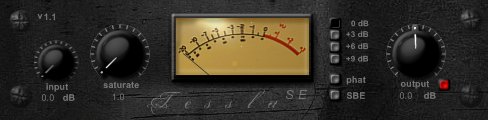
For an alternative effect more on saturation try 2 TesslaSE plugins in a row (not TesslaPRO)
---
---
For an alternative effect more on saturation try 2 TesslaSE plugins in a row (not TesslaPRO)
---
-
- KVRist
- 296 posts since 9 Feb, 2009
All plugins sound different. To me, Mystran's TSClip sounds pretty close to the Aradaz maximizer with minimum release. Both get things loud and punchy with none of that compressor flattening going on. So if limiter lets you work at zero attack/release, i think it's probably working in the same way as a clipper, but maybe also adding a little bit of saturation.Tp3 wrote: How about the PRACTICAL application of the theory ?
(aka "but how does it SOUND ?"
For the master bus, i think a flexible limiter/maximizer is best, because you can adjust the attack/release to suit the song.
This is how my master bus looks:
Limiter (zero att/rel, just used to keep the songs peaks at a steady level, to make the rest of the chain easier to work with. It's usually only taking off about 1db).
Multiband compressor
EQ (i always like this after the compressor, so i can easily adjust it, without worrying about some ratio bollocks).
Clipper (used to get back about 2-3db of headroom)
Limiter (with the major peaks already taken care of, i can either give this more attack/release and give the track some character, or i can use zero attack/release again, and boost the song to a completely stupid volume).
The fact that i also use clippers on individual tracks, and bus groups, means i often dont even need the main limiter at the end, so i'll probably just use it to add some character.
-
- KVRAF
- 4692 posts since 28 Jan, 2003 from In these very interwebs
Tp3 wrote:Hey thanksKim (esoundz) wrote:I think you'll find this post useful:
http://kimlajoie.wordpress.com/2009/07/ ... -clipping/
-Kim.
That's the THEORY...
How about the PRACTICAL application of the theory ?
(aka "but how does it SOUND ?"
http://kimlajoie.wordpress.com/2009/07/07/limiting-vs-clipping/ wrote:In many cases [of limiting] though, the gain reduction is audible. It can give the sound a soft, wooly character, or even a random tremolo effect if the threshold is too low. Often using a limiter reduces the power and impact of a sound. This effect is sometimes hidden because the limiter also increases the overall volume, making it more difficult to notice that the character of the sound is changed.
[...]
When [clipping] happens, the excess level in the transient peaks is transformed into upper harmonics. That is, the transients become noisier and dirtier. For some kinds of music, this can be a desirable alternative to reducing gain. The power and impact of the sound is often retained (or even enhanced!), but at the expense of fidelity.

-Kim.
-
- KVRAF
- 2138 posts since 8 Feb, 2007
Tp3 wrote:That's the THEORY...
How about the PRACTICAL application of the theory ?
HOW DOES IT SOUND ?
AL321 wrote:To me, Mystran's TSClip sounds pretty close to the Aradaz maximizer with minimum release. Both get things loud and punchy with none of that compressor flattening going on
So if limiter lets you work at zero attack/release, i think it's probably working in the same way as a clipper, but maybe also adding a little bit of saturation
Now, 60 seconds of some definitions :Kim (esoundz) wrote:In many cases [of limiting] though, the gain reduction is audible. It can give the sound a soft, wooly character, or even a random tremolo effect if the threshold is too low. Often using a limiter reduces the power and impact of a sound. This effect is sometimes hidden because the limiter also increases the overall volume, making it more difficult to notice that the character of the sound is changed.
[...]
When [clipping] happens, the excess level in the transient peaks is transformed into upper harmonics. That is, the transients become noisier and dirtier. For some kinds of music, this can be a desirable alternative to reducing gain. The power and impact of the sound is often retained (or even enh
Audio (ie "Sound") is about audible acoustic waves
Blindman : hey Dude !text - the words of something written
Written - set down in writing in any of various ways
Dude : hey buddy
Blindman : listen, can you describe to me the sensation of seeing a beautiful woman ?
Dude : Ohhh ! it's like what one feels when he sees a new born's face... it's like a rainbow in the
sky after the rain... it's like the shinning of a diamond !
Blindman : arggg

Professional technicians are assessed by the abilities they possess.
Amateur technicians are assessed by the tools they possess - and the amount of those tools, with an obvious preference to the latest hyped ones.
(Gabe Dumbbell)
Amateur technicians are assessed by the tools they possess - and the amount of those tools, with an obvious preference to the latest hyped ones.
(Gabe Dumbbell)
-
- KVRAF
- 4692 posts since 28 Jan, 2003 from In these very interwebs