

Usually a fast attack/fast release is at something like a 7 o'clock position, couter-clockwise.
For the NI vc76 is exactly the opposite. Any idea why the did it?

NI vc76 - any idea why lower attack/release are working clockwise and not counter-clockwise?
-
midi_transmission midi_transmission https://www.kvraudio.com/forum/memberlist.php?mode=viewprofile&u=298730
- KVRian
- 1045 posts since 13 Feb, 2013
-

- KVRAF
- 4469 posts since 15 Nov, 2006 from Hell
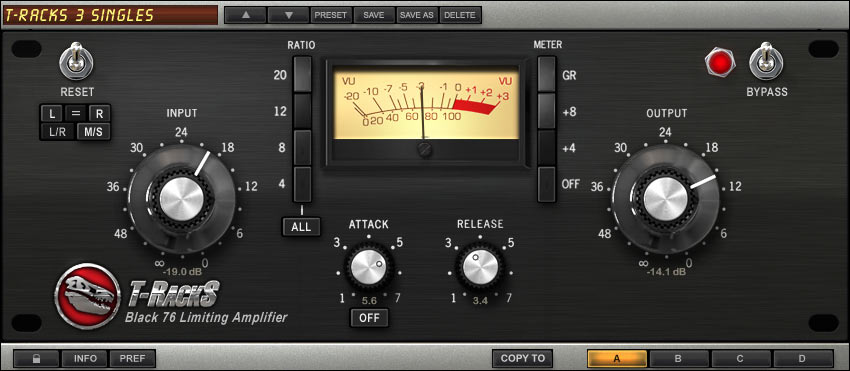
ummm... which ones did you compare it to? because the 1176 from T-Racks (the Black 76) has counter-clockwise attack/release knobs as well, and i believe that's how every other emulation (Waves, UAD, etc.) works because that's how the original unit worked.
EDIT: what does it mean to be "7 o'clock counter clockwise"? 7 o'clock is 7 o'clock.
EDIT: what does it mean to be "7 o'clock counter clockwise"? 7 o'clock is 7 o'clock.
I don't know what to write here that won't be censored, as I can only speak in profanity.
-
midi_transmission midi_transmission https://www.kvraudio.com/forum/memberlist.php?mode=viewprofile&u=298730
- KVRian
- Topic Starter
- 1045 posts since 13 Feb, 2013
You're right 7 is 7. But I mean that you usually turn counter-clockwise to get fast attack/release.With the vc76 is the opposite.
-
- KVRAF
- 4469 posts since 15 Nov, 2006 from Hell
yes, but all 1176 emulations that i'm aware of exhibit this, because the original unit behaved that way as well.
for example, here's a picture of Softube FET's GUI:

attack goes from slow to fast (so, counter-clockwise if we're going by milliseconds), rather than from fast to slow. same applies to IK emulation (you can't actually see the "fast"/"slow", but i can attest to the fact that it works in reverse):
Waves emulation has the same markings as IK version, and presumably works the same way:

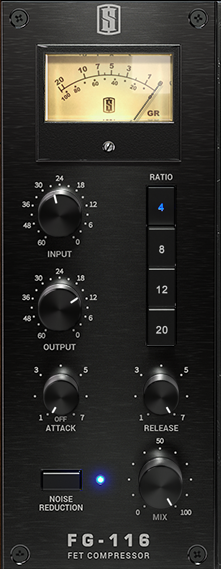
same goes for Slate emulation:
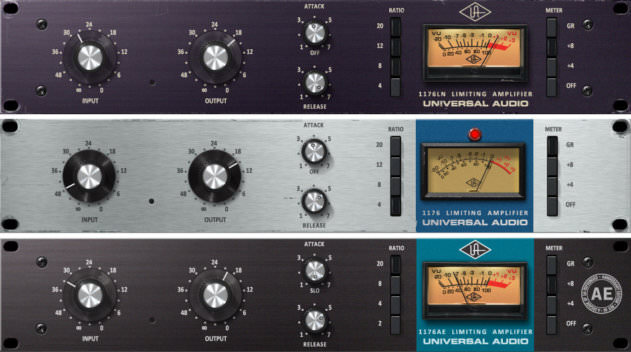
same for UAD:
and finally, the original unit:

so, as you can see, that's by design
for example, here's a picture of Softube FET's GUI:
attack goes from slow to fast (so, counter-clockwise if we're going by milliseconds), rather than from fast to slow. same applies to IK emulation (you can't actually see the "fast"/"slow", but i can attest to the fact that it works in reverse):
Waves emulation has the same markings as IK version, and presumably works the same way:
same goes for Slate emulation:
same for UAD:
and finally, the original unit:
so, as you can see, that's by design
I don't know what to write here that won't be censored, as I can only speak in profanity.
-
- KVRAF
- 2639 posts since 17 Apr, 2004
Think of it as how pronounced the attack is, higher values are more pronounced/extreme. Don't think of it as time.
Voted KVR's resident drunk Robert Smith impersonator (thanks Frantz!)
https://open.spotify.com/artist/2myYesRBRgQB3LkZzEYdt5 | https://soundcloud.com/steevm/
https://open.spotify.com/artist/2myYesRBRgQB3LkZzEYdt5 | https://soundcloud.com/steevm/
-
midi_transmission midi_transmission https://www.kvraudio.com/forum/memberlist.php?mode=viewprofile&u=298730
- KVRian
- Topic Starter
- 1045 posts since 13 Feb, 2013
@Burillo: great answer! thanks for pointing at the hardware, did not thought about it....
thanks for pointing at the hardware, did not thought about it....-
simon.a.billington simon.a.billington https://www.kvraudio.com/forum/memberlist.php?mode=viewprofile&u=341278
- KVRAF
- 2604 posts since 12 Nov, 2014
This was typical of how the original hardware units were designed.
Clockwise was fastest, anti-clockwise was slowest. Counter-intuitive from what we ar used to today, but historically accurate non-the-less.
Clockwise was fastest, anti-clockwise was slowest. Counter-intuitive from what we ar used to today, but historically accurate non-the-less.