
cannot wait to test them myself !
Indeed, too bad.JustusHall wrote:Sorry to hear thatUrs wrote:Nope, didn't winCh00rD wrote:Any news on the MIPA 2013 Awards? Did u-he's Diva win one?Award or not, she's still a winner
Rest assured that Diva has already won many of our hearts. 
 The caffé coretto deserves an award as well, even without the coffee.
With so many interesting things and people to see, one is bound to miss many highlights anyway...Urs wrote:[...] Eric
 ). Urs, explaining how they had even analysed a Miele the other day - which, although being a very authentic and well respected piece of vintage analog gear, still turned out to be somewhat underwhelming in comparison to the DCO Saw + Square PWM that they already have covered in Diva, but that it was not even the digitally emulated 'Digitally Controlled Oscillator' that he was actually playing with just now, but the new digitally emulated 'Digital Oscillator' (perhaps a very subtle difference in terminology when you just read it, but quite a difference when you actually *hear* it, of course).
Honestly though that's a tough opponent.Urs wrote:Nope, didn't winCh00rD wrote:Any news on the MIPA 2013 Awards? Did u-he's Diva win one?

Urs wrote:We're still working on the features even. Let's see how Ch00rd's TB-303s influence the outcome. One can't do a tutorial for something that isn't set in stone yet. [...]olikana wrote:audio demos are nice but video tutorial on how to use the new arp features would be nicer. so as soon as it is released we can get going.
It might well take a while, as u-he seems to have many very interesting things going on... but from now on, it may be advisable, if only out of precaution, to ensure that there are no sharp pointy objects in a 2 meter radius from your seat in front of your computer when you look here, and always keep at least one fresh pair of pants nearby. Which you may well already be doing, of course, just a friendly reminder.Sleepwalker wrote:[...] Oh man, id faint and poop my pants if Diva got to do 303 sounds!

Urs wrote:At the moment, the Arp can transpose the sequencer. So if you program C-pause-pause-C-pause-pause-C-pause in the sequencer, you'll only hear the Arp notes played at C, while paused notes are paused. If you program C-Tie-C then you'll have every second note tied (you can use any note, not just C, the transpose function just takes the first note you programmed as a reference)Echoes in the Attic wrote:I'm assuming the arp can be set to use the sequencer rhythm as it's mode? Urs said it would be able to do sequenced arps, so hopefully. He also said there would be glide per step for the arp, but looking on the GUI I don't yet see how that would be possible. That's basically the only thing I care about in the update. Fingers crossed...
It all requires a tiny bit of getting used to things as there is no visual interface. Maybe one day we'll do an editor as well (certainly needed for Z3 then)

Ch00rD wrote: One important aspect already seems to be covered, as it already seems to include a glide function (by using ties between different notes). So I would think that the main important function that would also be desirable (but does not yet seem to exist) in Diva, especially to emulate the pattern sequencing style characteristic of the 303, is a way to trigger accents. One could say that the accent function of the sequencer is more or less intrinsically linked with the filter (and envelope, as accented notes on a 303 have a decay time that is fixed and independent from the regular decay time), or at least that a 303-ish filter without an accent function is to some degree less interesting (although certainly not uninteresting). Support for accents in the sequencer / arp could perhaps be implemented as simple as using some arbitrary note-on velocity threshold level (e.g. velocity below 100 => no accent; velocity of 100 and higher => accent).

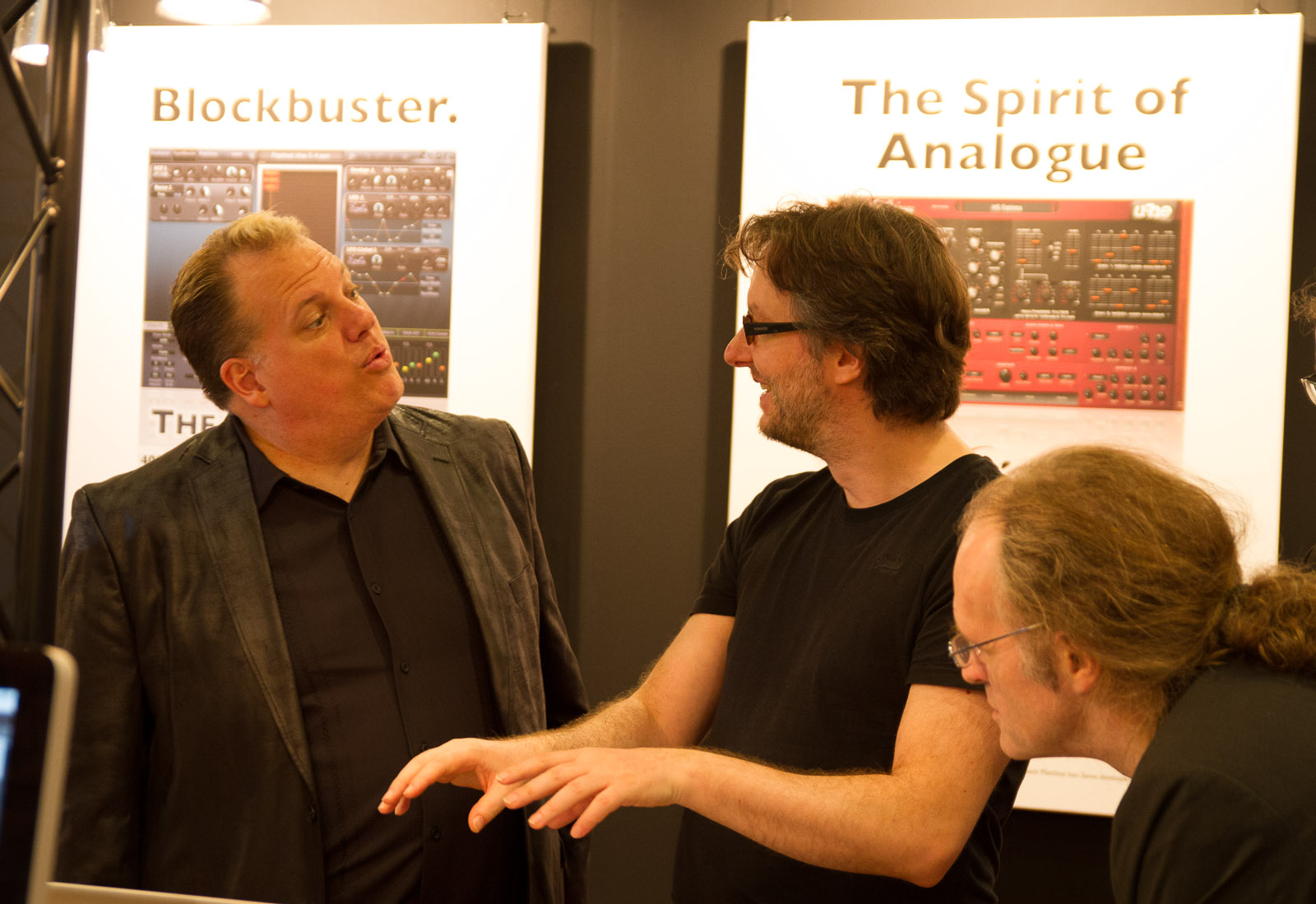
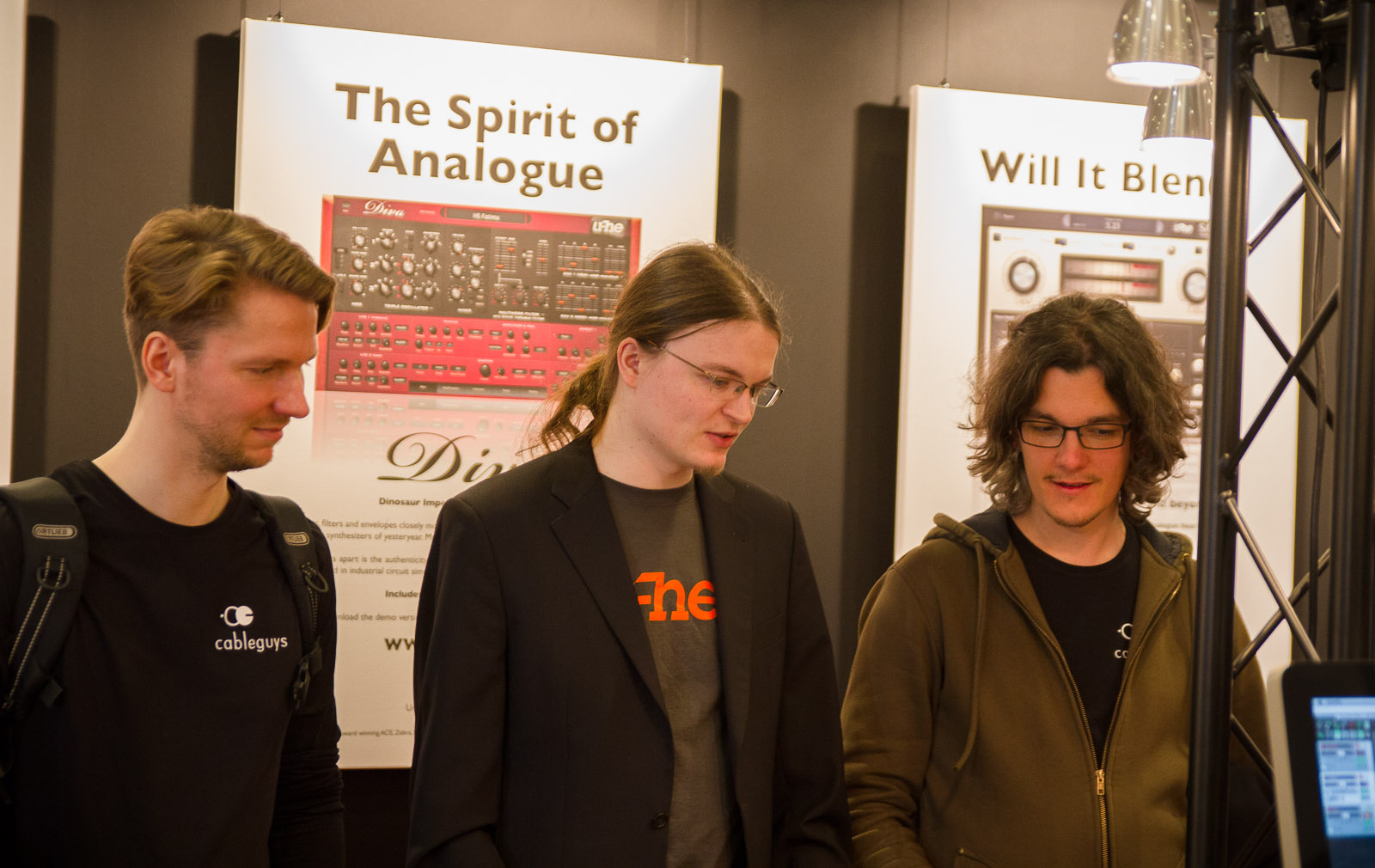
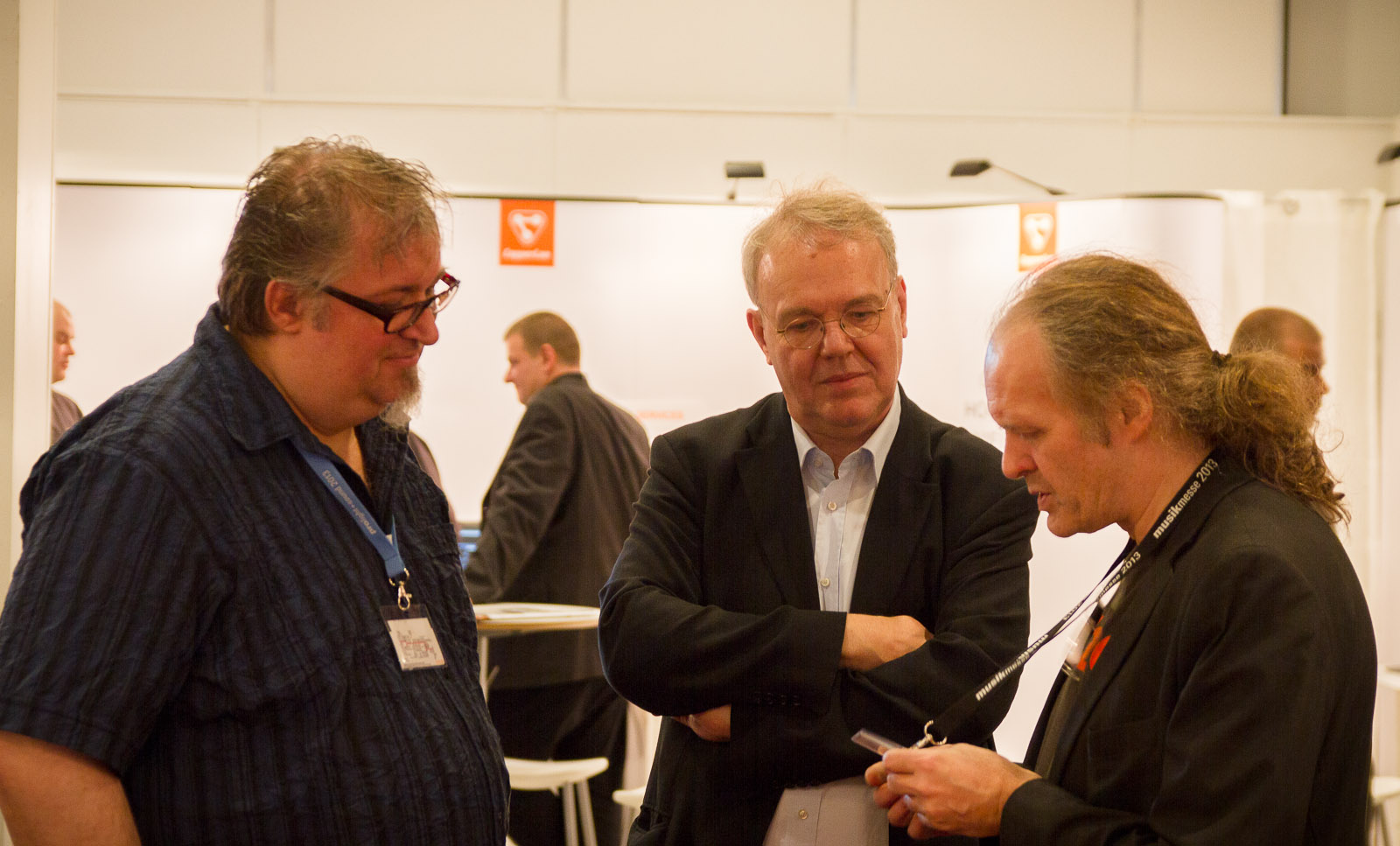
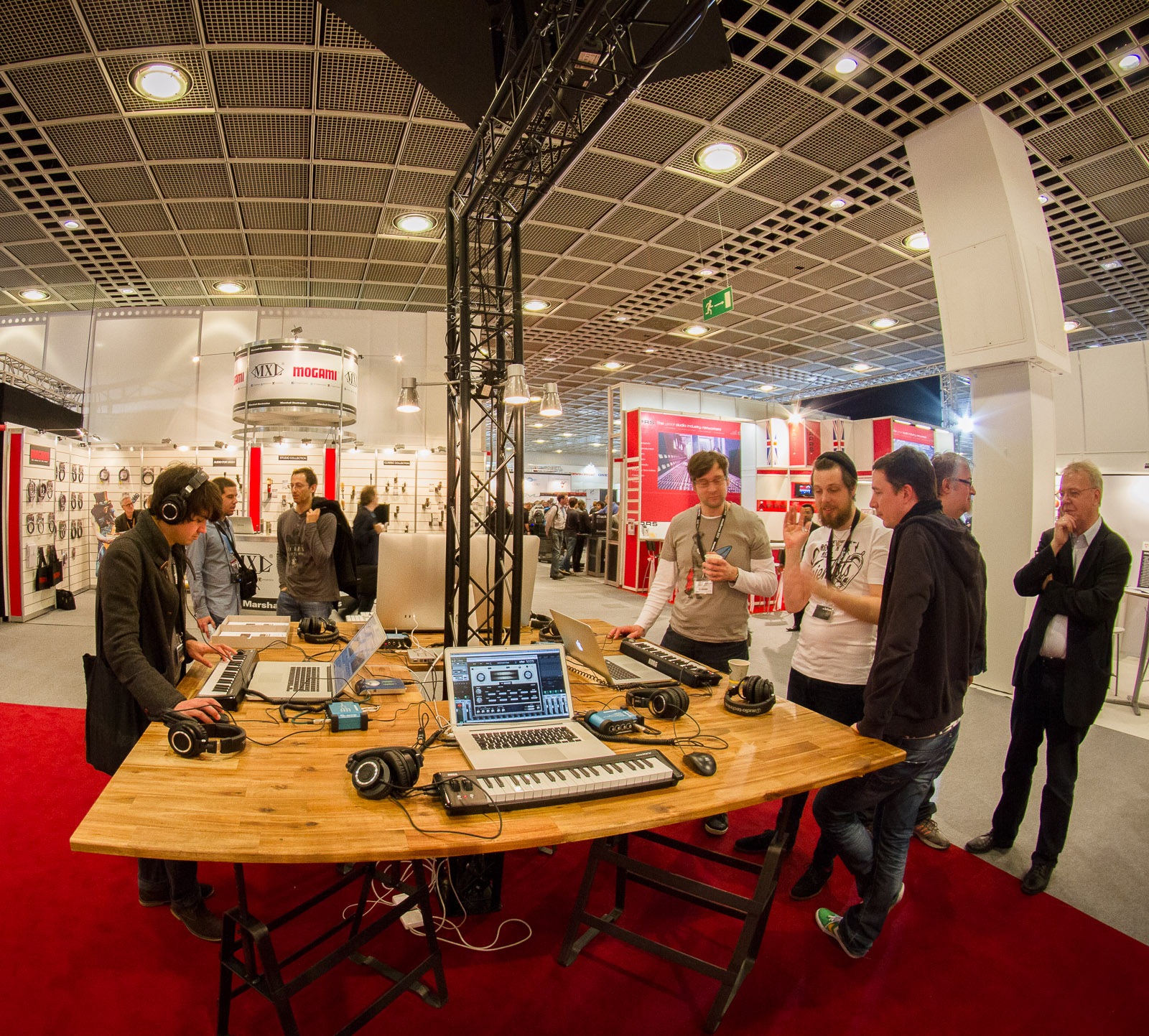
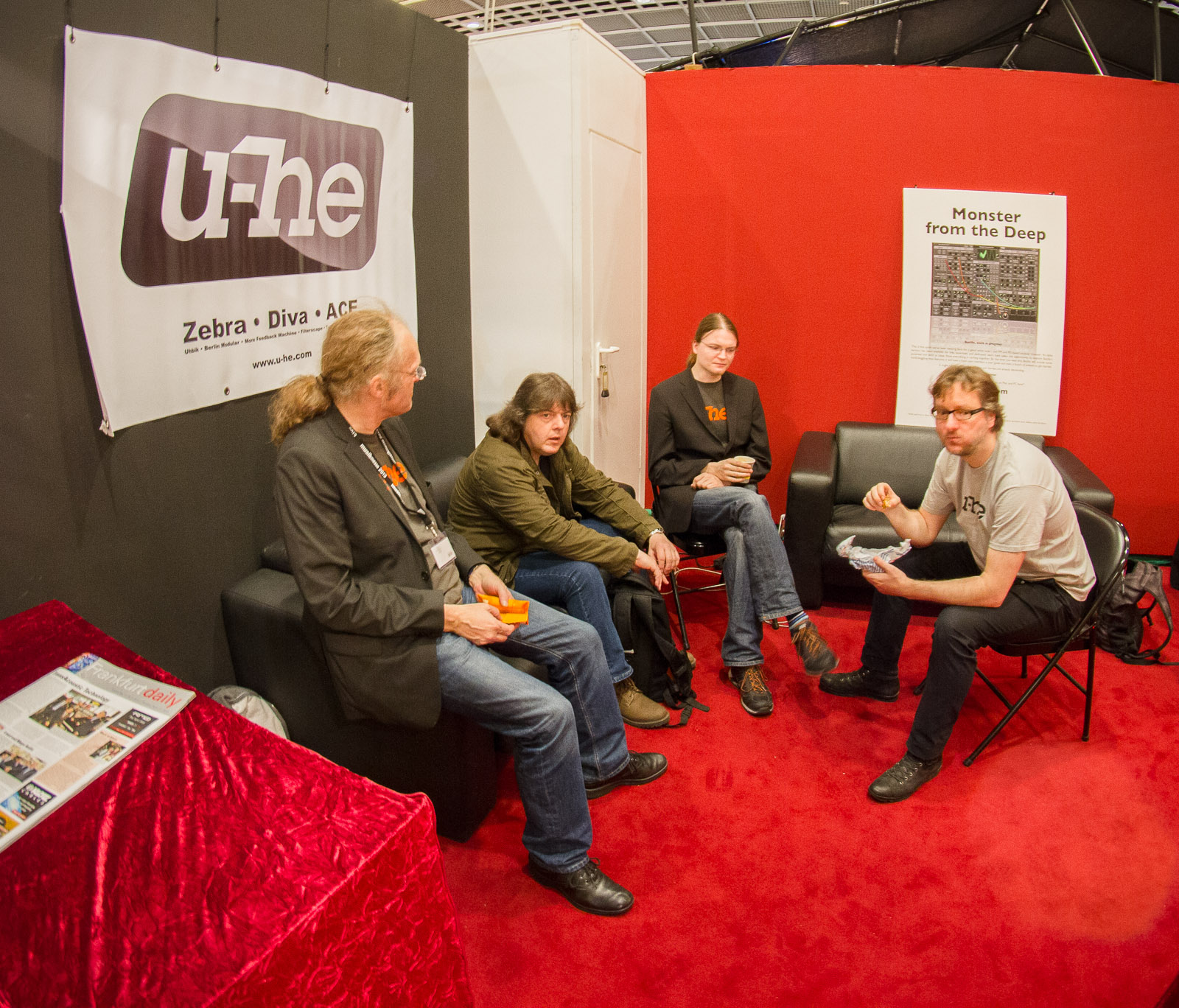
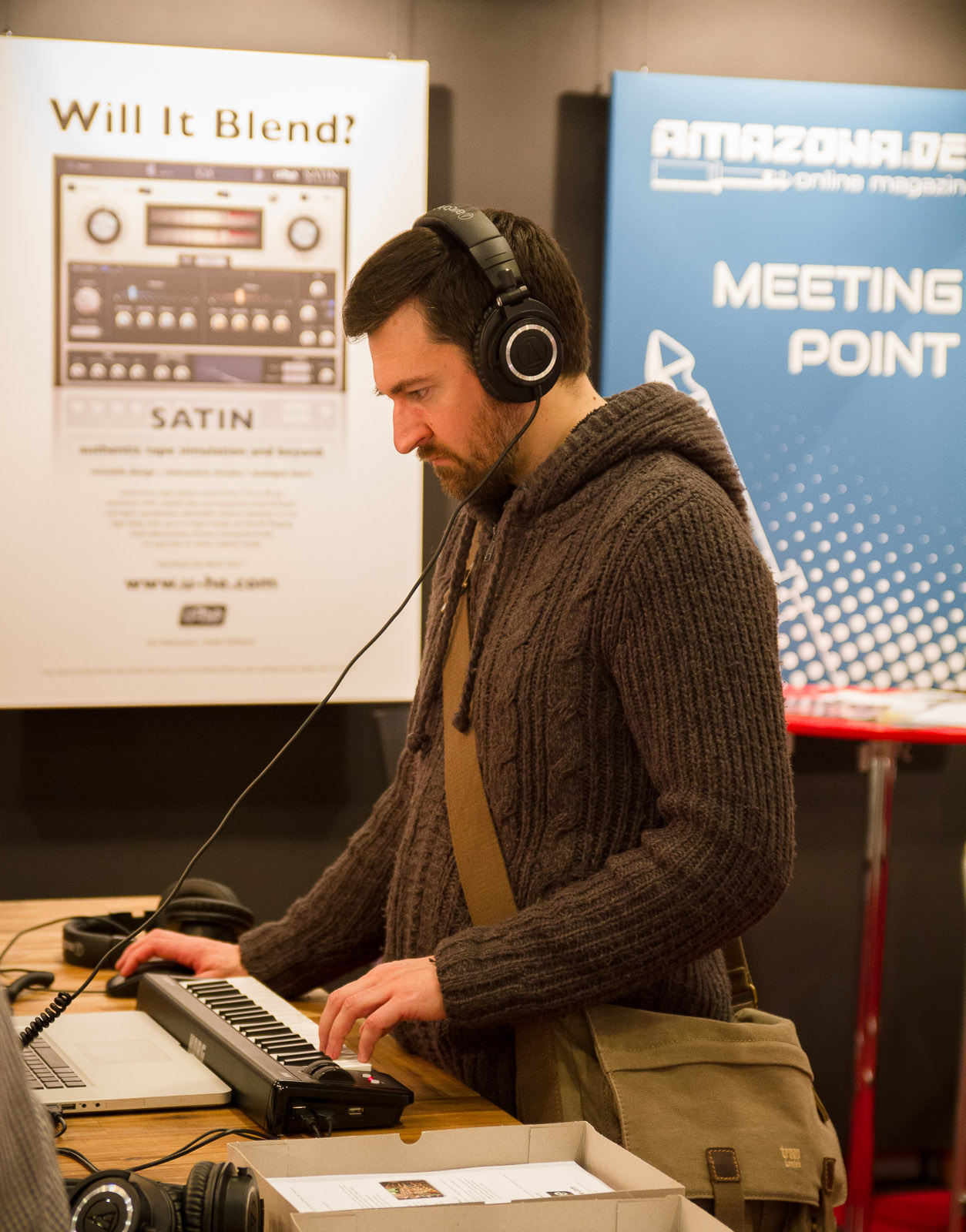
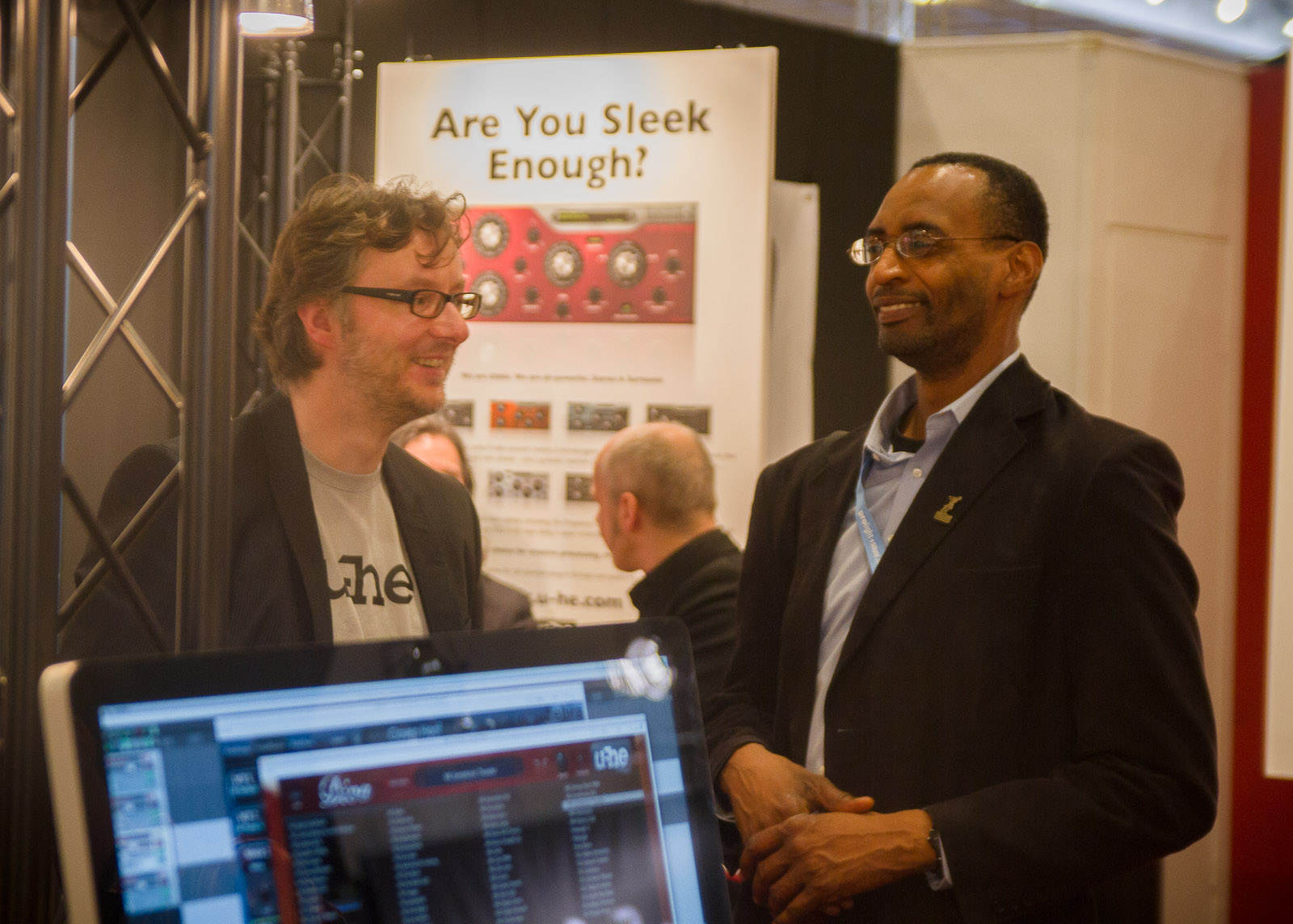
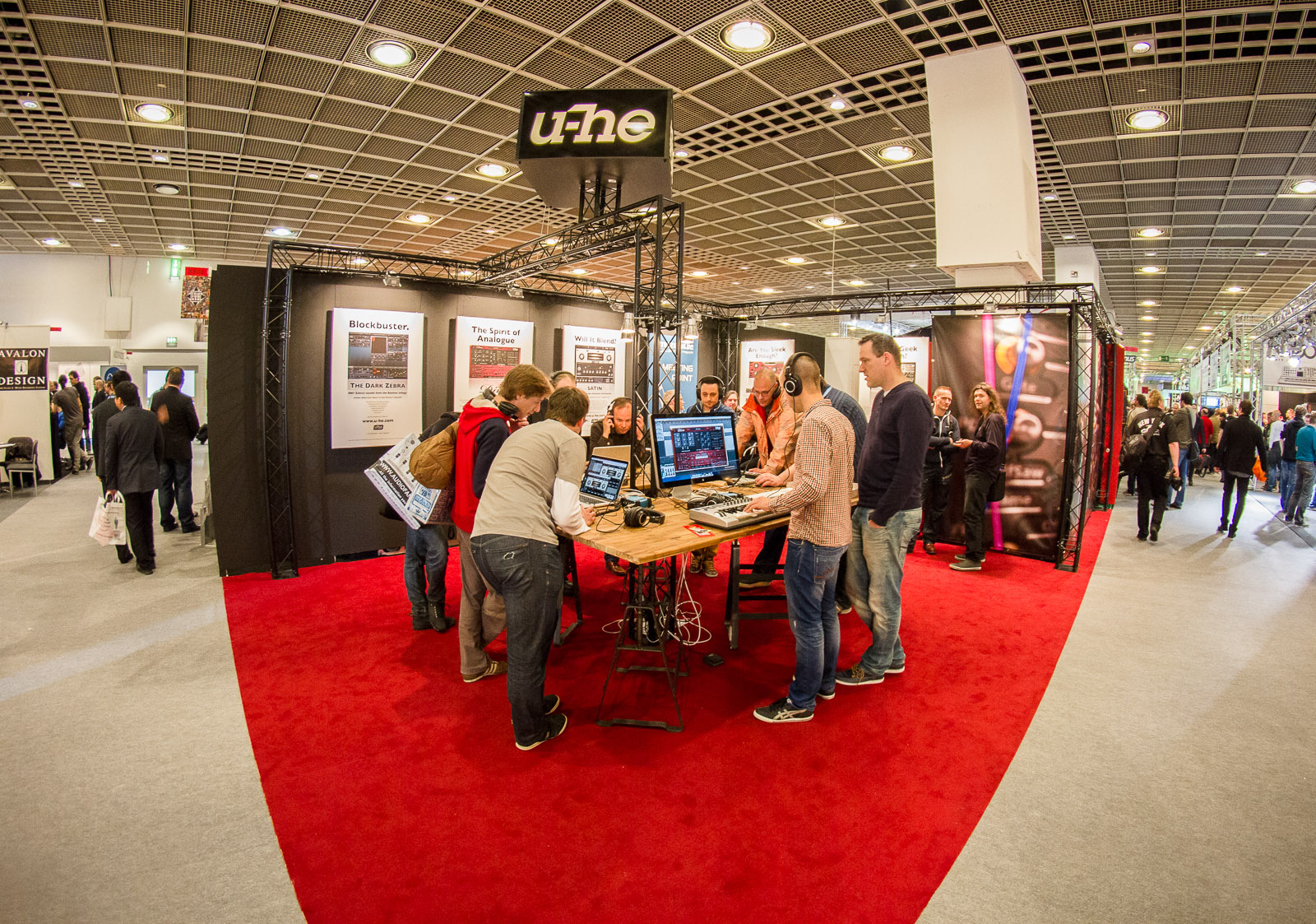
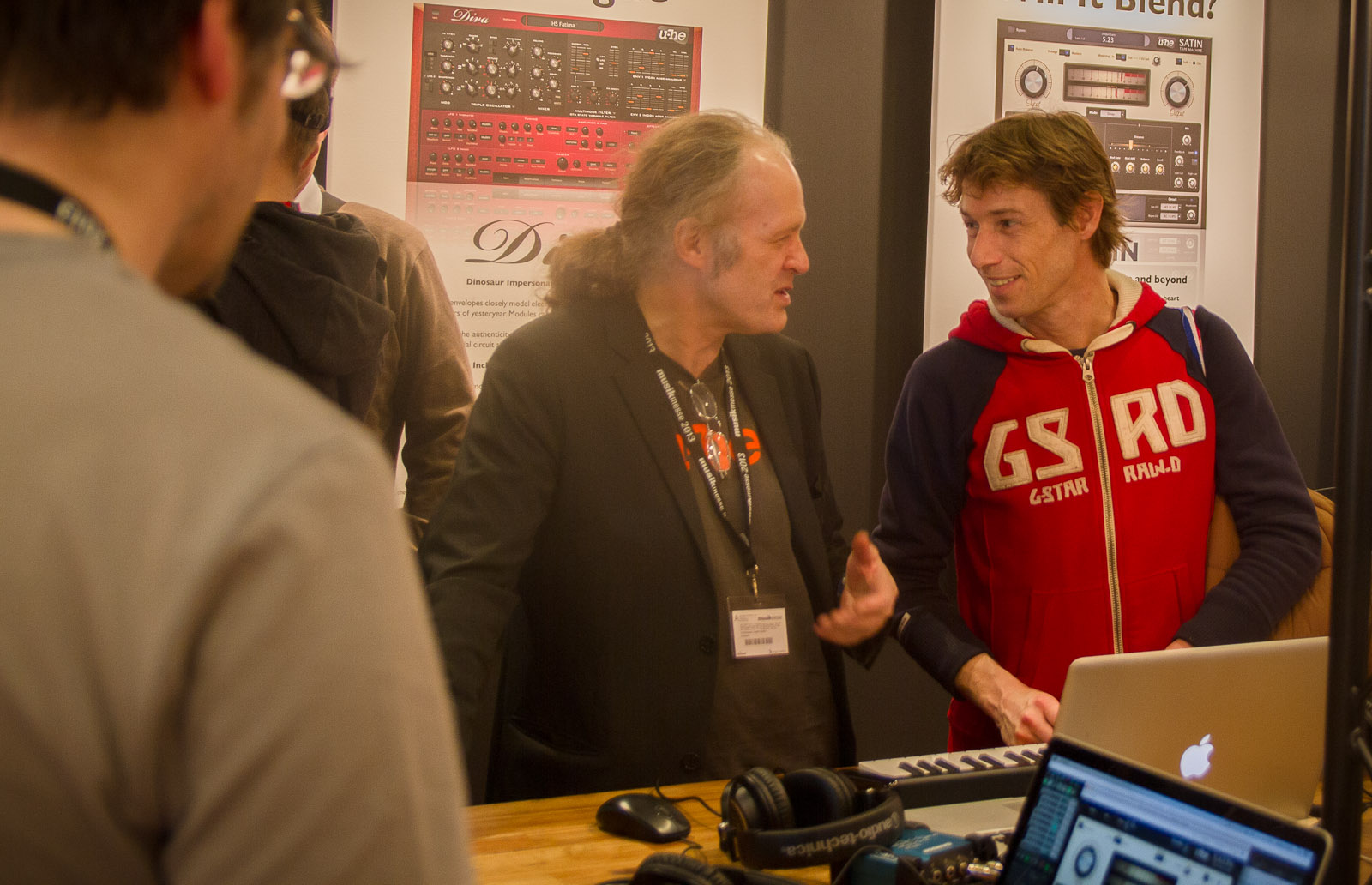
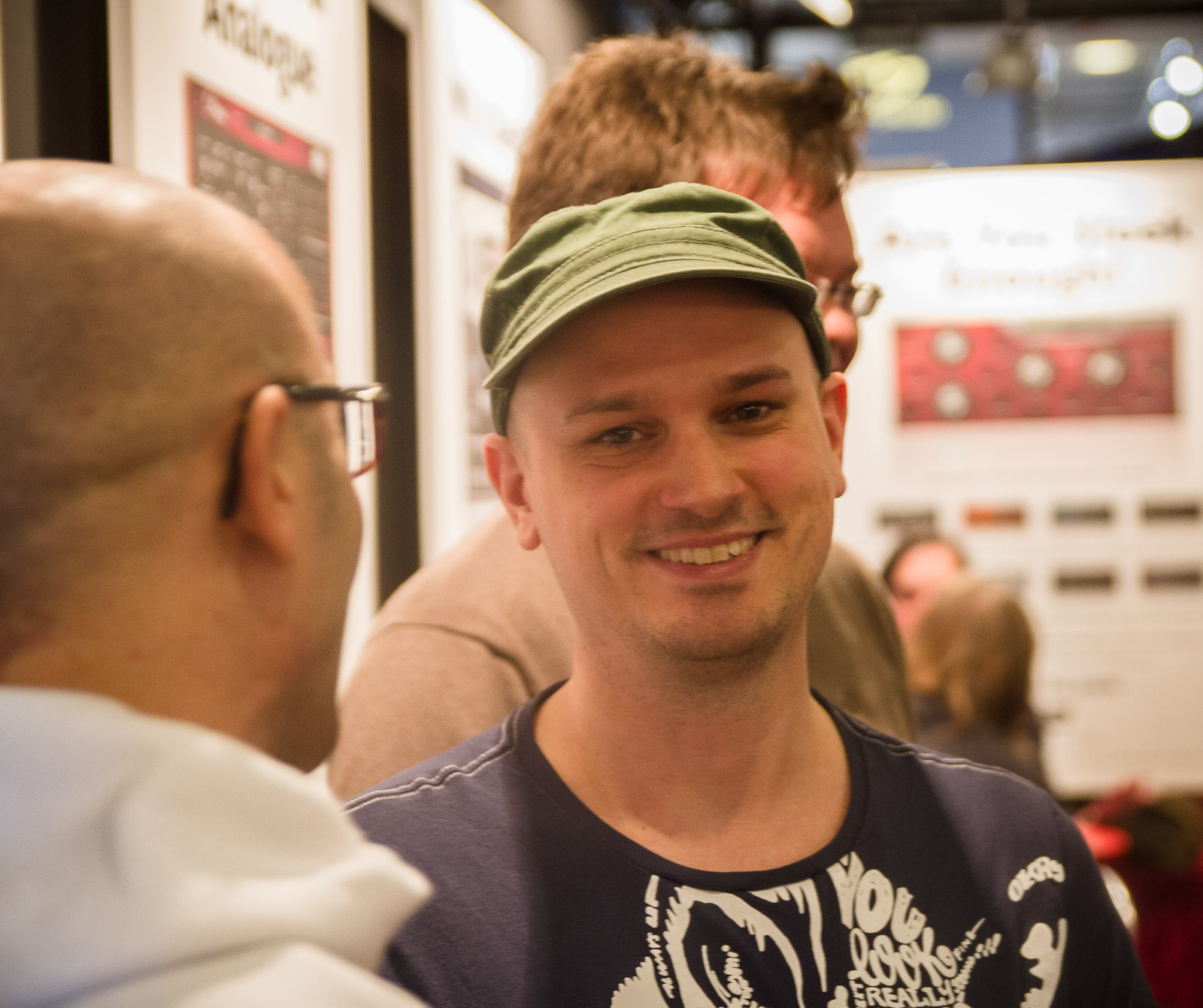
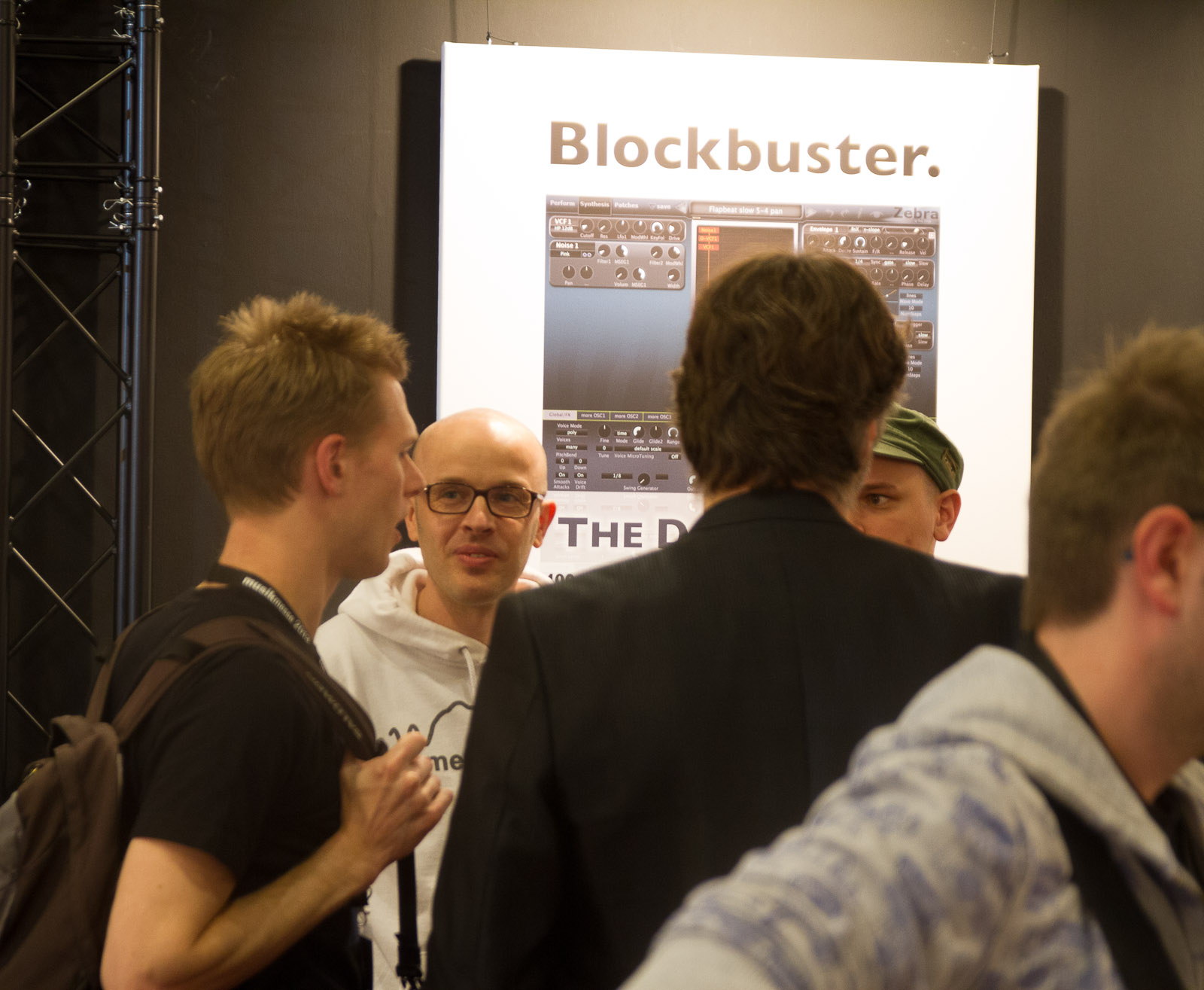
djanthonyw wrote:Urs wrote:A remarkable moment, left to right:
Eric Persing, Urs, Howard, Clemens, Jim Heintz of Way Out Ware, Chris Adam (co-founder of Emagic, with headphones), Claes of Bitwig lurking in the back


Hmm, perhaps. A 303 does not even have any adjustable controls for the attack stage of the envelope; it only has a single decay control, and that does not even affect accented notes directly (the decay of any previous note which is tied to an accented notes does matter quite a bit, though).pdxindy wrote:Ch00rD wrote: One important aspect already seems to be covered, as it already seems to include a glide function (by using ties between different notes). So I would think that the main important function that would also be desirable (but does not yet seem to exist) in Diva, especially to emulate the pattern sequencing style characteristic of the 303, is a way to trigger accents. One could say that the accent function of the sequencer is more or less intrinsically linked with the filter (and envelope, as accented notes on a 303 have a decay time that is fixed and independent from the regular decay time), or at least that a 303-ish filter without an accent function is to some degree less interesting (although certainly not uninteresting). Support for accents in the sequencer / arp could perhaps be implemented as simple as using some arbitrary note-on velocity threshold level (e.g. velocity below 100 => no accent; velocity of 100 and higher => accent).
There could be a simple A/D envelope to control step shape.
Urs wrote:
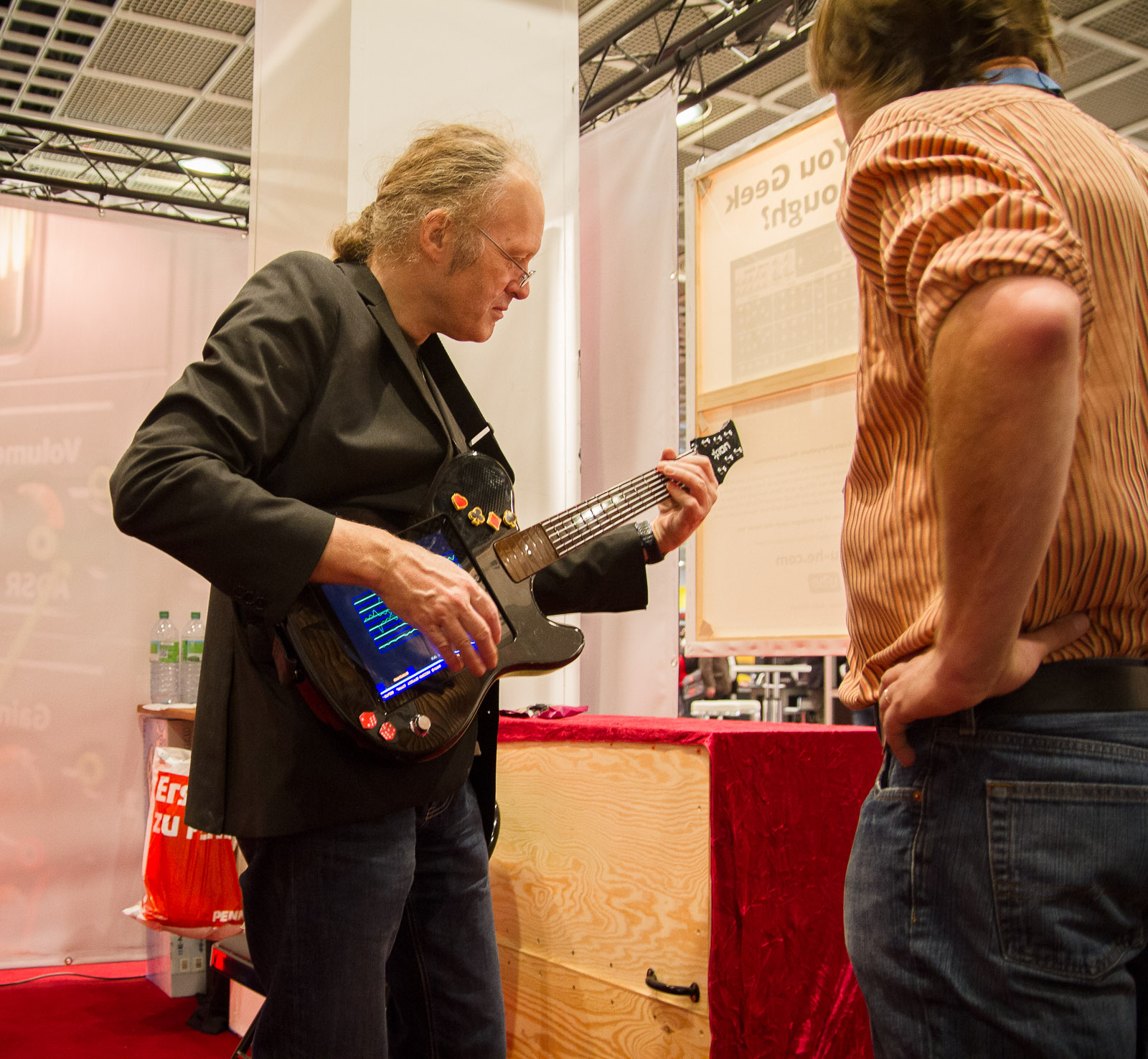
The Cocktor himself:

I really like the A/D control in the Alchemy Sequencer(s)Ch00rD wrote:Hmm, perhaps. A 303 does not even have any adjustable controls for the attack stage of the envelope; it only has a single decay control, and that does not even affect accented notes directly (the decay of any previous note which is tied to an accented notes does matter quite a bit, though).pdxindy wrote:Ch00rD wrote: One important aspect already seems to be covered, as it already seems to include a glide function (by using ties between different notes). So I would think that the main important function that would also be desirable (but does not yet seem to exist) in Diva, especially to emulate the pattern sequencing style characteristic of the 303, is a way to trigger accents. One could say that the accent function of the sequencer is more or less intrinsically linked with the filter (and envelope, as accented notes on a 303 have a decay time that is fixed and independent from the regular decay time), or at least that a 303-ish filter without an accent function is to some degree less interesting (although certainly not uninteresting). Support for accents in the sequencer / arp could perhaps be implemented as simple as using some arbitrary note-on velocity threshold level (e.g. velocity below 100 => no accent; velocity of 100 and higher => accent).
There could be a simple A/D envelope to control step shape.
I sure wouldn't mind having more extensive (e.g. ADSR) envelopes anyway, of course, but an accented step would need to be shaped by an additional envelope, that has a different shape as the regular envelope. In that context, my point here is merely that for a similar accent function, some method would arguably be needed to distinguish in the sequencer which steps should play regular vs. accented notes.
But again, I haven't even wrapped my head around the new arp / sequencer feature yet at all. I simply mention accents as something that could also be useful to take into account in its design one way or another.
I'm not very familiar with Alchemy, but one can of course create 'accents' in many ways. That's a very nice example to illustrate the point indeed.pdxindy wrote:[...]
I really like the A/D control in the Alchemy Sequencer(s)
In the new Diva sequencer, you can record 3 channels of per step cc automation - Modwheel, Breath and Expression Pedal. Here in this example, the sequencer is adjusting filter cutoff and resonance per step:
http://draigathar.org/sounds/Arpseq4.mp3

So what does Accent in a 303 do? Please explain...Ch00rD wrote: However, the characteristic 303 accent is still quite a different beast compared to sequencing separate filter / amp / envelope parameter values for each step. Imho there is no practical way that the former (admittedly a very specific and at this point hypothetical case) can be achieved by the latter (which in general has much more interesting possibilities, but would not suffice to capture the interaction between parameters that is so characteristic for the 303).
Basically: it bumps the volume and the cut-off up, depending on the accent level (which is a separate control knob on the panel), and a fixed envelope shape is used with fast attack (but perhaps slightly slower than regular notes, can't remember or check atm), and fast decay. Although regular notes and accented notes use different envelope shapes, there seems to be only a single envelope, with a single depth control that affects the envelope depth for both types of notes. The intensity of accents is also increased by previous accents, but then tops off after a bit; depending on the speed (of the sequencer, or playing notes manually if they are modded to take gate/CV input), you'd typically get three or four different levels in a rapid succession of accented notes, which makes it sound very much 'alive'. Also, when you play a non-accented note tied to an accented note, you can make the accent audible at varying levels (or completely disappear) by varying the decay amount of the previous note, again, also dependent on speed. So while it may seem that the decay control only directly affects non-accented notes, in fact it can very much affect accented notes as well.pdxindy wrote:So what does Accent in a 303 do? Please explain...Ch00rD wrote: However, the characteristic 303 accent is still quite a different beast compared to sequencing separate filter / amp / envelope parameter values for each step. Imho there is no practical way that the former (admittedly a very specific and at this point hypothetical case) can be achieved by the latter (which in general has much more interesting possibilities, but would not suffice to capture the interaction between parameters that is so characteristic for the 303).
Is there a single female plugin developer?  Unfortunately the soft material used is starting to disintegrate after just two years of careful use
Submit: News, Plugins, Hosts & Apps | Advertise @ KVR | Developer Account | About KVR / Contact Us | Privacy Statement
© KVR Audio, Inc. 2000-2026