
When will Hive come out?
Two choices atm, no preference from my side:
1. We can rush it out by mid January.
2. Sound Design, UI and a few features can mature while I'm taking my Summer break in Australia in February, and then we prepare for a luxurious release in late March/early April, with some more features added. In this case a free-to-use beta will be available till end of March at least.
Envelope Slopes aka "can we have a slope parameter like in Zebra?"
Envelopes can modulate themselves… that's how different slopes are done in the Virus. The "snappy" feature in ACE and Bazille is nothing but an envelope modulating its own rate.
I was going to experiment with this a bit, also get Howie involved. And then we'll decide how we handle it, either with a dedicated "env rate" parameter, or with slope parameter (which is the same, but different angle), or simple with a tutorial and a few presets.
Thing is, if you look at Sylenth, Virus and what not, they all have their limitations and people have happily worked around them. It was never a big deal that Sylenth had no PWM because everybody knows how to do it. So we think that only because it isn't immediately obvious, we might not need to add each and every feature.
Oscillator Phase aka "where is the phase knob?"
Osc Phase is tucked away in the ModMatrix. Click the arrow of a ModMatrix slot and choose "Osc Phase Control". Then you can use the Constant modulator to set the osc phase. Very simple, and look at last paragraph of above statement

Multi Synthe Engine Technology?
Forget the buzzword. Hive can't switch filter topology for both filters individually, but we wanted to offer a ladder filter, a diode-based Steiner-Parker filter and a State Variable Filter. We also wanted to offer different detune laws and different envelopes without making things too esoteric, homoeopathic or too technical. Hence you get all of these things as different characters in the synth engines.
Normal: exponential detune, s-shaped attack, short, punchy decays, oversampled ladder filter with non-linear resonance, self oscillating.
"Normal" Amp envelopes:
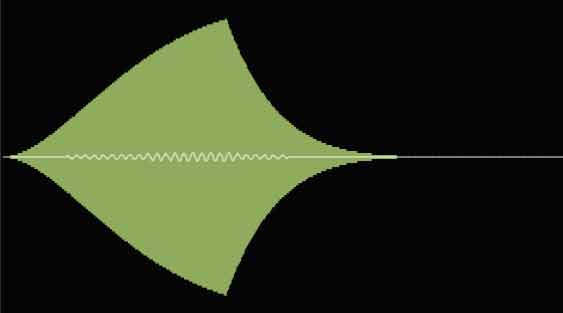
"Normal" Mod envelopes:

Dirty: Even space detune, exponential envelopes, oversampled, highly non-linear Steiner-Parker filter, self oscillating, unpredictable. Bit like the MS-20 filters, but built with an unbuffered diode ring (it's a bit like everyone does Sallen-Key nowadays, so I wanted to go that extra mile for something unusual).
All "Dirty" envelopes:
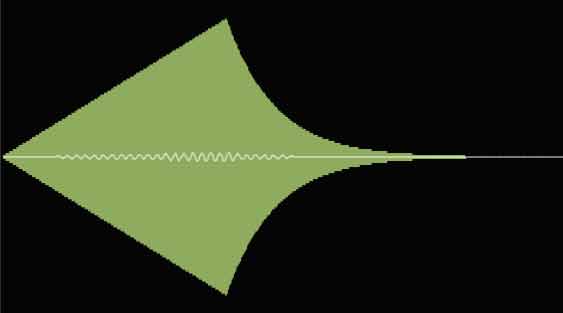
Clean: Wide detune, linear attack, exponential decay/release, not oversampled and absolutely linear State Variable Filter
All "Clean" envelopes:
What's going into the hexagon?
We have three things planned. One of them will make it.
Oscilloscope is one of them, but not the favourite. Osciloscope "possibly" if we manage to also display envelope shapes, LFOs and loads of other useful things.
Another idea is based on XY controls, involving patch randomisaton, breeding and morphing. It might be too ambitious and too techncially challengeing to do short term.
I forgot what the last one was. But it sounded good.
What about the oscillators?
Well, from what I could gather, we're using the same principle as Sylenth (and many other synths) - multisampled waveform cycles distributed over the pitch range. But as we don't need oversampling (no FM or similar involved) we need a bit of headroom at the upper end of the spectrum. Sylenth does the same, but while Sylenth has 2 zones per octave (and I think a bit of crossfade), we have 3.
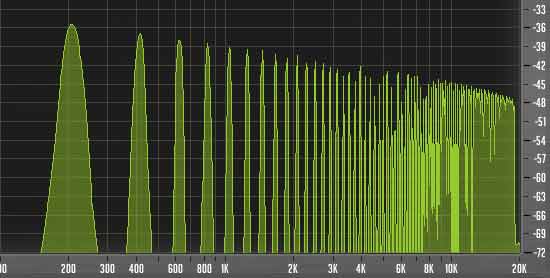
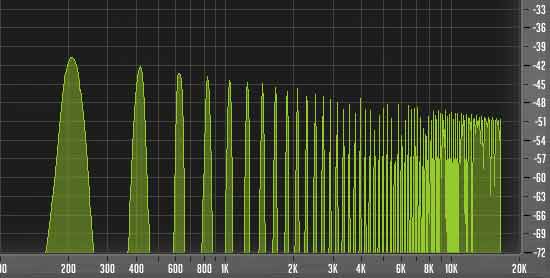
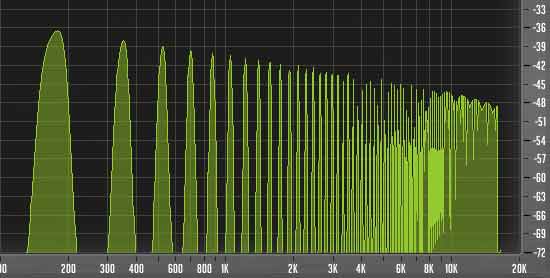
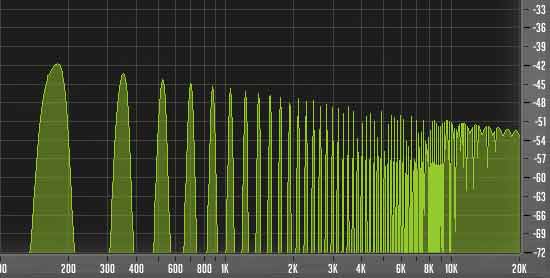
As the comparisons are undoubtly going to happen, and as 90% of them will be Hive vs. Sylenth, here's a preemptive comparison of Hive vs. Sylenth waveform spectrum at different keys, quoting myself:
That's it for now, more to pop out later.Urs wrote:Now, about those oscillators…
Both Hive and Sylenth use the IMHO fastest possible way to render static waveforms. Its called mipmapping, or multisampled waveform cycles which are switched based on pitch. Depending on which key you press you get either the full spectrum, or a spectrum up to, say, 17kHz or something in-between. Sylenth has 2 zones per octave, Hive currently has 3. Therefore they switch at different keys, so that conparing waveforms at the same key yields results either in favour of one or the other. A fair comparison would use not just one pitch, but several.
Hier is such a fair comparison:
Sylenth Gs2:
Here you see a nice full spectrum sawtooth form Sylenth.
Hive Gs2
But what's that? - Something seems to miss in Hive. OMG, there'll be ringing on the edges of the waveform!
But what happens if we go 3 semitones down?
Sylenth F2:
Ugh!
Hive F2
Ahhh! - Seems like at the F, the picture has turned the other way round
You see, it's the same basic technique. As it powers Sylenth, we think it's tried and tested and hasn't been in the way of making Sylenth one of the most popular synths out there. Therefore we think this technique is good enough for Hive. It btw. also powers the oscillators of many other synths out there.
Cheers,
- Urs