u-he rePro in the works

VST, AU, AAX, CLAP, etc. Plugin Virtual Instruments Discussion
Post Reply New Topic
RELATED
PRODUCTS

Post

fmr wrote:
EvilDragon wrote:
fmr wrote:
EvilDragon wrote:
fmr wrote:And the power of desktop computers double every five years.
Not anymore. Moore's law capped out on us.
How so?
Well going just purely by numbers, we aren't doubling GHz since 5 years ago. We cannot expect 10 GHz CPUs in 5 years time. What we can expect is more cores, but not more GHz, and smaller TDP - but that doesn't really impact performance much, since applications need to be coded to take advantage of multiple cores, however the majority of applications still don't know what multiple cores even mean...
Yes, we are now following a different path, with more cores, instead of faster clocks, but judging in terms of benchmarks, we are there. Raw power exists, it's just a matter of coders adapting to the new reality.
It aint what it was before... my 5 year old iMac i7 quad is not that much slower than a new i7 quad core iMac today. Mostly the other areas are faster... memory throughput, usb speed, switch to SSD, etc.

An 8 core today is not the same price and in the same use as a quad core then. And in terms of benchmarks, 5 years ago I could buy 2 quad core machines to make a render farm for CGI, Video etc. So to me, putting 2 quad core processors in one machine or on one chip does not count as an increase in speed. We already could do that 5 years ago.

Post

fluffy_little_something wrote:
chk071 wrote:It's funny, because i already heard/read the same 15 years ago. :P
But not from me :hihi: And now with all the military and secret service fascists so keen on it, progress might speed up a lot...
yeah, but quantum computers are by nature socialist... :lol:

Post

fluffy_little_something wrote:
chk071 wrote:It's funny, because i already heard/read the same 15 years ago. :P
But not from me :hihi: And now with all the military and secret service fascists so keen on it, progress might speed up a lot...
There are supposed to be fusion reactors in 20-30 years too. Funnily my father who studied physics in the 60's/70's told me that on his university people said that in 30 years we have fusion reactors too. :hihi: People just love hypes i guess.

Post

chk071 wrote:
fluffy_little_something wrote:
chk071 wrote:It's funny, because i already heard/read the same 15 years ago. :P
But not from me :hihi: And now with all the military and secret service fascists so keen on it, progress might speed up a lot...
There are supposed to be fusion reactors in 20-30 years too. Funnily my father who studied physics in the 60's/70's told me that on his university people said that in 30 years we have fusion reactors too. :hihi: People just love hypes i guess.
We created a virtual world and then have mistaken our ability to control it to mean that we would easily be able to do the same in the real world.

The real world still depends on old technology. Go to a farm and the same mechanical devices are doing the work just like they were 50 years ago. And of course the internal combustion engine still reigns supreme.

Post

fmr wrote:
EvilDragon wrote:Moore's law capped out on us.
How so?
Moore's law lives within the limitations of the physical world. Even if it does increase, from where it is now, it can only double about 5 more times before it reaches the size limit of single atoms (0.1 to 0.5 nanometers, depending on the element). As it reaches those limits preventing electrical signals from straying (from where you want them to be) gets harder and harder. To put the sizes in perspective, it's 1 millionth the width of a human hair.

Ultimately, further progress must come from sub-atomic (quantum) computing. Presently its future is uncertain (yes, that was a bad joke).

As well as the distance (making CPU's smaller) there's also the CPU's clock speed. 1GHz is another way of saying 1 nanosecond per clock cycle. If you managed to find materials which would allow you to run at 100GHz (about 25 times the speed of todays fastest CPU's) that is 0.01 nanoseconds. Then you run into another limit - the speed of light can only travel 3mm distance in that time. The reason they can't offer those speeds now is they can't find materials which don't have huge power (and thus heat) issues. That's also why there's efforts to try to move to light based signals, in order to help remove limitations introduced by the materials used.

Things are also being hindered by the fact that Intel is not facing serious competition in the desktop / server market, meaning they're taking less risks and investing less than they might if AMD were stronger. The vast majority of their consumer desktop CPU sales are still for 2 and 4 core CPU's, and most consumers have very little reason to upgrade a 6 year old i7 CPU. No desktop competition means they don't need to give you an 18 core CPU for $200. They could. But they won't.

It's also true that Intel x86/64 isn't suited to some tasks. There's a very simple example everyone is familiar with. Use 64 or even 32 samples of latency, if your audio card supports it, and watch what happens to your CPU performance. Not all of that is down to the motherboard i/o and OS.

Core counts will increase, but that cannot continue for long either. It becomes more expensive to manufacture as the sizes per chip go back up, and it uses more power (meaning heat issues again, as with increasing clock rates).

Eventually, failing a quantum computing breakthrough (and even with it), there will have to be a greater reliance on more specialised methods of calculation. You already see it with GPU assisted software, using the computation power of graphics cards for things they might calculate faster than an x86/64 based CPU. You will see a lot more of that in the years ahead.

So it's not an end to performance increases quite yet. But Moore's law won't be saving people from badly optimised code like it used to..

Post

PAK wrote:Presently its future is uncertain (yes, that was a bad joke).
:tu:

Post

PAK wrote:But Moore's law won't be saving people from badly optimised code like it used to..
Hear, hear!

Post

Yes, graphics cards are popular with hackers I heard some time ago, they are cheap and very powerful for brute stuff.

I am curious to see if AMD's new processors will change the current quasi monopoly of Intel. They are supposed to be launched later this year.

Not sure about multi-core, some say 4 is the ideal number of cores and will continue to be for quite some time.

Post

Are Moore and Briscati the two U-he employees working on rePro? If not, I'm not sure why we've wasted several pages discussing them in this thread [when there's a lovely DSP forum].

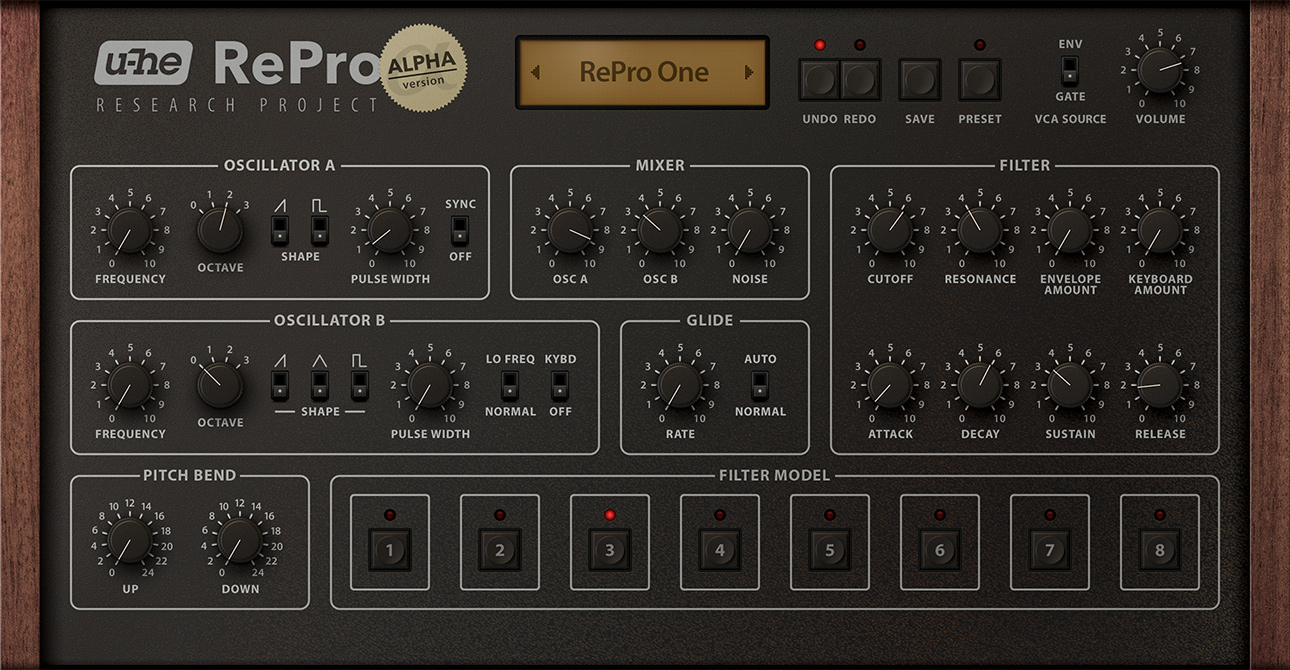
So how about that rePro? Seems like it will be cool. I'm glad U-he's taking on stuff like this. Wonder what the pricing will be? I know I'm not the first to say it, but I'd really like to see a U-he Prophet 5.

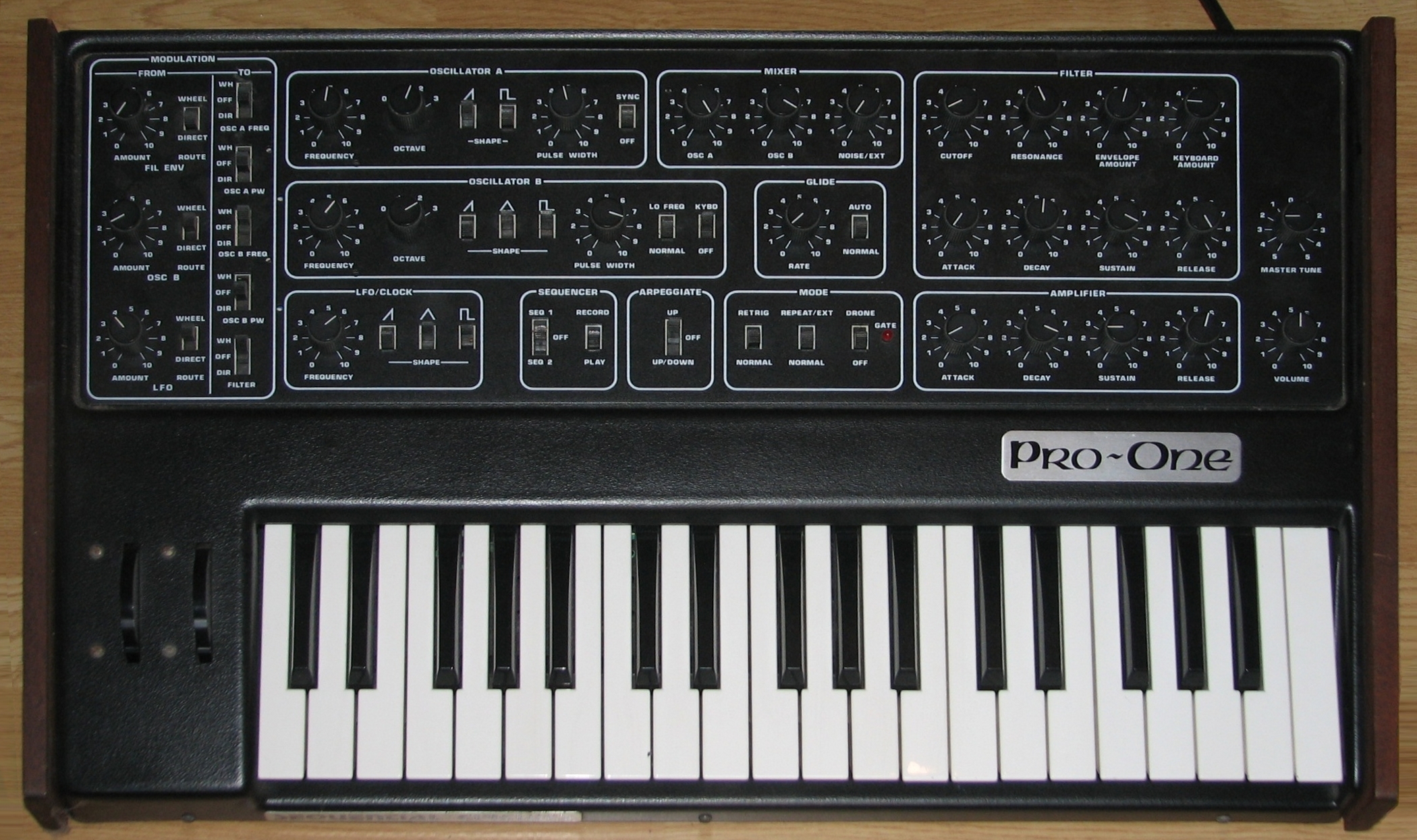
Question for Urs: where's the modulation section and amp ADSR?

Image

Image

Post

The first U-he gui I like :hihi:
The filter selectors seem basically like the three selectors in Hive, right?

There is an Env/Gate switch at the top, so maybe they will share the envelope like on Roland's Juno.

Post

Methinks after the public beta is over and best filter model/s are decided by the userbase, that area will be replaced with the amp envelope and poly mod section. Makes sense to me.


I'd also like to see bipolar envelope amount and keytracking, too...

Post

EDIT: Never Mind
Last edited by fmr on Sun Jan 31, 2016 9:05 pm, edited 1 time in total.
Fernando (FMR)

Post

Those two parameters don't seem to be bipolar on the hw, either. Just checked with my magnifying glass :hihi:

Post

This will be fun! I really appreciate this concept of involving your user-base. 8)
I'm not a musician, but I've designed sounds that others use to make music. http://soundcloud.com/obsidiananvil

Post

knowix wrote:As regards what Urs said about people's perceptions of sounds. I think there's a huge likelihood that people can perceive things that current scientific knowledge says they shouldn't be able to hear.
Yes, possibly, but even more likely when two or more sources interact. For example, one can't hear the phase relation of harmonics of a waveform per se, but it has an audible difference once running through distorting filters.
I also think that what appears on an oscilloscope/spectrascope doesn't necessarily reflect what happens when a sound bounces around the ears, or the surrounding room.
Fully agreed. Visualisation is important for the rough picture, but pixels can't compete with the resolution of the human ear.

Post Reply

Return to “Instruments”