


!Epoch, for the next 4 years
-
- KVRAF
- 2728 posts since 25 Aug, 2003 from Bournemouth, UK
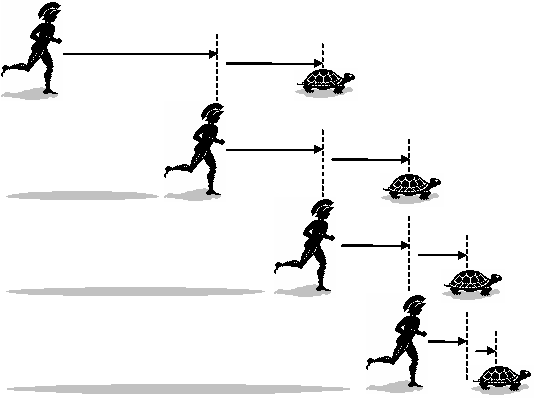
Thankfully, Zeno's paradox fails when one accounts for the summation of infinite series, hence Achilles (me) will catch the turtle (release this year.)
Architect, the modular MIDI toolkit, beta now available for macOS, Windows, and Linux.

-
- KVRAF
- 2728 posts since 25 Aug, 2003 from Bournemouth, UK
Of course I don't mind, sfxsound: it made made me laugh. Achilles chasing an impossible-to-capture turtle says exactly how protracted development periods feel sometimes!
Architect, the modular MIDI toolkit, beta now available for macOS, Windows, and Linux.
-
Winstontaneous Winstontaneous https://www.kvraudio.com/forum/memberlist.php?mode=viewprofile&u=98336
- KVRAF
- 2593 posts since 15 Feb, 2006 from Another Green World
Hee hee!woggle wrote:Historically, !Epoch has typically not been released most yearsbungle wrote:Thanks for the infoDaags wrote:this won't be released in 2017.
-
- KVRist
- 89 posts since 9 Dec, 2012
Hello,
after some time with Rea Blocks I was able to do this Modular Seqs.
Is something similar possible with !Epoch?
after some time with Rea Blocks I was able to do this Modular Seqs.
Is something similar possible with !Epoch?
You do not have the required permissions to view the files attached to this post.
Located in the European Outback
-

- KVRAF
- 10134 posts since 16 Dec, 2002
Great, now you've added at least another 6 months to the release date while Colin adds 3D panel rendering capability 
I suspect it can already easily replicate the functions of any analog emulating sequencer as they're all based on basic principles
I suspect it can already easily replicate the functions of any analog emulating sequencer as they're all based on basic principles
jue wrote:Hello,
after some time with Rea Blocks I was able to do this Modular Seqs.
Is something similar possible with !Epoch?
-
- KVRAF
- 2728 posts since 25 Aug, 2003 from Bournemouth, UK
I can't see exactly what's going on in that tiny bottom screenshot, but in terms of building a sequencer and making a circular ui: yes, both are simple to do.
Architect, the modular MIDI toolkit, beta now available for macOS, Windows, and Linux.

-

- KVRAF
- 6540 posts since 9 Dec, 2008 from Berlin
Hey Colin,
can you say something about the current CPU/RAM/System load of !Epoch?
I used Reaktor 6 for most of my Midi mangling so far, but recently found it more and more of a hog when I have something like 20 instances running in Bitwig Studio (not sure if something changed in Reaktor or BWS to make it more of a problem).
As you may remember, I'm mostly interested in rather simple things, not so much in running a dozen sequencers or hosting VSTs etc. so my question is mostly about the load of many instances that do very little actual computing, or what the basic load of !Epoch is if I just load it?
I currently contemplate writing my own Midi VSTs although I would still prefer having a node based environment like !Epoch, but am a bit worried since it has grown so far from it's initial form which was exactly what I was looking for (a kind of "!Epoch Lite" I guess ).
).
And: What's the current status? Any beta test date yet?
Cheers,
Tom
can you say something about the current CPU/RAM/System load of !Epoch?
I used Reaktor 6 for most of my Midi mangling so far, but recently found it more and more of a hog when I have something like 20 instances running in Bitwig Studio (not sure if something changed in Reaktor or BWS to make it more of a problem).
As you may remember, I'm mostly interested in rather simple things, not so much in running a dozen sequencers or hosting VSTs etc. so my question is mostly about the load of many instances that do very little actual computing, or what the basic load of !Epoch is if I just load it?
I currently contemplate writing my own Midi VSTs although I would still prefer having a node based environment like !Epoch, but am a bit worried since it has grown so far from it's initial form which was exactly what I was looking for (a kind of "!Epoch Lite" I guess
).And: What's the current status? Any beta test date yet?
Cheers,
Tom
"Out beyond the ideas of wrongdoing and rightdoing, there is a field. I’ll meet you there." · Rumi
UrbanFlow.art · Instagram · YouTube
UrbanFlow.art · Instagram · YouTube
-
- KVRAF
- 2728 posts since 25 Aug, 2003 from Bournemouth, UK
It has a light memory footprint: the first instance will take about 30MB on a 64-bit system, and a fraction less on a 32-bit. Because a lot of the resources - font, graphics resources, the built-in documentation, will be shared between instances, a second instance in the same host will take considerably less. A big part of the memory allocation is the memory pool the VM running on the audio thread uses. It currently stands at 8MB per instance, and isn't shared. I have a feeling changing the pool size whilst the VM is running isn't possible, but I could certainly make it configurable. In your case, if you're using lots of instances that each do something tiny, you could likely get away with a pool being just a fraction of that size.
CPU usage is again tiny, but it's hard to give definite figures because it varies so wildly between systems. I can't remember the exact figures I had last time I checked, but I seem to recall it was about 1% CPU per 100 modules, on average, on a 2Ghz Mac. I've optimised further since then, so it could be even less now. The main CPU spike was always memory allocation in the VM: when you create data to send between modules, it needs to create new objects. I have a very fast TLSF algorithm that handles most cases, and I also have a number of fixed objects in the VM environment that are used as flyweight objects for some of the most common object values, such as the integer number 0, 1, and -1, the booleans true and false, the empty array[], the empty tuple() and empty map{}. Furthermore, objects are shared, so if a module doesn't actually change an object, it can pass the unchanged object through without needing to create a new one. The result of all this: it's very fast.
CPU usage is again tiny, but it's hard to give definite figures because it varies so wildly between systems. I can't remember the exact figures I had last time I checked, but I seem to recall it was about 1% CPU per 100 modules, on average, on a 2Ghz Mac. I've optimised further since then, so it could be even less now. The main CPU spike was always memory allocation in the VM: when you create data to send between modules, it needs to create new objects. I have a very fast TLSF algorithm that handles most cases, and I also have a number of fixed objects in the VM environment that are used as flyweight objects for some of the most common object values, such as the integer number 0, 1, and -1, the booleans true and false, the empty array[], the empty tuple() and empty map{}. Furthermore, objects are shared, so if a module doesn't actually change an object, it can pass the unchanged object through without needing to create a new one. The result of all this: it's very fast.
Architect, the modular MIDI toolkit, beta now available for macOS, Windows, and Linux.