


Tone2 I2 vs Trueno Analog

-

- KVRAF
- 12522 posts since 21 Mar, 2008 from Hannover, Germany


Ingo Weidner
Win 10 Home 64-bit / mobile i7-7700HQ 2.8 GHz / 16GB RAM //
Live 10 Suite / Cubase Pro 9.5 / Pro Tools Ultimate 2021 // NI Komplete Kontrol S61 Mk1
Win 10 Home 64-bit / mobile i7-7700HQ 2.8 GHz / 16GB RAM //
Live 10 Suite / Cubase Pro 9.5 / Pro Tools Ultimate 2021 // NI Komplete Kontrol S61 Mk1
-
- KVRian
- 1262 posts since 15 May, 2002 from Finland
I'm still on win7 and don't trust newer versions, from here I'm going to Linux when I'm forced to. Otherwise I would have bought it since it's a fresh concept.
It should work with every sample rate automatically in my opinion. Also, I hope the DAC is high quality...
It would be much better to have an analog audio out, now the routing to DAW seems unneededly complex. I would much prefer the possibility of doing what I want with the audio and using any pedals, preamps, etc. Especially if only one instance can run at a time. With audio outs I could run however many I want and just use the inputs of my soundcard.
I would prefer to have also oscillator sync and xmod/fm available.
I hope the control surface can take audio rate controls? So it should be amazing with Bitwig and the modulation system so audio followers etc could be used.
It should work with every sample rate automatically in my opinion. Also, I hope the DAC is high quality...
It would be much better to have an analog audio out, now the routing to DAW seems unneededly complex. I would much prefer the possibility of doing what I want with the audio and using any pedals, preamps, etc. Especially if only one instance can run at a time. With audio outs I could run however many I want and just use the inputs of my soundcard.
I would prefer to have also oscillator sync and xmod/fm available.
I hope the control surface can take audio rate controls? So it should be amazing with Bitwig and the modulation system so audio followers etc could be used.

-

- KVRAF
- 9096 posts since 5 Feb, 2004
I agree with everyone that has said it needs an analog out. That would make it a lot more flexible (external effects) and avoid some of the worst of compatibility issues that could arise, and take away cost of development to deal with latency via USB. Since you would need to render to audio to use more than one instance per USB stick anyway, I don't see the up side of using USB audio.
I have a little USB extension cable, would it work with that? I would hope so, because that would work around the placement of ports that would apparently be a big problem with this.
Can you run multiple sticks at a time? (Again, if it didn't use USB audio, that would seem a much simpler thing to do) It would be pretty cool if you had a USB hub that had up to 8 different synths plugged in, with an audio router harness kind of thing to go to your sound card.
I have a little USB extension cable, would it work with that? I would hope so, because that would work around the placement of ports that would apparently be a big problem with this.
Can you run multiple sticks at a time? (Again, if it didn't use USB audio, that would seem a much simpler thing to do) It would be pretty cool if you had a USB hub that had up to 8 different synths plugged in, with an audio router harness kind of thing to go to your sound card.
If you have requests for Korg VST features or changes, they are listening at https://support.korguser.net/hc/en-us/requests/new
-
- KVRist
- 364 posts since 7 Sep, 2012
Pretty much so. I can't understand how some call this a revolutionary product, yet another game changer in a game where nothing much has actually changed in like, decades. I have hardware devices with all kinds of connections, not just USB, and some are from the past century already. So it's not that. What is it then? A hardware box which cannot be run independently and doesn't have any of the hands on control either, two of the strong points of OTB gear. Few pages earlier somebody replied with a list about the things where this one doesn't differ from the plugins, so yea, it's not quite just a plugin but has the same limitations, some ways even more than some plugins.AnX wrote:Emperor's New Clothes
Ok, it's tiny compared to any regular hw synth, and it supposedly sounds better than any ITB synth...debatable of course. But once these are specced out to really compete with regular hw, the tiny format is gone as well. Sounds? Maybe, if you don't have any real OTB gear?
-
- KVRAF
- 9883 posts since 15 Sep, 2005 from East Coast of the USA
I (sort of) agree with you. I have one analog synth that is in hardware form already (Sub Phatty). I would own more, but there is just way too much great software out there these days.wagtunes wrote:You know, the more I think about this, with all its limitation, who needs it?
I sure as hell don't.
The Legend, Diva, and Repro-1/Repro-5 are very good, excellent actually. Also MiniMonsta, OP-X Pro II, and a couple of others are great even though they are older. (Older?....so is the Minimoog..
 )
)-
- KVRAF
- 16751 posts since 13 Oct, 2009
I do find things like this and the comments a bit funny TBH. Conceptually, there's nothing really new here beyond the form factor and some of your questions can be answered by just thinking that through.
This is an analog synth module. We've had them for years, even without a user interface of any significant from, think Roland MKS-7 or Oberheim Matrix 1000. A synth in box with control in (midi) and audio out. Now, take away the midi and replace it with USB to control the synth and we get a little closer. There's no magic with respect to an analogue synth and audio input to a computer, you need an ADC, period, end of discussion. So replace those audio outputs with an ADC, aka, an audio input interface, and shrink the whole thing down into a dongle and you have this.
There's not going to be any magic to get this straight into a DAW and I doubt you can expect to see direct audio outs or PCI cards. I don't think that is the intended market. You might see desktop boxes that run from USB and maybe have audio outs, but think about that, as soon as we start adding controls and audio outputs the price rises again. There's no real magic to a PCI card in terms of these issues, you still need a low latency ADC on the card, by the time you solve that you're almost certainly better off just making an external USB box which can also achieve sufficiently low latency and has a sufficiently large market. Putting an analog synth on a PCI card with external outs has to be about the most pointless suggestion that I can imagine. For what? Stick an analog synth into a noisy environment to save a few bucks on power supply and packaging, if there's any savings at all? PCI (or PCIe) are largely dead as consumer audio interface products. That ship has sailed and this isn't novel enough to make that interesting again.
So this is like having an external analog synth that is connected to a cheap audio input interface and you have all of the problems that you have anytime you try to use that setup with an existing setup. I'm not seeing any novelty in that aspect of this product TBH. You are likely to have the same kind of problems that you have with using a bunch of USB synths that have their own audio input devices on board.
I think that this is squarely targeted at the contemporary laptop based EDM home studio market. They don't use audio inputs for much of anything, if anything at all, so, the irritation of trying to sync audio interfaces that don't have any way to clock them externally is of no real concern. For a lot of those guys, they don't even play keyboards really, so even the latency isn't going to be that big of a deal. They can add an analog monosynth without buying an interface or cables or any of the support technology that those of us with more gear take for granted.
This is an analog synth module. We've had them for years, even without a user interface of any significant from, think Roland MKS-7 or Oberheim Matrix 1000. A synth in box with control in (midi) and audio out. Now, take away the midi and replace it with USB to control the synth and we get a little closer. There's no magic with respect to an analogue synth and audio input to a computer, you need an ADC, period, end of discussion. So replace those audio outputs with an ADC, aka, an audio input interface, and shrink the whole thing down into a dongle and you have this.
There's not going to be any magic to get this straight into a DAW and I doubt you can expect to see direct audio outs or PCI cards. I don't think that is the intended market. You might see desktop boxes that run from USB and maybe have audio outs, but think about that, as soon as we start adding controls and audio outputs the price rises again. There's no real magic to a PCI card in terms of these issues, you still need a low latency ADC on the card, by the time you solve that you're almost certainly better off just making an external USB box which can also achieve sufficiently low latency and has a sufficiently large market. Putting an analog synth on a PCI card with external outs has to be about the most pointless suggestion that I can imagine. For what? Stick an analog synth into a noisy environment to save a few bucks on power supply and packaging, if there's any savings at all? PCI (or PCIe) are largely dead as consumer audio interface products. That ship has sailed and this isn't novel enough to make that interesting again.
So this is like having an external analog synth that is connected to a cheap audio input interface and you have all of the problems that you have anytime you try to use that setup with an existing setup. I'm not seeing any novelty in that aspect of this product TBH. You are likely to have the same kind of problems that you have with using a bunch of USB synths that have their own audio input devices on board.
I think that this is squarely targeted at the contemporary laptop based EDM home studio market. They don't use audio inputs for much of anything, if anything at all, so, the irritation of trying to sync audio interfaces that don't have any way to clock them externally is of no real concern. For a lot of those guys, they don't even play keyboards really, so even the latency isn't going to be that big of a deal. They can add an analog monosynth without buying an interface or cables or any of the support technology that those of us with more gear take for granted.
-
- KVRAF
- 1763 posts since 1 Aug, 2006 from Italy
I think that an analog audio output wouldn't change the final price that much, especially because the synth is already analog: add an opamp to buffer the signal, add a minijack connector and slightly change the form factor to accomodate it.
I suppose that raising a price rise of 10 € should cover those costs...
Clearly the first target for a product like this is the laptop based EDM home studio market. Lowering the price of, let's say, 10 € is important on the "low-end" market... but some features like plug'n'play support, programming through midi messages and an analog audio output (the last one is always expected, regardless of usb audio support) would make it more interesting to other market segments, too.
I'm fine with having an adc built in a synth, it makes sense for some users (and I would probably use it too, if it offers a proper integration with the daw, something like OverBridge so to speak - I never tried it)... I just wish it had some "standard" features that are easy to implement, so the product becomes appealing to a wider audience...
My fears are related to the story of the old Waldorf AFB16... I never experienced this directly (I was too young when it came out), but i'm doubtful when I see analogies with thay solution.
I suppose that raising a price rise of 10 € should cover those costs...
Clearly the first target for a product like this is the laptop based EDM home studio market. Lowering the price of, let's say, 10 € is important on the "low-end" market... but some features like plug'n'play support, programming through midi messages and an analog audio output (the last one is always expected, regardless of usb audio support) would make it more interesting to other market segments, too.
I'm fine with having an adc built in a synth, it makes sense for some users (and I would probably use it too, if it offers a proper integration with the daw, something like OverBridge so to speak - I never tried it)... I just wish it had some "standard" features that are easy to implement, so the product becomes appealing to a wider audience...
My fears are related to the story of the old Waldorf AFB16... I never experienced this directly (I was too young when it came out), but i'm doubtful when I see analogies with thay solution.

-

- KVRAF
- 2856 posts since 10 Jul, 2008 from Orbit SW US
Yep, gimmiky as fck. Analog, the use of transistors, vacuum tubes, or linear ICs to generate and process sounds, so far, has included a hard interface, often with a 1:1 controller/ parameter interface. IMO the interface is a huge part of what mekes it "analog".AnX wrote:Emperor's New Clothes
Andeven so what a load of hype...
gadgets an gizmos..make noise~crystalawareness.bandcamp.com/ soundcloud.com/crystalawareness Restocked: 5/2026
if this post is edited -it was for punctuation, grammar, or to make it coherent (or make me seem coherent).
if this post is edited -it was for punctuation, grammar, or to make it coherent (or make me seem coherent).
-
- KVRAF
- 2856 posts since 10 Jul, 2008 from Orbit SW US
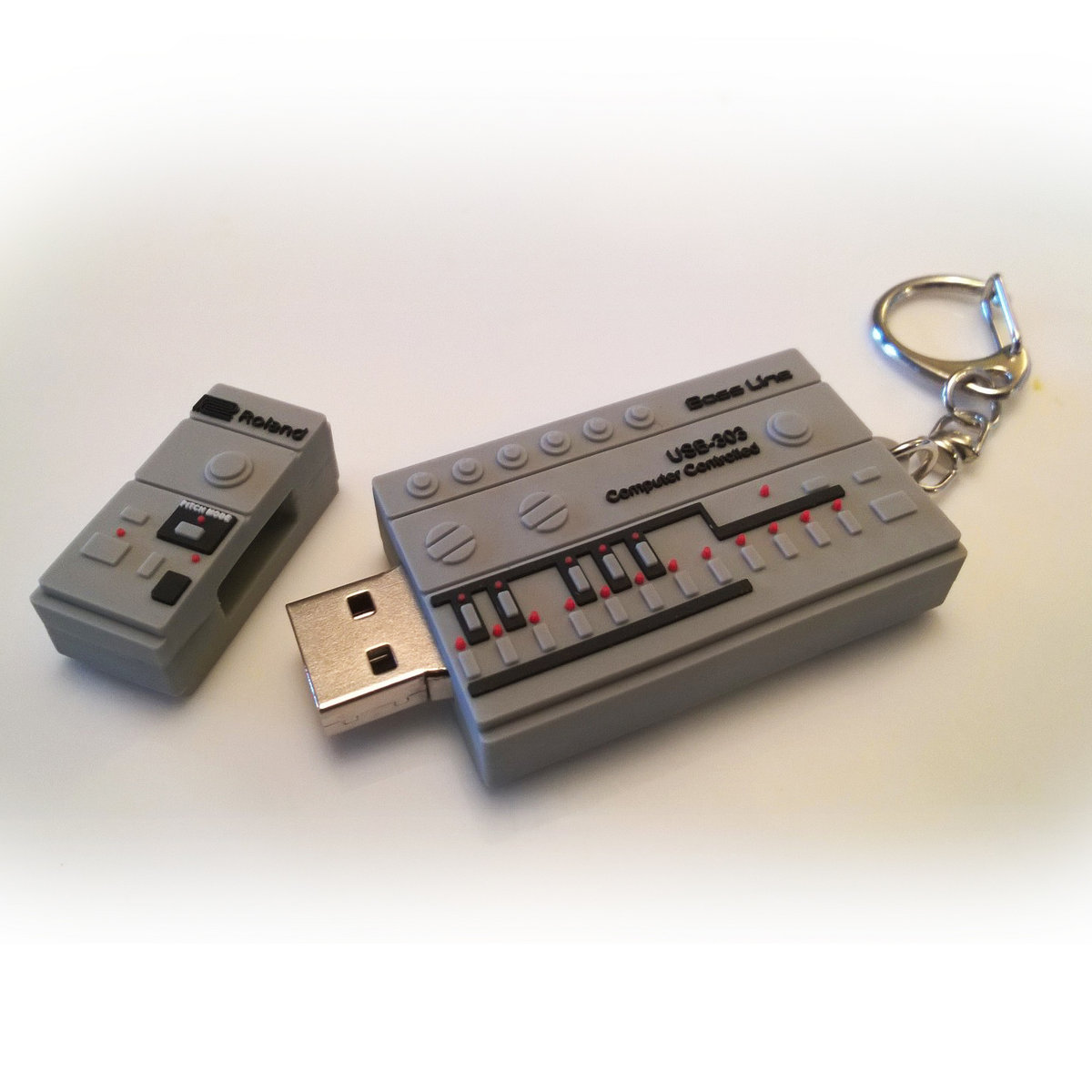
Oop, i didn't see this photo.


What a load of hyper hype.
gadgets an gizmos..make noise~crystalawareness.bandcamp.com/ soundcloud.com/crystalawareness Restocked: 5/2026
if this post is edited -it was for punctuation, grammar, or to make it coherent (or make me seem coherent).
if this post is edited -it was for punctuation, grammar, or to make it coherent (or make me seem coherent).
-
- KVRAF
- 12522 posts since 21 Mar, 2008 from Hannover, Germany
I currently got 2 real anlog monosynths (Novation Bass Station 2 + Waldorf Pulse 2) and a bunch of analog modeled plugins including the new U-He Repro-5 and somehow i do not really feel Trueno is truely amazing for me just because it is a synth on an USB stick...
Anyway somehow it is also hard to believe how the circuits of a full featured analog monosynth fit there and additionally also the circuits for teh digital part of it (including d/a converters, RAM/ROM chips and USB controller). The circuit boards in the Bass Station 2 and Pulse 2 i got here are based on SMD components and are alraedy really small compared to vintage analog snth but still it would be imposible to fit this into a ISB stick. Maybe something like the size of an external 2.5" HD case would be possible for those which would be already quite small.
Anyway somehow it is also hard to believe how the circuits of a full featured analog monosynth fit there and additionally also the circuits for teh digital part of it (including d/a converters, RAM/ROM chips and USB controller). The circuit boards in the Bass Station 2 and Pulse 2 i got here are based on SMD components and are alraedy really small compared to vintage analog snth but still it would be imposible to fit this into a ISB stick. Maybe something like the size of an external 2.5" HD case would be possible for those which would be already quite small.
Ingo Weidner
Win 10 Home 64-bit / mobile i7-7700HQ 2.8 GHz / 16GB RAM //
Live 10 Suite / Cubase Pro 9.5 / Pro Tools Ultimate 2021 // NI Komplete Kontrol S61 Mk1
Win 10 Home 64-bit / mobile i7-7700HQ 2.8 GHz / 16GB RAM //
Live 10 Suite / Cubase Pro 9.5 / Pro Tools Ultimate 2021 // NI Komplete Kontrol S61 Mk1
-
- KVRAF
- 9096 posts since 5 Feb, 2004
Yeah, a minimoog this is not.
If you have requests for Korg VST features or changes, they are listening at https://support.korguser.net/hc/en-us/requests/new