
ROLI does release a new seaboard

Anything about hardware musical instruments.
RELATED
PRODUCTS

Post

Tj Shredder wrote: Mon Apr 18, 2022 5:57 amFor thick heads: Mac Pro has the size of the power supply of a comparable spec Monster
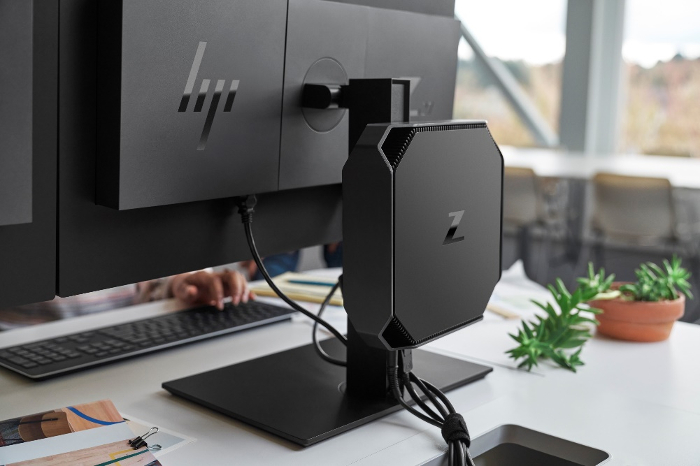
No, it doesn't. Look how tiny the Z2 Mini is, yet it has workstation-class components - Xeon CPUs and nVidia Quadro GPUs - and performance -

Image

It's what all our editors/producers use to cut promos (on Avid Media Composer) for the network.
And the moment we get to laptops, not only heat is relevant, also weight. My next laptop will be a M1 for sure...
... and it won't be any faster or lighter than my Zenbook Duo, nor will it have better battery life, but it will be more expensive and have one less screen. So enjoy being fleeced by your own stupidity.
NOVAkILL : Legion GO, AMD Z1x, 16GB RAM, Win11 | Audient EVO 8 | Lumi Keys | Studio Pro 8
Korg Odyssey, bx-oberhausen, Proxima, PolyMax, GR8, JP6K, Union, Atomika,
Invader 2, Flow Motion, Olga, TRK 01, Thorn, Spire, VG Iron

Post

BONES wrote: Tue Apr 19, 2022 3:05 am
Tj Shredder wrote: Mon Apr 18, 2022 5:57 amFor thick heads: Mac Pro has the size of the power supply of a comparable spec Monster
No, it doesn't. Look how tiny the Z2 Mini is, yet it has workstation-class components - Xeon CPUs and nVidia Quadro GPUs - and performance -
A quick vs. google reveals even a Mac mini can beat it…

Post

Not when I search "Mac Mini v HP Z2 Mini". All I got was a spec comparison at BH Photo (and even that was for the last gen Z2), although I did find a video on YT where they say that the Mac Mini is the "best overall" because you can surf the 'net faster than ever, even though they acknowledge that the Z2 Mini is capable of running heavy-duty 3D applications and is their pick for best small workstation. So if you want to post a link or two, I'd be interested to see something useful.
NOVAkILL : Legion GO, AMD Z1x, 16GB RAM, Win11 | Audient EVO 8 | Lumi Keys | Studio Pro 8
Korg Odyssey, bx-oberhausen, Proxima, PolyMax, GR8, JP6K, Union, Atomika,
Invader 2, Flow Motion, Olga, TRK 01, Thorn, Spire, VG Iron

Post

himalaya wrote: Mon Apr 18, 2022 11:12 am
Not really. When we speak of aftertouch/pressure vs continuous-pressure we speak in terms of what happens when you first trigger a note. With a normal MIDI keyboard with aftertouch you can trigger a note even with high velocity and aftertouch will not be triggered. You need to apply some force after-the-initial-touch (of the note), in order to trigger 'pressure'. So this 'pressure' is triggered after you trigger a note and apply some downwads force.

However, continuous-pressure is active the moment you touch the playing surafce, be it a plastic key, silicone surafce, or some other material (see Haken Contiuum). Here, you can trigger a note with the gentlest of touches and immediately trigger pressure.
You're correct. What I meant by continuous-pressure I only count for the aftertouch part. You cannot avoid the initial velocity part but you can ignore it in the sound design if desire. For plastic keys or silicone surface that I own, I can either just focus on the aftertouch part or also control the initial force part. When isolated to the aftertouch part it is just a continuous pressure measurement. The 2 device I own with aftertouch both are global to keys and not MPE.
himalaya wrote: Mon Apr 18, 2022 11:12 am
This is true and controlling pressure on keyboards with aftertouch can be hard. It's not smooth and fluid, although many people do not realise that the actual 'expression curve' that controls pressure can be tweaked in system preferences (on a good hardware keyboard). This may or may not help to make 'aftertouch' more 'smooth' and controllable.

Not really. It still works on the same scale of 0 to 127 just as 'aftertouch'. The difference concerns the actual trigger point, in that on the Seaborad pressure is active the moment you touch a key, which is not what happenes on any normal MIDI keyboard with 'aftertouch'.
Yes, the same scale of 0-127 in value, but the difference between the movement or force different with the change in scale value are different. For Seaboard you have plenty of dynamic range from pressing it very light to very hard. It's easier to control how you want to fade or vibrato in more details. For my keys and silicon pads the dynamic is much more narrow which mean a small force change will lead to much higher value change. Also because those aftertouch require a certain initial force to activate it, it's also harder to control with that "force range". However, for whatever device you'll still need to practice well in order to control it beautifully.
himalaya wrote: Mon Apr 18, 2022 11:12 am You don't need to use 'lag'. If you desire to separate velocity from pressure on a Seaboard just use that specific 'expression-curve' shape I've posted above. It imitates the way 'aftertouch' works and you can do it in Equator1. While Equator2 also adds MATHS where you can add the additional 'lag' processor. Personaly, I don't like to use 'lag' too much, since large amounts create too much delay and I don't like the feel it introduces, but for certain sounds it's a must.

You are right when you say that sound design and specific playing techniques go hand in hand. But this is true of any MPE instrument and special playing techniques are a de-facto requriement of the more complex MPE controllers. We speak of pressure here only, but how about the more complex LIFT (release velocity)? This requires another set of playing techniques and specific sound design techniques. But really the true skill is about combining all of the dimensions while playing, this is where the magic of MPE is (for me at least).
Yes, it needs time to pick up and design the sound you want to control for.

Post Reply

Return to “Hardware (Instruments and Effects)”