


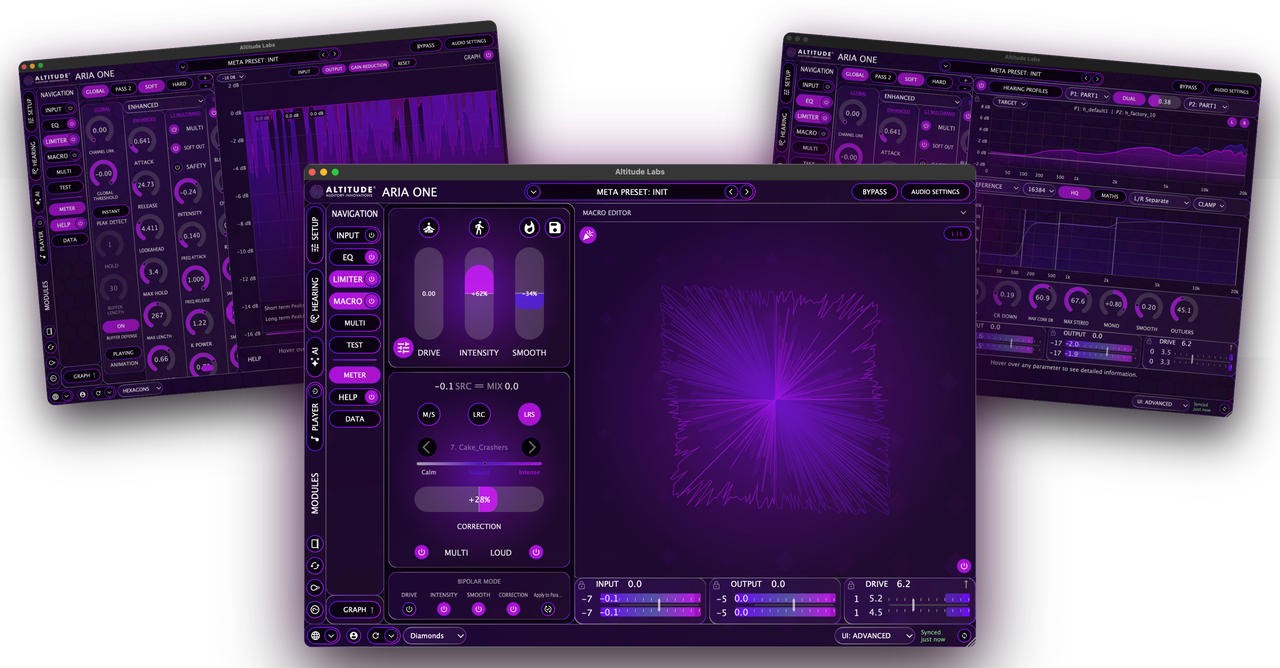
ARIA ONE is a multi-platform audio application suite built around your hearing. It consolidates a full-spectrum hearing test, high-resolution hearing correction, a dual-pass modular multi-algorithm lookahead limiter, AI-assisted preset personalization, cross-device sync, and a built-in audio player into one interconnected system across macOS, Windows, iOS, and Android.
The hearing test runs inside ARIA ONE itself, measuring up to 37 frequencies per ear between 125 Hz and 20 kHz. Those results drive the correction engine, limiter behavior, preset generation, and device-specific listening states from onboarding forward.
This post is a high-level summary of the system. The follow-up posts in this thread go deeper into each area — find the ones that interest you.
───────────────────────────────────────
ONBOARDING
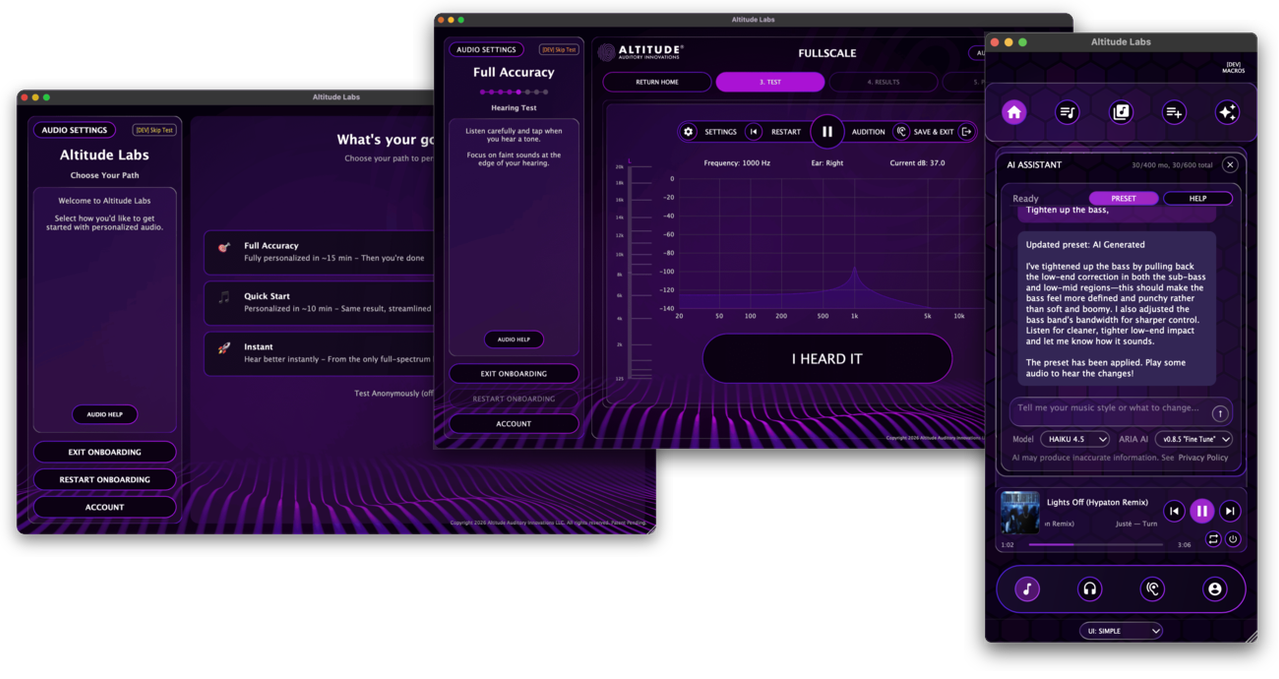
ARIA ONE walks you through a guided onboarding flow the first time you launch. Three starting paths:
- Instant — age-matched profile, listening in under a minute, no testing required
- Quick Results — real hearing test, skips calibration steps for faster results
- Full Accuracy — calibrated setup using your specific headphones for maximum precision
───────────────────────────────────────
ECOSYSTEM AND SHARED ARCHITECTURE
ARIA ONE is the connected center of the Altitude Audio ecosystem. FullScale provides the hearing test layer — embedded inside ARIA ONE on desktop and available as a standalone app on macOS, Windows, iOS, and Android. Hearing data from any FullScale path feeds back into the same system.
The limiter engine shares architecture and preset logic with the broader Altitude product line through the local preset library. Limiter presets, adaptive input states, and related subpresets built or refined in one product are available in others that share the same architecture.
ARIA Studio is the offline, production-focused branch of the workflow. ARIA ONE can export Full Preset and EQ Full states to ARIA Studio as a one-way copy — ARIA Studio does not import states back into ARIA ONE.
Crossfeed is integrated directly into the listening chain as a dedicated module.
───────────────────────────────────────
HEARING CORRECTION AND SOUND PERSONALIZATION
The correction engine offers both FIR convolution and SOS cascaded biquad filter paths built from your hearing profile.
- Three correction modes: Mid/Side, Left-Right Linked, and Left-Right Decoupled
- Profile blending: mix multiple hearing profiles or merge a personal result with a factory profile
- Macro control: four knobs and two toggles mapped to any combination of DSP parameters through custom response curves — each macro addresses up to 24 parameters
- Input adaptive gain: levels incoming audio before the limiter regardless of source volume
ARIA AI
ARIA AI is built into ARIA ONE and works from your hearing profile, your current DSP state, and your listening goals.
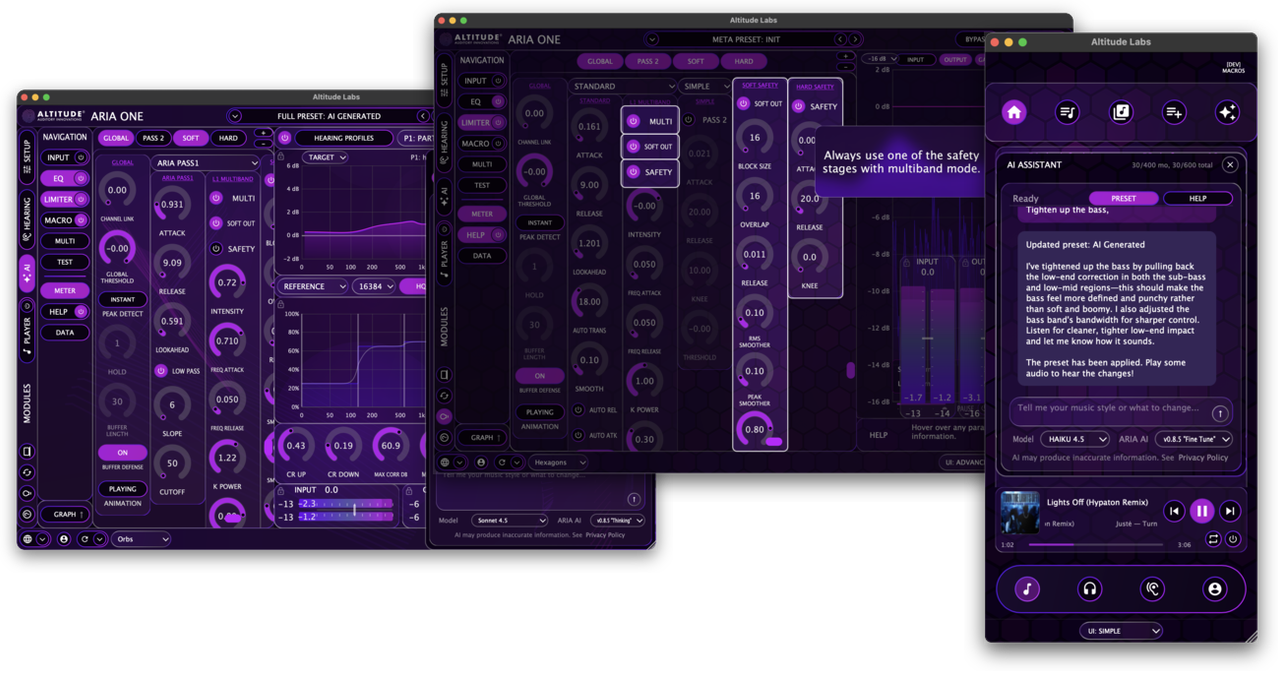
- Preset generation and refinement — describe what you want in natural language and the AI builds or adjusts your preset
- Setup and help — ask about controls, workflows, or what you are looking at
- Generated tutorials — saved, replayable walkthroughs built around your specific question
- Multiple agent styles — different reasoning and edit depths for different tasks
───────────────────────────────────────
DEVICE SYNC AND DEVICE CONTROL
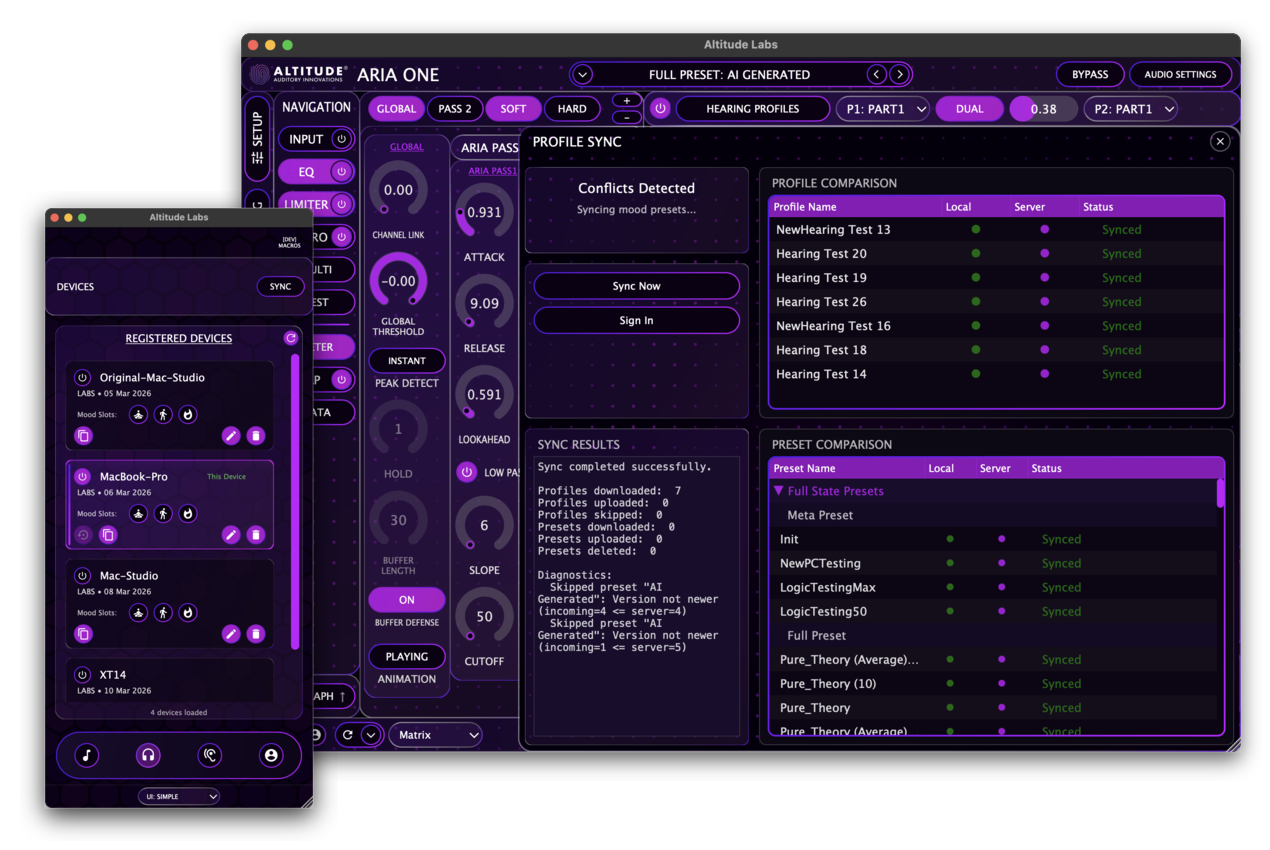
Hearing profiles, presets, and listening states sync across all registered devices in Cloud Mode. Each device maintains its own set of three mood preset slots — full DSP state recalls. The typical workflow is to build and refine presets in Advanced View on desktop, then push those states out to your phone or other devices so each endpoint has tuned listening ready to go. You can also check out another device's state, audition and edit its presets locally, and commit changes back.
───────────────────────────────────────
AUDIO PLAYER AND MOBILE
ARIA ONE includes a built-in audio player that routes playback directly through the correction and limiting chain. In standalone mode on desktop, system audio can also be routed through ARIA ONE using a Virtual Audio Device. The mobile applications on iOS and Android run the same DSP engine in a streamlined player-focused layout without the Advanced View interface.
───────────────────────────────────────
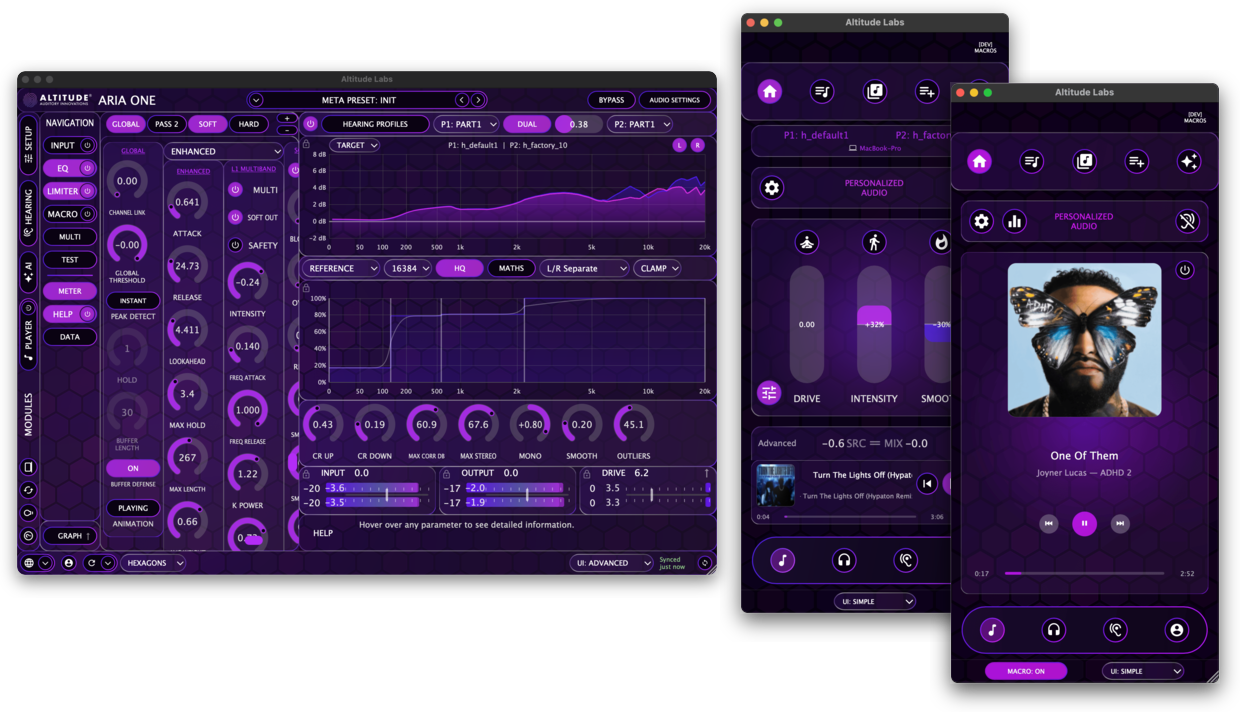
SIMPLE VIEW AND ADVANCED VIEW
ARIA ONE has two operating surfaces on the same engine.
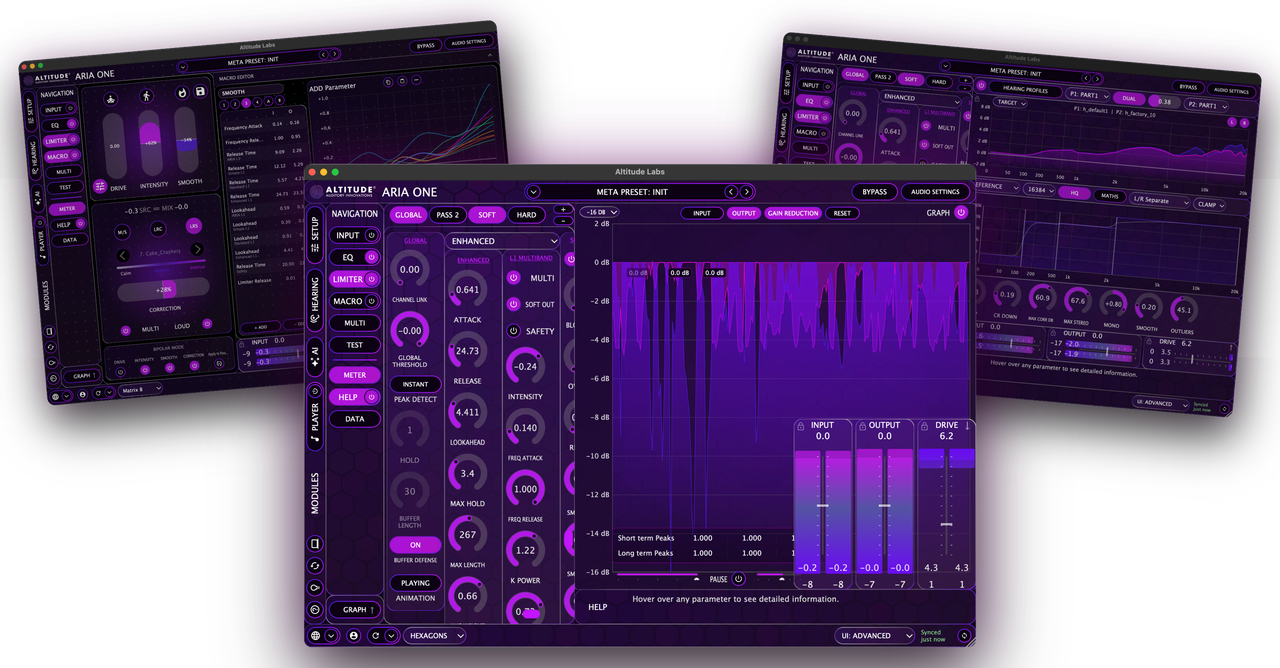
Advanced View
- 400+ parameters across the full signal chain
- Eight standalone graphing and analysis windows
- Module-level control, AI access, sync and device management
- Complete signal chain visibility
- Three mood state buttons — Calm, Natural, Intense — each a full DSP state recall
- Four macro controls and one-tap favorites
- Built-in playback in a mobile-compatible layout
───────────────────────────────────────
CLOUD MODE AND LOCAL MODE
Cloud Mode enables sync, AI features, and cross-device continuity. Local Mode keeps the entire workflow private and offline on a single machine with no cloud dependency. This is a per-machine choice made during setup and is permanent for that installation. Automatic sync is in place and will notify you if a sync failure occurs. Manual batch sync is available as a fallback.
───────────────────────────────────────
AVAILABILITY
- macOS: Ventura 13+ — VST3, AUv3, Standalone
- Windows: Windows 11 — VST3, Standalone
- iOS: Free through TestFlight
- Android: In review with Google
- AAX: On the roadmap
- Sample rates: 44.1 kHz to 192 kHz
- Virtual Audio Device: supported in standalone mode
───────────────────────────────────────
Website: https://altitude.audio/aria-one
User Manual: https://altitude.audio/aria-one/manual


 .
.