

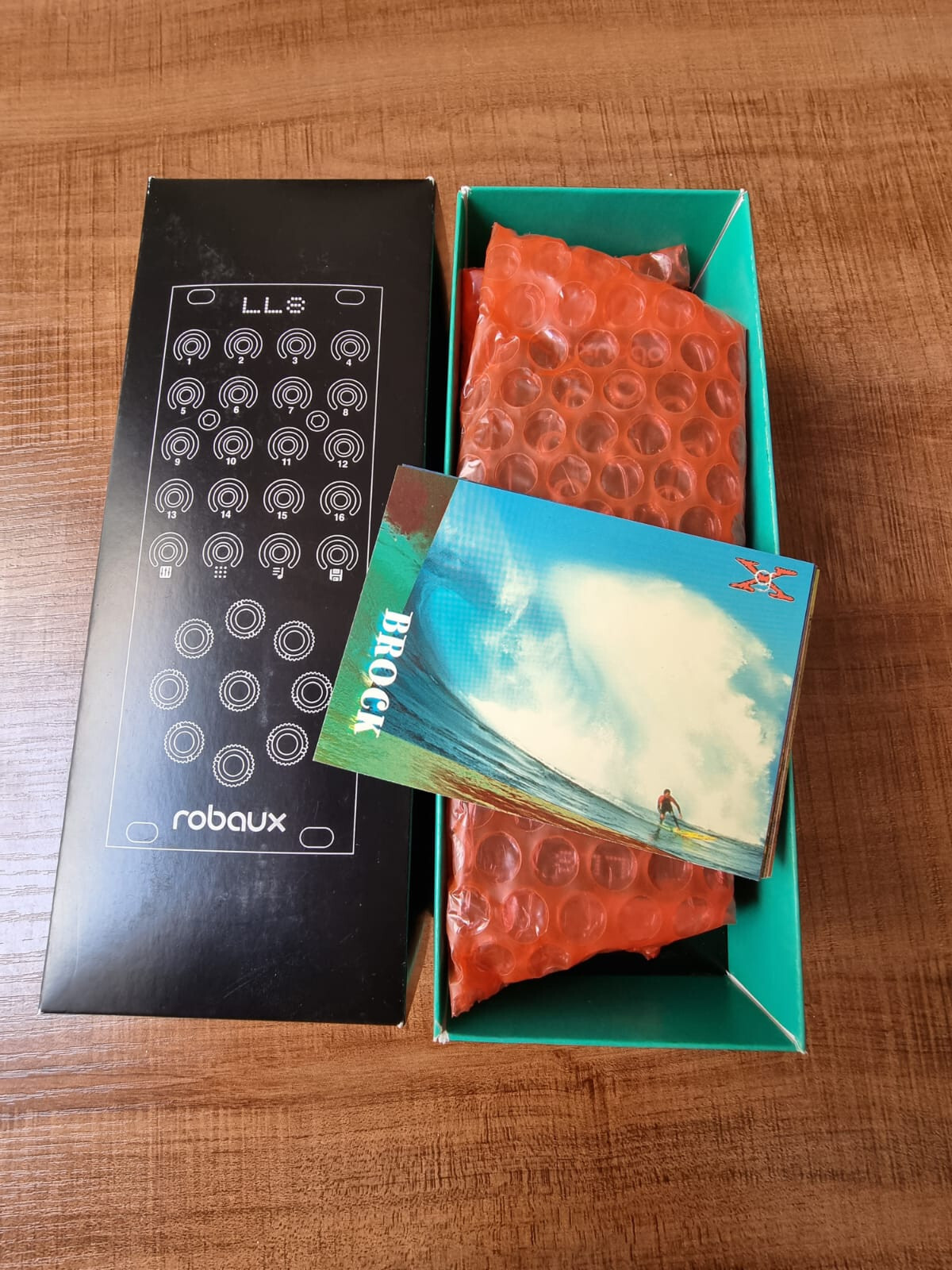
and now just ordered a cheap built Grids clone from Pusherman.
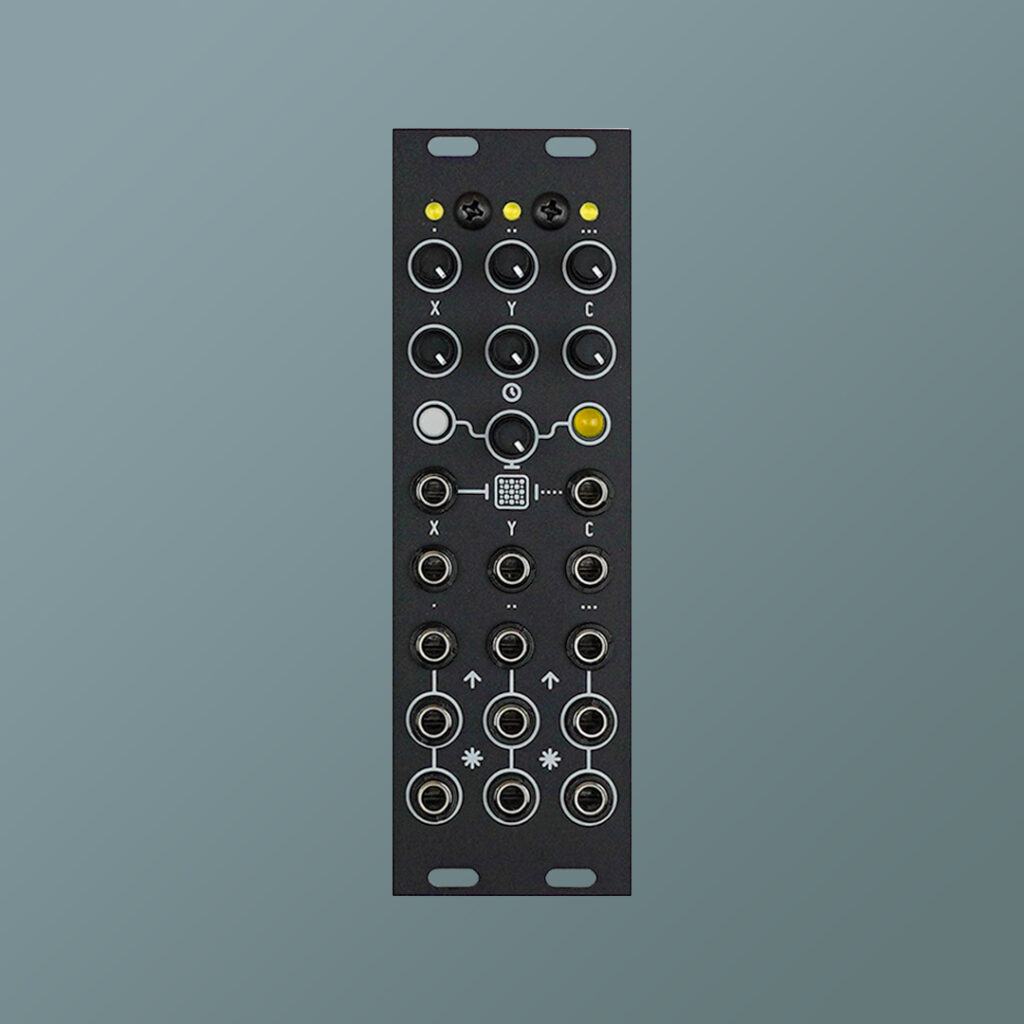
My booming, thudding, crashing, clicking cup runneth over.
A mini splurge thanks to finally getting back the money the finance dept at my work mistakenly took out of my pay last month.



Didn’t know those existed! I’m gonna have to pick some up. Earlier this year I had some unusual nerve/joint pain in my fingers and I had to put off playing. Calluses are gone and the practice routine is messed up. This could help if I can practice to rebuild strength/agility before waiting to redevelop calluses. I’m not a good guitarist but I like playing.foosnark wrote: Tue Sep 27, 2022 1:19 pm Not thrilling, but I ordered a pair of Musician's Practice Gloves. Instead of building up calluses from playing the Miezo I get this weird irritating sore spot. Some combination of the playing angle, the thicker low B string, round wounds, my nickel allergy...?
Peradam is out for delivery today -- nice and quick!

them-whatdon'tknowme wrote:Don't you already have more delays than King Tubby?
Me wrote: ... don't be a dumb ass

 I <3 D..e.e.e.e-La.a.a.ays ... Just pre-ordered this:
https://www.qubitelectronix.com/QU-Bit wrote:Nautilus is a complex delay network inspired by sub-nautical communications and their interaction with the environment. In essence, Nautilus is a stereo delay consisting of 8 unique delay lines which can be connected and synced in interesting ways. Each time Nautilus pings its sonar system, the generated topography reveals itself through the delay, all while staying in time with the internal or external clock. Complex feedback interactions plunge sounds to new depths, while related delay lines pull fragments of sound in different directions. Manipulate the delay lines even further by configuring the the stereo receptors, sonar frequencies, and aquatic materials that filter the space between Nautilus and its surroundings.
Though Nautilus is a delay effect at heart, it is also a CV/Gate generator. The Sonar Output creates either a unique Gate signal, or a unique CV signal algorithmically generated from Nautilus’s findings. Drive other parts of your patch with pings from the delay network, or use the generated topography as a modulation source.
From the deep ocean trenches, to shimmering tropical reefs, Nautilus is the ultimate exploratory delay network.
Stereo Sub-Nautical Delay Processor
Ultra low noise floor
8 codependent delay lines with up to 20 seconds of audio each
Fade, Doppler and Shimmer delay modes
Sonar configurable CV/Gate output
Pre-Orders are now open, shipping October 6, 2022!
With 8 delay lines - 4 per stereo channel - to play with, Nautilus builds ever evolving delays. Create stereo trills, bouncy ball delays, and polyrhythmic movements with the core system of the Nautilus delay network.
Sensors - controls the amount of delay lines available for Nautilus to use.
Dispersal - adjusts the spacing between the delays, creating complex rhythms in sync with the internal or external clock.
Definite eye candy. Interesting with 8 delay lines. I was hoping to hear some feedback in the demos. They played it a bit too safe for the effects demos, but I get the idea.Shabdahbriah wrote: Tue Sep 27, 2022 6:31 pmthem-whatdon'tknowme wrote:Don't you already have more delays than King Tubby?Me wrote: ... don't be a dumb ass
QU-Bit Nautilus.jpg
There are a number of audio demos at the link below the copy.
https://www.qubitelectronix.com/QU-Bit wrote:Nautilus is a complex delay network inspired by sub-nautical communications and their interaction with the environment. In essence, Nautilus is a stereo delay consisting of 8 unique delay lines which can be connected and synced in interesting ways. Each time Nautilus pings its sonar system, the generated topography reveals itself through the delay, all while staying in time with the internal or external clock. Complex feedback interactions plunge sounds to new depths, while related delay lines pull fragments of sound in different directions. Manipulate the delay lines even further by configuring the the stereo receptors, sonar frequencies, and aquatic materials that filter the space between Nautilus and its surroundings.
Though Nautilus is a delay effect at heart, it is also a CV/Gate generator. The Sonar Output creates either a unique Gate signal, or a unique CV signal algorithmically generated from Nautilus’s findings. Drive other parts of your patch with pings from the delay network, or use the generated topography as a modulation source.
From the deep ocean trenches, to shimmering tropical reefs, Nautilus is the ultimate exploratory delay network.
Stereo Sub-Nautical Delay Processor
Ultra low noise floor
8 codependent delay lines with up to 20 seconds of audio each
Fade, Doppler and Shimmer delay modes
Sonar configurable CV/Gate output
Pre-Orders are now open, shipping October 6, 2022!
With 8 delay lines - 4 per stereo channel - to play with, Nautilus builds ever evolving delays. Create stereo trills, bouncy ball delays, and polyrhythmic movements with the core system of the Nautilus delay network.
Sensors - controls the amount of delay lines available for Nautilus to use.
Dispersal - adjusts the spacing between the delays, creating complex rhythms in sync with the internal or external clock.


Pladsk Matrise or Herbs and Stones’ Pathways have 1/4” i/o. I usually prefer to use a small mixer with 4 or more sends, for effect distribution, like that.Constructed Identity wrote: Tue Sep 27, 2022 10:00 pm The loopop video on this used a matrix mixer that had 1/8 inputs and I wouldn't like that at all however so I don't know what I would get or what the final setup would look like.


Submit: News, Plugins, Hosts & Apps | Advertise @ KVR | Developer Account | About KVR / Contact Us | Privacy Statement
© KVR Audio, Inc. 2000-2026