107 KVR members have added JS80P to 76 MyKVR groups 132 times.
Download KVR Studio Manager (FREE)
{See video at top of page}
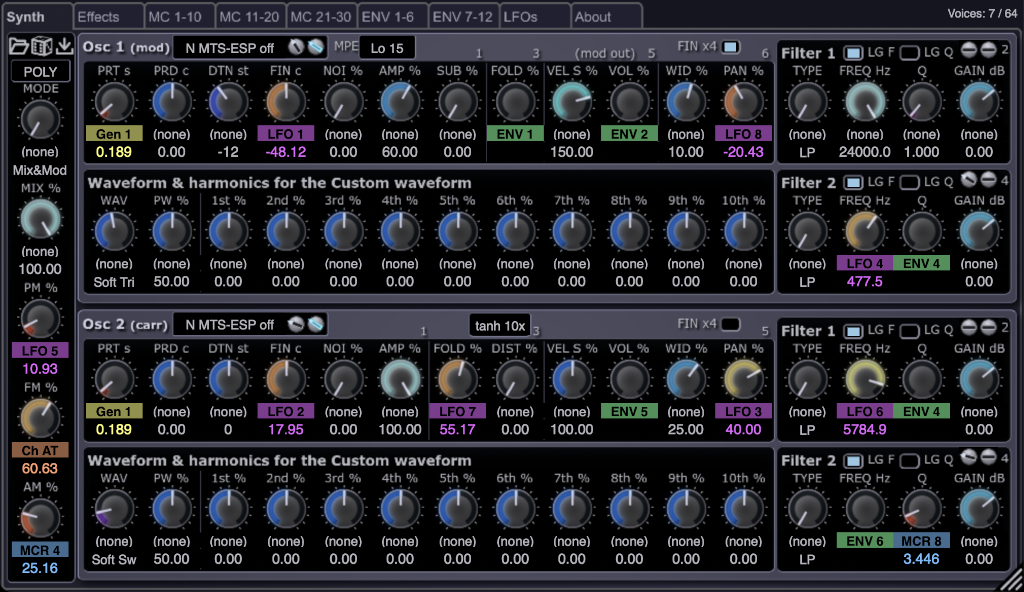
JS80P is a MIDI driven, performance oriented, versatile, free and open source synthesizer VST plugin.
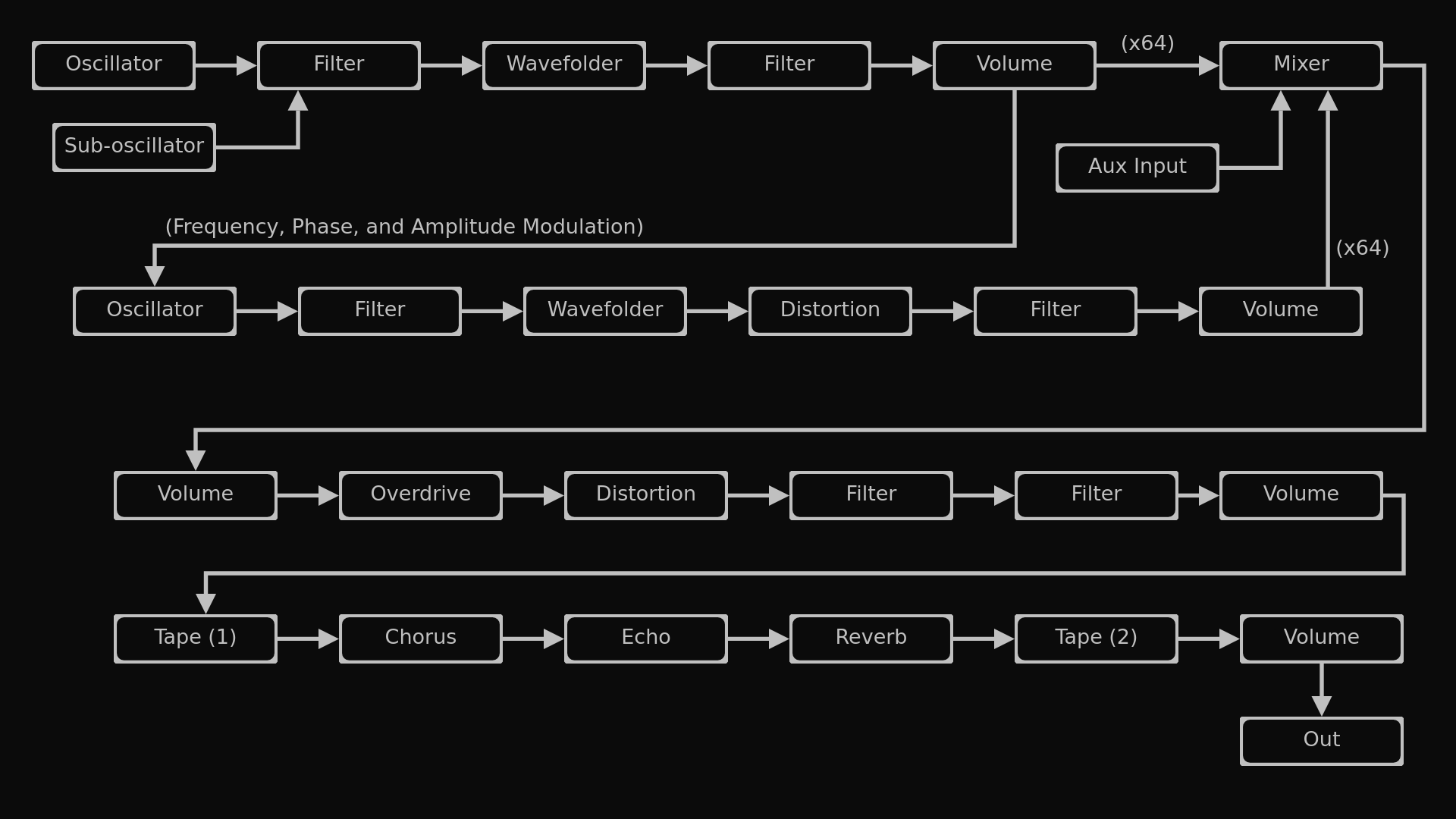
It comes with two oscillators (and a sub-harmonic sine), and a lot of filters, effects, envelopes, LFOs, and powerful macros to shape your sound with subtractive, additive, PWM, FM, PM, and AM synthesis, complete with polyphonic, monophonic, and split keyboard modes, MPE support, MTS-ESP tuning support, analog imperfection emulation, and more.
Note: VST is a registered trademark of Steinberg Media Technologies GmbH.
Various small CPU usage optimizations were done.
Bugfix: using the 10th harmonic of the Custom waveform could cause unwanted noises and aliasing distortions if the oscillator's frequency was moving (e.g. via the Fine Detune knob or the Oscillator Instability setting, etc.). This has been fixed. (#41).
Bugfix: when both the VST 3 and the FST version of JS80P were loaded in a host application on macOS, or when JS80P and MPE Emulator were both loaded on macOS, then a name collision of an internal resource could occur between these plugins, resulting in various warnings or error messages, depending on the host application. This collision has been resolved so that now any combination of the latest versions of these plugins can be loaded on macOS into the same process without any warnings and error messages. (#42).
Bugfix: when using MPE, envelope generators with dynamic update modes failed to properly update once the envelope reached the sustain stage. This has been fixed so that envelope update modes are now respected when using MPE as well. (#43).
Bugfix: switching note handling modes could result in Note On messages being dropped. This has been fixed, so now notes will properly make the configured sounds after changing the note handling mode. (#44).
Bugfix: note states were not properly reset when loading presets, resulting in envelope generators not respecting the configured update modes. This has been fixed. (#45).
Reviewed By TorresBob88 [all]
June 8th, 2024
Version reviewed: 1.1.2 on Windows
It sounds good.
A perfectly solid and nicely packaged Synth.
We need some sound designers to create more presets for it.
A random generation function is always fun and could help expedite that.
Response from attilammagyar from Attila M. Magyar on June 13th, 2024
Thank you, I'll consider randomization for a future version. (Right now I'm working on a different feature that I hope to release in the upcoming weeks.).
You have indicated that you were using v1.1.2 - I recommend checking out more recent versions (the latest one is v3.1.1), because they contain several bugfixes and other improvements, including more features and presets, better performance, etc. (And if I remember correctly, if you are not using MIDI CC 84, then you should not experience any backward-incompatibility issues either.).

Please log in to join the discussion
Submit: News, Plugins, Hosts & Apps | Advertise @ KVR | Developer Account | About KVR / Contact Us | Privacy Statement | Sell @ KVR | KVR Marketplace Terms & Conditions
© KVR Audio, Inc. 2000-2026